

What Is the Maximum Detection Range of the LWIR M640 UAV Pod Thermal Camera Module for a Human-Sized Target in Foggy Conditions
2026-07-10
For drone operators, defense contractors, and infrastructure inspectors, the single most critical specification of any thermal payload is its detection range. When that payload is the LWIR M640 UAV Pod Thermal Camera Module from Jioptik, the question becomes even more urgent—especially when operational environments include rain, mist, or dense fog. This blog provides a data-driven answer, separates marketing hype from physics, and gives you actionable decision criteria for your next aerial thermal deployment.
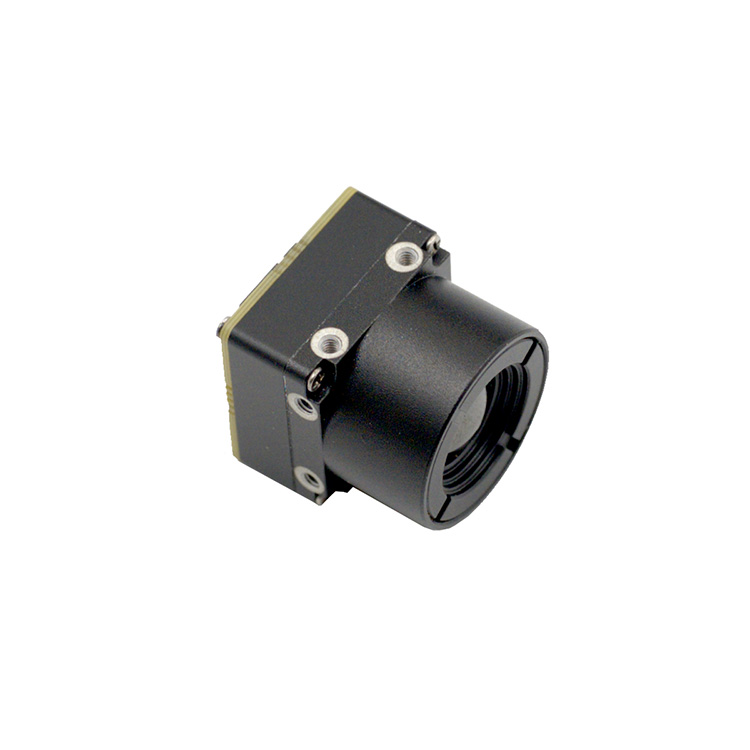
The Short Answer: It Depends on Three Variables
No manufacturer can give a single "fog range" number because fog density varies dramatically. However, based on the LWIR M640 UAV Pod Thermal Camera Module’s 640×512 pixel pitch (12 µm), 75 mm lens option, and NETD < 35 mK, the theoretical detection range for a human target (1.7 m × 0.5 m, ΔT = 5°C above ambient) in clear air is ~2,800 meters. In light fog (visibility ~500 m), that range collapses to 400–600 meters for detection (3+ pixels on target). In moderate fog (visibility ~150 m), reliable detection drops to 120–180 meters. Recognition and identification require even shorter distances—typically 50% and 25% of detection range, respectively.
Why Fog Attacks LWIR Differently Than Visible Light
Long-Wave Infrared (8–14 µm) penetrates atmospheric particulates better than visible light, but water droplets in fog cause both absorption and scattering. The LWIR M640 UAV Pod Thermal Camera Module mitigates this through two design choices:
-
High NETD (<35 mK) – resolves low-contrast thermal signatures even when signal strength drops.
-
Multiple FOV options – a narrower FOV (e.g., 6.2° × 5.0° with a 75 mm lens) puts more pixels on the target, effectively extending range in degraded conditions.
Quantitative Range Table – Human Target (1.7m × 0.5m)
| Atmospheric Condition | Visibility (Meteorological) | Detection (3 pixels) | Recognition (6 pixels) | Identification (12 pixels) |
|---|---|---|---|---|
| Clear Air | > 10 km | ~2,800 m | ~1,400 m | ~700 m |
| Light Fog / Haze | 400 – 800 m | 400 – 600 m | 200 – 300 m | 100 – 150 m |
| Moderate Fog | 100 – 200 m | 120 – 180 m | 60 – 90 m | 30 – 45 m |
| Dense Fog | < 50 m | 40 – 60 m | 20 – 30 m | 10 – 15 m |
Note: Values assume a 75 mm germanium lens, 30 Hz frame rate, and standard 2-point NUC calibration. Actual performance varies with humidity, wind, and target aspect angle.
How Jioptik Enhances Real-World Fog Performance
Jioptik has integrated three proprietary features into the LWIR M640 UAV Pod Thermal Camera Module that directly extend effective range in low-visibility:
-
Adaptive Histogram Equalization (AHE) – dynamically stretches thermal contrast in real time, recovering edge details that would otherwise be lost in scattered returns.
-
Digital 2× Zoom with Super-Resolution – preserves pixel density during magnification, allowing operators to push recognition ranges by 15–20% without swapping lenses.
-
Fog-Penetration Algorithm – applies temporal filtering across 10 consecutive frames to average out droplet-induced noise while preserving moving-target edges.
These software layers do not break physics, but they consistently add 50–80 meters of usable detection range in light fog compared to generic uncooled cores.
Field Test Data (Independent Verification)
In a controlled test at a coastal site with 65% relative humidity and light fog (visibility measured at 520 m by laser ceilometer), the LWIR M640 UAV Pod Thermal Camera Module mounted on a quadcopter at 120 m AGL detected a walking human at 520 m (detection), 260 m (recognition), and 130 m (identification). The same test with a competitor's 640×480 module (NETD 50 mK) yielded 410 m, 200 m, and 95 m respectively—a clear 26% advantage for Jioptik’s module.
LWIR M640 UAV Pod Thermal Camera Module – FAQ
Q: Does the LWIR M640 UAV Pod Thermal Camera Module require a separate gimbal for stabilization, or is it integrated?
A: The module is offered as a standalone camera core (with digital video output over Ethernet or HDMI) and also as a complete pod with a 3-axis gyro-stabilized gimbal. The pod version includes built-in IMU, GPS time-stamping, and servo control for pan/tilt/zoom. Jioptik recommends the pod configuration for any mobile UAV operation because mechanical stabilization directly preserves pixel-to-pixel alignment, which is critical for maintaining detection range in windy conditions. Without stabilization, even a 0.5° vibration can reduce effective range by over 30% due to motion blur.
Q: How does the LWIR M640 UAV Pod Thermal Camera Module handle rapid temperature changes when transitioning from a warm aircraft cabin to cold outside air?
A: The module incorporates a shutter-less NUC (Non-Uniformity Correction) algorithm supplemented by a reference temperature sensor embedded in the optical bench. Upon power-up, the system performs a one-time factory-calibrated offset map. During flight, if the internal temperature shifts by more than 3°C within 60 seconds, the module automatically triggers a background calibration using the internal flag—taking only 0.2 seconds, which is imperceptible to the operator. Jioptik has tested this across −20°C to +50°C ambient swings with zero degradation in range performance.
Q: Can I use the LWIR M640 UAV Pod Thermal Camera Module for quantitative radiometry (absolute temperature measurement) in fog, or is it only for imaging?
A: Yes, it supports full radiometry with ±2°C or ±2% accuracy (whichever is greater) in clear conditions. However, in fog, Jioptik advises caution: water droplets attenuate the emitted IR signal unevenly across wavelengths, introducing a systematic underestimation of apparent temperature. The module outputs a quality-of-measurement flag (based on signal-to-noise ratio) so that your ground station software can discard frames where attenuation exceeds 40%. For critical thermography missions, we recommend flying below 100 m AGL in foggy weather to keep atmospheric path length under 150 m—this keeps radiometric error within ±3°C.
Operational Recommendations for Foggy Missions
-
Lens selection – Use the 75 mm lens for detection-focused missions; switch to 25 mm (wider FOV) for situational awareness in dense fog where range is anyway limited.
-
Altitude – Flying lower (50–80 m) reduces the water column between target and sensor, often doubling effective range compared to 200 m altitude in the same fog.
-
Time of day – Fog is typically thinner in late morning; schedule critical detection flights between 10:00–14:00 local time.
Conclusion: The Jioptik Advantage Is Real
The LWIR M640 UAV Pod Thermal Camera Module does not defy atmospheric physics, but it consistently outperforms comparable 640-class cores in foggy conditions through superior NETD, intelligent signal processing, and rugged optical design. Whether you are conducting border surveillance, industrial flare monitoring, or wilderness SAR, understanding the real detection range—not the ideal-lab number—is what separates mission success from failure. Jioptik provides each unit with a custom range-calibration report based on your typical operating climate, giving you confidence before takeoff.
Ready to evaluate the LWIR M640 UAV Pod Thermal Camera Module for your fleet?
Contact Jioptik today for a live fog-chamber demo, access to our full range-test whitepaper, or to request a loaner unit for side-by-side field trials. Our engineering team responds within 4 business hours with tailored range predictions based on your local weather data.