

What Is the Difference Between Through-Hole and Surface-Mount Technology in Printed Board Assembly
2026-08-14
When engineers evaluate Printed Board Assembly methods for a new product, the debate between Through-Hole Technology (THT) and Surface-Mount Technology (SMT) is often the first critical decision. While both have their place in manufacturing, the choice directly impacts cost, performance, and long-term reliability. At Hoshineo Lcd-Tech, we have observed that many design flaws stem from selecting the wrong mounting strategy for the application. Understanding these two technologies is not just about soldering—it is about engineering a product that survives real-world conditions.
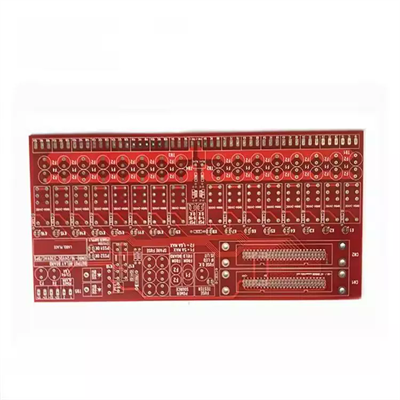
Defining the Two Core Technologies
Through-Hole Technology (THT) involves inserting component leads through pre-drilled holes on the board and soldering them on the opposite side. This creates a strong mechanical bond. In contrast, Surface-Mount Technology (SMT) places components directly onto pads on the surface of the board, with solder paste holding them in place during reflow soldering.
| Feature | Through-Hole (THT) | Surface-Mount (SMT) |
|---|---|---|
| Component Size | Larger, with long leads | Smaller, with no leads or short terminations |
| Mounting Process | Insertion + wave soldering | Placement + reflow soldering |
| Board Space Utilization | Poor (uses both sides sparingly) | Excellent (high component density) |
| Mechanical Strength | Very strong (ideal for connectors) | Moderate (relies on solder fillet strength) |
| Thermal Performance | Better heat dissipation via leads | Requires thermal vias for heat transfer |
| Cost per Joint | Higher (drilling and labor) | Lower (automated placement) |
| Prototype Flexibility | Easy to hand-solder and rework | Difficult without specialized tools |
The Practical Advantages of Each Method
Why SMT Wins in High-Volume Production
For most consumer electronics, SMT is the undisputed leader. Because components are smaller, designers can pack more functionality into a compact space. The automated placement process used in Printed Board Assembly for SMT is extremely fast, often placing thousands of components per minute. This reduces manufacturing time and labor costs significantly. Furthermore, SMT performs better at high frequencies due to shorter signal paths, making it preferable for RF and high-speed digital circuits.
Why THT Remains Irreplaceable
Despite the dominance of SMT, THT is far from obsolete. Components that experience heavy mechanical stress—such as large transformers, connectors, and electrolytic capacitors—benefit from the physical anchoring provided by leads passing through the board. In industrial or automotive applications where vibration and thermal cycling are extreme, Hoshineo Lcd-Tech frequently recommends a hybrid approach: using SMT for passive components and THT for structural components to ensure durability.
Critical Design Considerations for Your Project
When planning your Printed Board Assembly workflow, consider these three pillars:
-
Thermal Management: SMT components generate heat in a small footprint. Without proper thermal via design, hotspots can degrade performance. THT naturally wicks heat through the lead to the opposite side.
-
Rework and Repair: SMT components, especially ball-grid arrays (BGAs), are notoriously difficult to rework. THT allows for easier desoldering and replacement, which is vital for prototype stages.
-
Cost Structure: While SMT reduces placement costs, it requires expensive stencils and pick-and-place programming. THT requires drilling but has lower setup costs for small batches.
Printed Board Assembly FAQ
Q1: Can I mix Through-Hole and Surface-Mount components on the same Printed Board Assembly?
A: Yes, hybrid assemblies are standard practice in modern manufacturing. However, you must sequence the soldering processes carefully. Typically, SMT components are placed and reflowed first, followed by THT components which are wave-soldered or hand-soldered. At Hoshineo Lcd-Tech, we always advise clients to group THT components on one side of the board to simplify the wave-soldering process and avoid shadowing effects that prevent proper solder wetting.
Q2: Which technology offers better reliability for long-term field operation in harsh environments?
A: For environments with continuous vibration, thermal shock, or high humidity, Through-Hole technology generally provides superior reliability because the plated through-holes create a solid mechanical rivet between the lead and the board. However, modern SMT with underfill epoxy can match THT performance in many cases. The deciding factor is the component type—passive resistors and capacitors in SMT are extremely reliable, while heavy inductors and connectors should always be through-hole mounted. Hoshineo Lcd-Tech recommends conducting a failure mode analysis before finalizing the technology mix.
Q3: How does the choice between THT and SMT affect the overall cost of a Printed Board Assembly prototype versus mass production?
A: This is a classic trade-off. For prototypes (1–50 units), THT is often cheaper because it does not require a solder stencil or complex placement programming, and hand-soldering is straightforward. For mass production (1,000+ units), SMT becomes significantly more cost-effective due to automation and reduced board real estate, which allows for smaller panels and more boards per square foot. At Hoshineo Lcd-Tech, we typically advise clients to design with SMT as the baseline but reserve THT for critical mechanical components, thus balancing prototype flexibility with production scalability.
Making the Right Decision for Your Product
The choice is not about which technology is "better," but which fits your operational environment, production volume, and lifecycle requirements. A Printed Board Assembly designed exclusively for SMT may fail in a power supply unit, while an all-THT design may be too bulky for a wearable device. By leveraging the strengths of both, you achieve a robust, manufacturable product.
Contact Us for Expert Guidance
Selecting the correct mounting technology is a strategic decision that affects your entire supply chain. If you are uncertain about the optimal mix for your next project, reach out to the engineering team at Hoshineo Lcd-Tech. We provide comprehensive DFM (Design for Manufacturability) reviews and prototyping services to de-risk your production. Contact us today to discuss your specific requirements and receive a tailored proposal that ensures your Printed Board Assembly performs flawlessly from the first prototype to full-scale mass production.