

What is the Difference Between Smart and Conventional Fire Extinguishing Controllers
2026-02-11
When designing life safety infrastructure, the choice of control panel is fundamental. At the heart of any reliable Automatic Fire Extinguishing System Controller lies the critical decision between conventional and smart (addressable) technology. This choice impacts everything from installation flexibility to maintenance efficiency. As a leader in advanced fire protection solutions, Wzonpa is committed to providing clarity on this crucial topic to help you specify the right system for your asset's needs.
The primary distinction lies in how devices are identified and communicated with. Let's break down the key differences using a comparative approach.
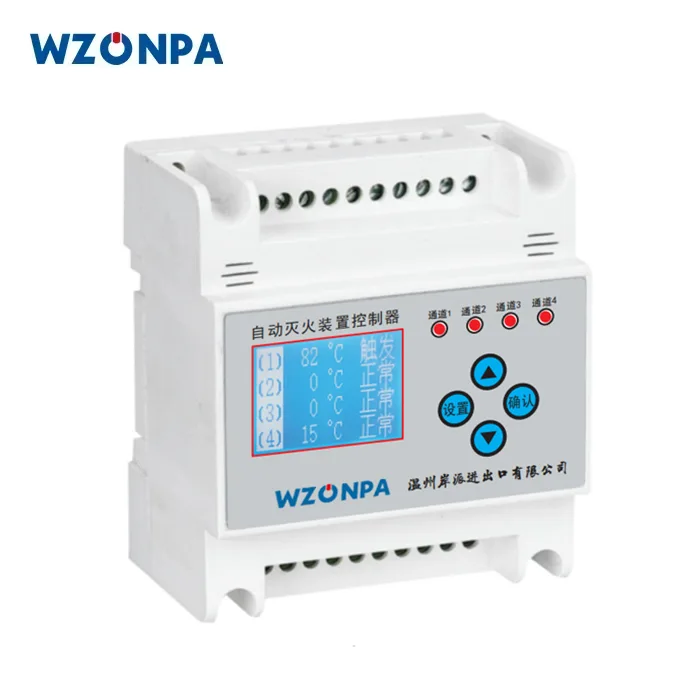
Key Differences at a Glance:
-
Device Identification: Conventional systems group devices by zones (e.g., "Zone 3, 2nd Floor"). Smart systems provide a unique address for each device (e.g., "Smoke Detector, Room 205").
-
Wiring Architecture: Conventional uses a radial (star) topology for each zone. Smart systems typically use a single loop connecting all devices, simplifying cable runs.
-
Fault & Pre-Alarm Detection: Conventional controllers generally identify faults at the circuit level. Smart controllers can pinpoint the exact device fault and often provide advanced warnings for deteriorating sensor performance.
-
Installation & Cost: Conventional systems often have a lower upfront hardware cost but can incur higher installation expenses due to more cabling. Smart systems offer lower installation costs and greater flexibility but may have a higher initial unit cost.
To visualize these operational contrasts, consider the following comparison:
| Feature | Conventional Fire Extinguishing Controller | Smart Fire Extinguishing Controller |
|---|---|---|
| Identification Method | Zone-Based (Group of Devices) | Point Addressable (Each Device) |
| Wiring Complexity | Higher (Multiple Zone Circuits) | Lower (Single Loop Topology) |
| Fault Location | General Zone Area | Exact Device Location |
| System Scalability | Moderate, requires new circuits | High, easy to add devices to existing loop |
| Maintenance Insight | Basic Status (Normal/Fault) | Advanced Diagnostics & Pre-Alert Data |
Automatic Fire Extinguishing System Controller FAQ
Q: Can a smart controller be retrofitted into an existing conventional system?
A: A full retrofit typically requires replacing the control panel and all field devices (detectors, modules) with addressable ones. However, hybrid solutions exist. Wzonpa offers consultation services to assess the feasibility and best upgrade path for legacy installations, ensuring a cost-effective transition to smarter protection.
Q: Which type of controller is more reliable?
A: Both types are engineered to high reliability standards when installed correctly. The advantage of a smart Automatic Fire Extinguishing System Controller lies in its enhanced diagnostic capabilities, allowing for proactive maintenance that can prevent failures. It offers superior resilience against single wire breaks due to its loop-style wiring.
Q: Are smart systems necessary for small buildings?
A: Not always. For very small, simple layouts, a conventional system can be perfectly adequate and cost-effective. The value of a smart controller grows with the size, complexity, and value of the property, where detailed information and fast fault localization minimize downtime and risk.
Choosing the right controller is a strategic decision that balances immediate needs with long-term operational intelligence. A smart Automatic Fire Extinguishing System Controller from Wzonpa provides unparalleled clarity, control, and preventative insight, transforming your fire suppression system from a passive shield into an active, intelligent safety partner.
Ready to specify the optimal control solution for your next project? Contact us today for a detailed technical consultation. Let our experts at Wzonpa help you design a system that offers not just protection, but peace of mind.