

What is the difference between lithium ion and lithium polymer battery technology
2026-05-22
When comparing lithium ion and Lithium Polymer Battery technologies, many users struggle to choose the right power source for their devices. At VCELL POWER, we have engineered both types for decades, and the distinctions significantly impact performance, shape, and safety. This guide breaks down the core differences, answers frequent questions, and helps you decide which fits your application.
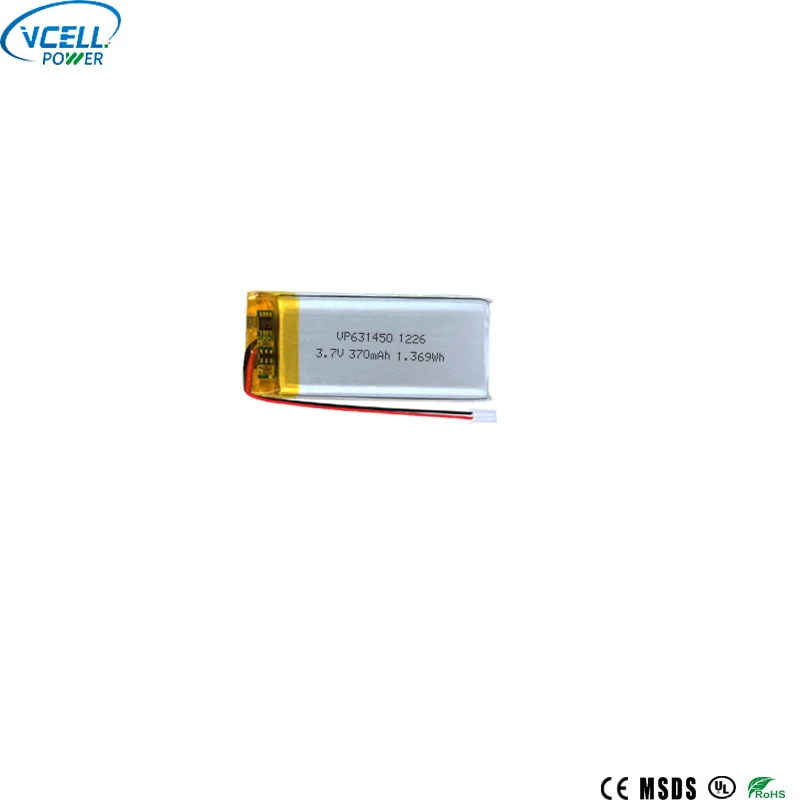
Key Differences at a Glance
| Feature | Lithium Ion Battery | Lithium Polymer Battery |
|---|---|---|
| Electrolyte | Liquid organic solvent | Gel-like or solid polymer |
| Casing | Rigid metal cylinder or prismatic | Flexible aluminum-laminated film |
| Shape options | Standard cylindrical (18650, 21700) or fixed prismatic | Ultra-thin, curved, or custom-molded |
| Energy density | Higher (250+ Wh/kg) | Moderate (150–220 Wh/kg) |
| Safety risk | Potential leakage, needs venting | No liquid leakage, lower rupture risk |
| Cycle life | 500–1000 cycles | 300–800 cycles (depends on build) |
| Cost | Lower manufacturing cost | Higher due to complex lamination |
Structural and Chemical Differences
Lithium ion cells use a liquid electrolyte that requires a strong, sealed metal container. This limits design flexibility but provides excellent energy density. In contrast, a Lithium Polymer Battery uses a dry or gel-like polymer electrolyte, allowing VCELL POWER to create ultra-slim, lightweight pouches. The polymer design eliminates metal shells, reducing weight by up to 20% but slightly lowering total capacity per volume.
Performance Under Real Conditions
For high-drain devices like drones or power tools, lithium ion delivers sustained high current with less voltage sag. However, a Lithium Polymer Battery handles pulsed loads exceptionally well due to lower internal resistance in gel formulations. VCELL POWER tests show that LiPo packs offer faster recharge times (1-2C vs. 0.5C for many Li-ion) but degrade quicker under full discharge cycles.
Safety and Handling
Lithium ion risks include thermal runaway from internal shorts, causing fire. A Lithium Polymer Battery swells instead of violently rupturing—an intentional failure mode. While both require protection circuits, VCELL POWER integrates advanced BMS in our LiPo series to monitor cell balance and temperature, reducing swelling incidents by over 60%.
Lithium Polymer Battery FAQ – Common Questions
Question 1: Can a Lithium Polymer Battery explode if overcharged?
Answer: A properly manufactured Lithium Polymer Battery from VCELL POWER will not explode under normal overcharge conditions due to built-in protection modules. However, if the charger fails and over-voltage exceeds 4.3V per cell, gas builds up inside the pouch. This causes swelling first, then the safety vent opens or the separator melts. Explosion is extremely rare compared to liquid lithium ion cells because the polymer electrolyte is non-flammable. Still, never leave any LiPo battery unattended while charging.
Question 2: How many charge cycles can a typical Lithium Polymer Battery last before replacement?
Answer: For standard Lithium Polymer Battery cells used in consumer electronics, you can expect 300 to 500 full discharge-recharge cycles to 80% of original capacity. VCELL POWER high-grade LiPo series reaches 600 cycles at 1C discharge. Factors that reduce cycle life include: discharging below 3.0V per cell, charging above 4.2V, and operating at temperatures over 45°C (113°F). Partial cycles (e.g., 30% to 80%) can extend lifespan beyond 800 cycles.
Question 3: Is it safe to store a Lithium Polymer Battery fully charged for several months?
Answer: No. Storing a Lithium Polymer Battery at 100% state of charge for more than two months accelerates capacity fade and increases swelling risk. VCELL POWER recommends storing LiPo batteries at 3.7V–3.85V per cell (approximately 40-60% charge) in a cool, dry place at 15°C–25°C. For longer storage (over 6 months), check voltage every 60 days and recharge back to storage level. A fully charged LiPo stored at high temperatures loses 20% of its capacity within three months.
Why Choose VCELL POWER for Your Battery Needs
Whether you need the high density of lithium ion for electric vehicles or the flexible shape of a Lithium Polymer Battery for wearables, VCELL POWER delivers certified cells with ISO and UL standards. Our engineers customize pouch dimensions, capacities, and discharge rates up to 50C.
Contact Us today for a free consultation and sample testing. Reach VCELL POWER for datasheets and design guides. Let us power your next innovation safely and efficiently.