

What Is the Difference Between FPC Membrane Switches and Rigid PCB Switches
2025-12-19
When designing an electronic interface, choosing the right switching technology is critical for performance, durability, and cost. Two prevalent solutions are FPC Membrane Switches and traditional Rigid PCB Switches. At TianTai Electronics, we specialize in engineering both, helping clients select the optimal component for their application. This article breaks down their key differences.
The core distinction lies in their construction and physical properties. An FPC Membrane Switch uses a flexible printed circuit (FPC) made of a thin, bendable polyester or polyimide substrate. Conductive traces are printed or etched onto this film. In contrast, a Rigid PCB Switch is built on a solid, non-flexible fiberglass substrate (like FR4), with switches typically made of separate mechanical components or dome arrays mounted onto the board.
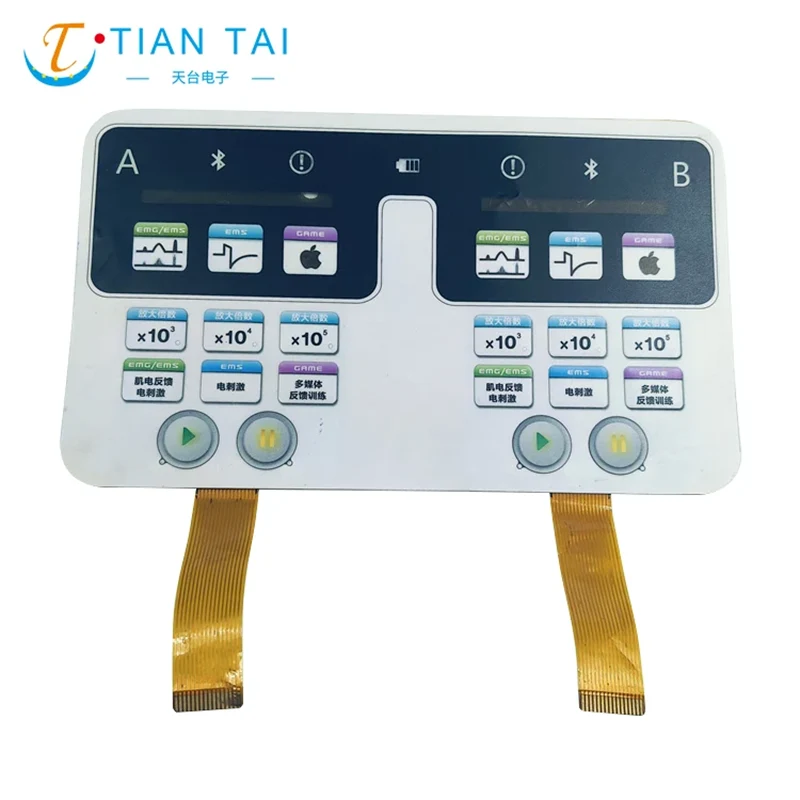
Key Parameter Comparison:
| Feature | FPC Membrane Switch | Rigid PCB Switch |
|---|---|---|
| Substrate | Flexible Polyimide/Polyester | Rigid FR4 Fiberglass |
| Profile | Ultra-thin (<1mm typical) and lightweight | Thicker and heavier |
| Flexibility | Highly flexible, can be bent during use | No flexibility; solid structure |
| Tactile Feedback | Often uses polyester or metal domes | Uses mechanical keys or PCB-mounted domes |
| Sealing & IP Rating | Easily sealed; excellent for dust/water resistance | Harder to fully seal; gaps around components |
| Customization | Excellent for complex shapes, 3D curves | Limited to flat or simple bent shapes |
| Durability | Excellent resistance to vibration and shock | Can be susceptible to solder joint fatigue |
| Cost for Complex Shapes | Generally more cost-effective | Can be higher due to assembly complexity |
Primary Advantages of TianTai Electronics FPC Membrane Switches:
-
Space-Saving Design: Ideal for compact, modern devices.
-
Superior Environmental Sealing: Perfect for medical, industrial, and outdoor equipment.
-
Lightweight and Conformable: Can be designed to fit curved surfaces.
-
Reliable Performance: Proven longevity exceeding 1 million actuations.
FPC Membrane Switch FAQ
Q: How durable is an FPC Membrane Switch?
A: Extremely durable. The flexible construction resists vibration and physical shock. With proper design and materials from TianTai Electronics, these switches routinely achieve lifespans of over 1 million cycles. The graphic overlay also protects against moisture, chemicals, and daily wear.
Q: Can FPC Membrane Switches support backlighting?
A: Yes, absolutely. TianTai Electronics integrates various backlighting options, including LED indicators, fiber optic panels (EL), and even RGB LEDs. The flexible nature of the FPC allows for efficient and even light distribution beneath symbols and keys.
Q: Are FPC switches suitable for high-temperature applications?
A: They can be. By using high-temperature polyimide substrates and stable adhesives, TianTai Electronics manufactures FPC Membrane Switches that reliably operate in environments exceeding 100°C, making them suitable for automotive and industrial controls.
Understanding these differences ensures your product has the right interface for its lifecycle and environment. For innovative, reliable, and tailor-made switch solutions, the expert team at TianTai Electronics is your ideal partner.
Ready to integrate the perfect switch into your next design? Contact us today for a free consultation and prototype quote.