

What Is the Difference Between Explosion Push Button Start Stop and Standard Emergency Stop Switches
2026-07-24
In industrial environments, selecting the right control device can mean the difference between routine operation and catastrophic failure. While both the Explosion Push Button Start Stop and the standard emergency stop switch serve critical functions, they are engineered for entirely different purposes, environments, and risk profiles. At YXFB, we have spent over a decade manufacturing hazardous-area control components, and we consistently see confusion between these two device classes. This blog clarifies their differences, applications, and selection criteria so you can make an informed, safety-compliant decision.
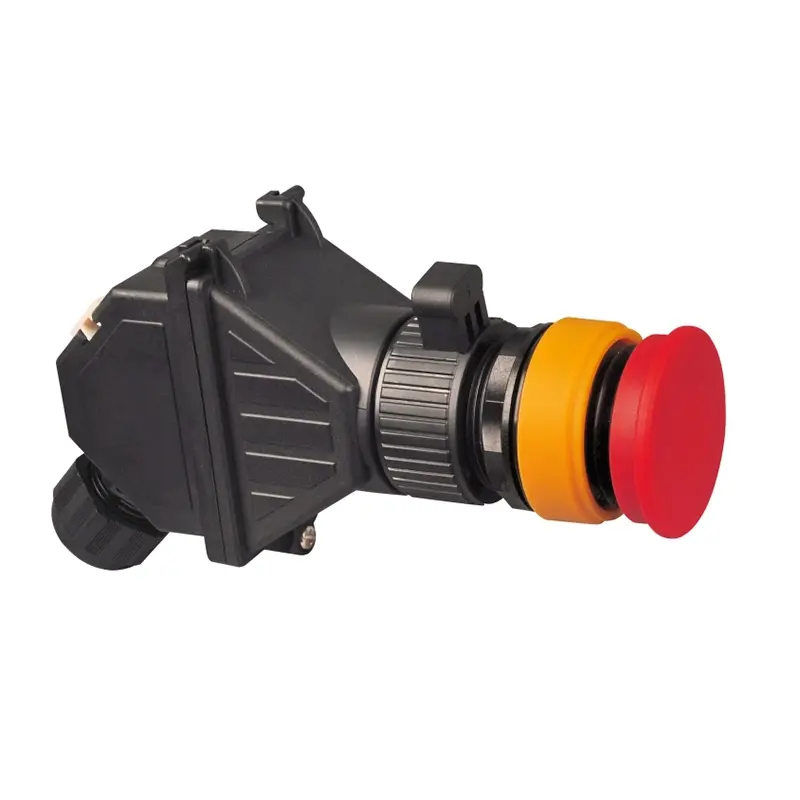
Core Design Philosophy: Protection vs. Function
The fundamental distinction lies in their primary objectives. A standard emergency stop switch is designed to interrupt power immediately during a fault condition—its sole purpose is to halt machinery regardless of the surrounding atmosphere. By contrast, an Explosion Push Button Start Stop is designed to prevent ignition of surrounding flammable gases, vapors, or dusts while performing normal start/stop and emergency functions. The explosion-proof variant does not just stop a machine; it contains any internal spark or thermal event within an enclosure that cools escaping gases below the auto-ignition temperature of the external atmosphere.
Key Differences at a Glance
| Feature | Explosion Push Button Start Stop (YXFB Series) | Standard Emergency Stop Switch |
|---|---|---|
| Primary Purpose | Start/stop control + emergency stop in hazardous areas | Emergency stop only in non-hazardous or protected areas |
| Enclosure Type | Flameproof / Ex d or Increased Safety / Ex e | General-purpose IP54–IP66 (no flame path) |
| Certification | ATEX, IECEx, Class I/II Div 1 & 2, NEC 500 | UL 508, CSA, or general industrial approval |
| Operating Temperature | -40°C to +85°C (with T-rating) | -20°C to +70°C (no T-rating) |
| Actuator Mechanism | Sealed, spring-return with flame-arresting gaps | Direct mechanical or spring-return |
| Installation Location | Zone 0, 1, 2 (gas) / Zone 20, 21, 22 (dust) | Indoor control panels, clean manufacturing floors |
| Cost Factor | 3–8× higher due to certified materials and testing | Standard industrial pricing |
| Maintenance Intervals | Annual certified inspection + seal replacement | Visual check or function test only |
Why Certification Matters
A standard emergency stop switch carries no guarantee against internal arcing igniting a surrounding methane cloud or grain dust suspension. The Explosion Push Button Start Stop from YXFB undergoes rigorous testing—including internal ignition pressure tests and gap-flame transmission tests—to earn its Ex d or Ex e marking. For instance, our YXFB-Ex series maintains a flame path gap of less than 0.15 mm, ensuring that any hot gas cools before reaching the external environment. This level of engineering is absent in standard switches.
3 Critical FAQs About the Explosion Push Button Start Stop
FAQ 1: Can I replace a standard emergency stop switch with an Explosion Push Button Start Stop in a non-hazardous area?
Answer: Yes, but it is economically inefficient. An Explosion Push Button Start Stop is over-engineered for clean environments—its heavier enclosure, certified terminals, and flameproof joints add unnecessary cost and installation complexity. However, if your facility plans to reclassify an area in the future (e.g., switching to hydrogen storage), installing a YXFB explosion-proof unit now can future-proof your panel. For standard workshops without flammable materials, a certified emergency stop switch remains the practical and cost-effective choice.
FAQ 2: How do I verify if my existing Explosion Push Button Start Stop has lost its explosion-proof integrity?
Answer: Visual inspection alone is insufficient. The Explosion Push Button Start Stop relies on precision-ground flame paths and O-ring seals. At YXFB, we recommend a three-step verification: (1) Measure the gap between the actuator shaft and bushing—if it exceeds 0.2 mm, the flame path is compromised. (2) Perform a pressure test per IEC 60079-1 using a calibrated manometer; any pressure drop over 30 seconds indicates seal failure. (3) Inspect the cable entry glands for cracking or corrosion; certified Ex d glands must be torqued to exact NM values. Annual re-certification by an authorised body is mandatory for Class I Div 1 installations.
FAQ 3: Does an Explosion Push Button Start Stop offer the same response time as a standard emergency stop?
Answer: Response time is nearly identical—both typically break the control circuit within 20–50 milliseconds. However, the Explosion Push Button Start Stop includes additional mechanical interlocks (e.g., double-break contacts, forced-guided relays) that delay contact reopening by 5–10 ms to prevent arcing. This micro-delay is intentional: it allows the arc to extinguish inside the sealed chamber before the contacts fully separate, reducing carbon build-up. Standard switches arc openly, which is acceptable in clean air but dangerous in explosive atmospheres. For emergency stop applications requiring <10 ms total response, consult YXFB for our high-speed Ex e variant with solid-state outputs.
Practical Selection Matrix
| Application Scenario | Recommended Device | Rationale |
|---|---|---|
| Offshore oil platform control station | Explosion Push Button Start Stop (YXFB Ex d) | Zone 1 gas + salt spray corrosion |
| Grain elevator motor start/stop | Explosion Push Button Start Stop (YXFB Ex tD) | Zone 21 dust, requires dust-tight enclosure |
| CNC machine shop emergency stop | Standard emergency stop switch | No explosive atmosphere, lower cost |
| Hydrogen refuelling station panel | Explosion Push Button Start Stop (YXFB Ex e with T4) | Hydrogen requires T4 temperature class |
| Indoor HVAC control panel | Standard emergency stop switch | Indoor, dry, non-classified area |
Long-Term Reliability and Total Cost of Ownership
While the upfront cost of an Explosion Push Button Start Stop is significantly higher, its total lifecycle cost often proves lower in hazardous settings. Standard switches in such environments fail prematurely due to contact corrosion, moisture ingress, and thermal stress—leading to unplanned downtime, which can exceed $50,000 per hour in petrochemical plants. YXFB units feature silver-nickel alloy contacts, double-sealed shafts, and UV-stabilised polyamide actuators, delivering a mechanical life exceeding 1 million operations at full rated current. Moreover, our explosion-proof line carries a 5-year warranty against flame-path degradation—a guarantee no standard switch manufacturer offers.
Final Verdict
Choose a standard emergency stop switch only when your installation area is permanently free of flammable gases, dusts, or vapours. For every other scenario—especially where methane, hydrogen, propane, or combustible metal dusts are present—the Explosion Push Button Start Stop is not optional; it is a regulatory and moral imperative. YXFB provides full engineering support, from ATEX/IECEx selection to panel integration and site commissioning.
Ready to specify the right Explosion Push Button Start Stop for your hazardous area? Contact YXFB today for a free compliance checklist and customised quotation. Our application engineers respond within 4 business hours with full CAD drawings, certification copies, and pricing tailored to your project volume.