

What is the Difference Between Ceramic and Mica Soldering Heating Elements in Terms of Heat Distribution
2026-04-24
When selecting a Soldering Heating Element for precision work, heat distribution is the most critical factor affecting joint quality and operational safety. GREENWAY, a specialist in industrial soldering solutions, provides both ceramic and mica-based systems. Understanding their thermal behavior helps professionals avoid cold solder joints and component damage.
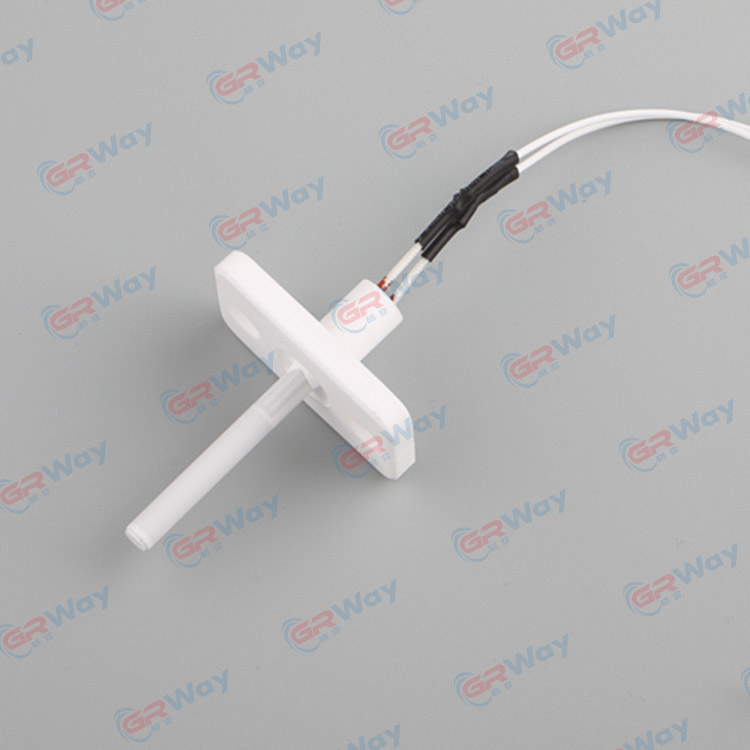
Heat Distribution Comparison: Ceramic vs. Mica
| Feature | Ceramic Soldering Heating Element | Mica Soldering Heating Element |
|---|---|---|
| Heat Uniformity | Excellent axial and radial uniformity due to monolithic structure | Moderate; hotspots common near wrapped resistance wire |
| Warm-Up Time | 15–25 seconds to 350°C (very fast) | 30–45 seconds to 350°C (slower) |
| Temperature Stability | ±1–2°C under load using embedded thermocouple | ±5–8°C; prone to drift with wear |
| Thermal Mass | Low – rapid response, ideal for fine-pitch SMD work | High – retains heat longer, suitable for heavy joints |
| Risk of Local Overheating | Very low – ceramic is a natural heat spreader | High – mica sheet erosion causes uneven contact |
Why Distribution Matters in Practice
A ceramic Soldering Heating Element transfers heat through the entire core simultaneously. This eliminates cold zones near the tip base, allowing consistent reflow on multilayer PCBs. In contrast, a mica Soldering Heating Element relies on a wound nichrome ribbon around a flexible sheet. The ribbon’s pitch determines hotspot positions – uneven winding creates 30–50°C variations across the tip.
For high-duty-cycle rework stations, GREENWAY recommends ceramic technology. The uniform heat distribution reduces flux spatter and prolongs tip life by minimizing thermal shock. Mica elements remain cost-effective for basic through-hole soldering where ±8°C fluctuation is acceptable.
Soldering Heating Element FAQ – Common Professional Questions
Q1: Can I replace a mica Soldering Heating Element with a ceramic one in the same soldering station?
A: Direct replacement is rarely possible without modifications. Ceramic elements require different driving electronics – typically a zero-crossing SSR and PID controller with faster sampling (≥10Hz). Mica elements often use simple triac phase control. Moreover, ceramic cores have lower electrical resistance (6–12Ω) versus mica (30–60Ω). Forcing a ceramic element into a mica-designed station will cause overheating or controller damage. GREENWAY provides compatibility charts for model-specific upgrades.
Q2: Does a cracked ceramic Soldering Heating Element still distribute heat safely?
A: No. A crack disrupts the internal heat path, creating severe hotspots (up to 600°C locally) while the tip measures ≤200°C. This hidden thermal imbalance can melt the handle housing and cause electrical leakage to the tip – a direct ESD safety risk. Stop using any cracked element immediately. Mica elements with torn sheets behave similarly but often arc visibly. Always inspect your Soldering Heating Element before daily operation.
Q3: Which Soldering Heating Element provides better heat distribution for lead-free soldering (Sn96.5/Ag3.0/Cu0.5)?
A: Ceramic is strongly preferred. Lead-free alloys require sustained tip temperatures of 370–400°C with very tight stability (±3°C) to avoid intermetallic growth or pad lifting. A mica Soldering Heating Element typically overshoots by 15–20°C on recovery, degrading alloy wetting. In controlled tests by GREENWAY, ceramic elements maintained ≤2°C deviation during 50 joints/hour, while mica units exceeded ±8°C after 30 joints. For lead-free production, choose ceramic.
Conclusion for Engineers and Hobbyists
Heat distribution defines soldering quality. Ceramic Soldering Heating Element technology from GREENWAY delivers superior uniformity, faster response, and finer temperature control – essential for modern electronics. Mica remains economical for legacy or low-precision tasks.
Contact us for a free thermal performance consultation or to request sample ceramic and mica heating elements. GREENWAY provides datasheets, retrofit guides, and OEM support. Reach our engineering team today via the contact form on our official website.