

What Is the Difference Between a Bently Nevada PLC System and a Conventional Industrial PLC?
2026-11-20
A Bently Nevada PLC system is a term some buyers use when searching for industrial machinery monitoring and protection equipment, but the Bently Nevada 3500 platform is not a conventional programmable logic controller. It is a dedicated machinery protection and condition monitoring system designed to measure vibration, shaft position, speed, temperature, and selected process variables on critical rotating equipment. Its primary job is to recognise abnormal machine conditions, generate alarms, and provide configured relay outputs for protective action.
A conventional industrial PLC, by comparison, is a general-purpose controller that executes a user-developed program to automate machines, production lines, utilities, and process sequences. It reads digital and analogue inputs, evaluates logic, and controls outputs such as motors, valves, pumps, and actuators. The distinction matters when specifying equipment for a turbine train, compressor package, pump station, or manufacturing plant. The phrase Bently Nevada PLC is often used loosely, so technical specifications should name the actual 3500 system and required modules.
The clearest difference is the engineering purpose. A machinery protection system is built around the behaviour and failure modes of rotating equipment. A conventional PLC is built around the sequence and logic of an industrial process. Both may receive field signals, process information, communicate with other systems, and provide outputs, but their measurement priorities and application requirements are different.
On a large turbine or centrifugal compressor, shaft vibration and axial position can change rapidly when a mechanical problem develops. The protection system continuously acquires signals from suitable proximity probes, accelerometers, velocity sensors, Keyphasor references, and other transducers. It conditions those signals, calculates the configured measurement values, and compares them with alarm setpoints. When a configured Danger condition occurs, the system can drive an engineered relay logic path to initiate a machine trip or another protective response.
A conventional PLC generally handles a wider range of plant automation tasks. A PLC program may start a pump when a tank level falls, stop a conveyor when a guard switch opens, sequence a compressor's auxiliary equipment, or regulate a process valve using analogue feedback. The controller is selected according to the number and type of I/O points, processor performance, communications, programming environment, and required control functions. Its application is not normally centred on specialised shaft vibration measurement or machinery protection algorithms.
For procurement teams, the phrase Bently Nevada PLC may appear in search enquiries or spare-parts lists. It should be treated as a search term rather than a precise product classification. When the requirement concerns the 3500 rack, the enquiry should identify the monitor, I/O, relay, power supply, or interface module needed. When the requirement concerns sequence control, motor logic, or general-purpose automation, the specification should identify the relevant PLC platform and its I/O and communication requirements.
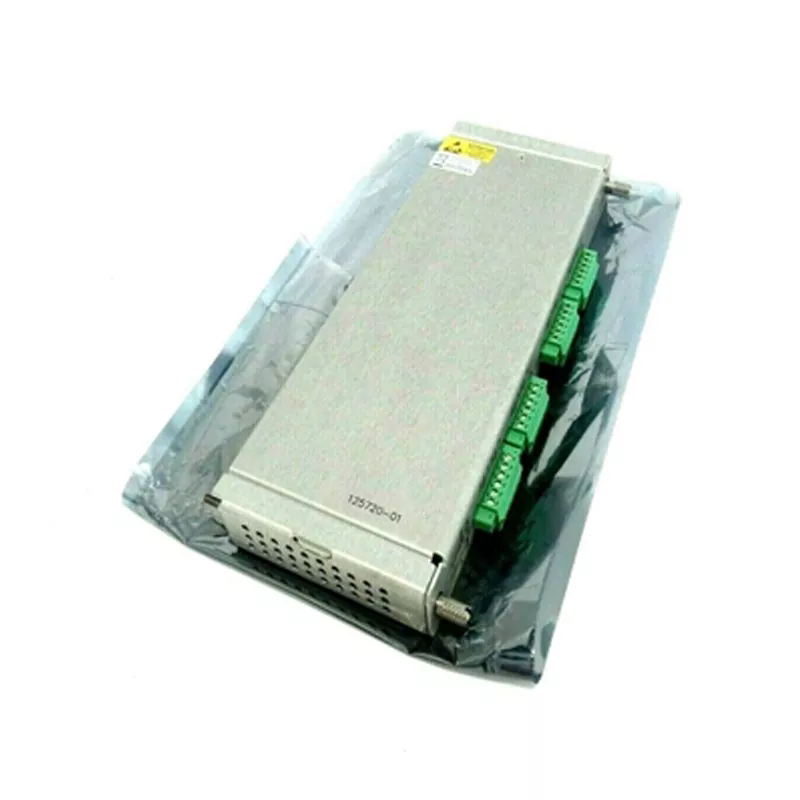
How Do Their Hardware, Measurements, and Technical Parameters Compare?
The 3500 architecture is modular and rack-based. Our technical review distinguishes the protection rack from the plant controller. A standard system is built around a 3500/05 instrument rack, one or two 3500/15 power supplies, a 3500/22M Transient Data Interface, one or more monitor modules, and the required I/O modules. Relay, Keyphasor, communication gateway, display, and hazardous-area interface options are added according to the project. This arrangement is fundamentally different from a typical PLC installation, where a CPU, power supply, local or remote I/O, communication modules, and application-specific software form the controller architecture.
| Comparison item | Bently Nevada 3500 machinery protection platform | Conventional industrial PLC |
| Primary purpose | Continuous machine condition monitoring and protection | General machine, equipment, and process automation |
| Core inputs | Proximity probe, seismic, speed, temperature, and selected process signals | Digital and analogue signals from switches, transmitters, encoders, and instruments |
| Typical processing | Vibration, shaft position, speed, temperature, alarm setpoints, and channel status | User-programmed logic, sequencing, interlocks, arithmetic, PID, and equipment control |
| Typical outputs | Configured alarm status and relay outputs for protection interfaces | Digital and analogue outputs to drives, valves, contactors, and actuators |
| System structure | 3500/05 rack with dedicated monitor and I/O modules | CPU with local or distributed I/O and communication modules |
| Configuration approach | Rack configuration software and module-specific channel settings | PLC engineering software and application program |
| Typical plant role | Machine protection and condition monitoring layer | Basic process control, equipment automation, and sequence control |
Several 3500 modules illustrate the measurement specialisation. The 3500/40M Proximitor Monitor provides four channels for supported proximity measurements such as radial vibration, thrust position, eccentricity, and selected differential expansion functions. The 3500/42M Proximitor/Seismic Monitor also provides four programmable channels and supports a broader set of measurement types, including radial vibration, acceleration, velocity, shaft absolute, and other configured functions. The available measurement depends on channel pairing, sensor compatibility, module revision, and configuration.
Position monitoring is handled by modules such as the 3500/45, which supports axial position, differential expansion, case expansion, and valve position applications. Speed and phase reference functions can use the 3500/50M Tachometer and 3500/25 Keyphasor modules. The 3500/50M has two channels and can monitor speed, rotor acceleration, zero speed, and reverse rotation. It is important to note that the 3500/50M is not designed to provide overspeed protection; a dedicated overspeed protection solution is required when that function is part of the safety design.
| 3500 component | Published configuration detail | Role in the system |
| 3500/05 | Standard instrument rack; 14 module slots remain after reserved power supply and TDI positions | Houses the rack modules |
| 3500/15 | One or two AC or DC power supply modules | Supplies rack power; dual supplies can provide redundancy |
| 3500/22M | Required Transient Data Interface | Provides rack configuration and System 1 interface functions |
| 3500/32M | Four relay channels | Configurable relay outputs for alarm and protection logic |
| 3500/33 | Sixteen relay channels | Higher-density relay output arrangement |
| 3500/92 | Communication gateway with supported Modbus interfaces | Exchanges selected rack data with plant systems |
Temperature and process measurements add operating context. The 3500/60 and 3500/61 provide six-channel temperature monitoring, while the 3500/65 provides a 16-channel temperature option. The 3500/62 Process Variable Monitor provides six channels for supported proportional inputs, including 4 to 20 mA current signals and voltage signals. These can represent variables such as pressure, flow, level, or motor current, allowing engineers to compare process conditions with machine behaviour.
Our procurement review therefore starts with the actual signal list and intended function, rather than assuming that a rack module can replace a PLC card. Yueyang Tongtu E-commerce Co., Ltd. assists buyers with identifying the requested monitoring and protection components. We check the full part number, hardware revision, matching I/O module, termination arrangement, transducer type, power requirements, and communication interface. For a PLC, our review focuses on CPU and I/O compatibility, firmware, network architecture, program requirements, and the installed control platform. This prevents a technically incorrect substitution based only on physical appearance or a broad product description.
When Should Plants Use Both Systems Together?
Many industrial facilities need both dedicated machinery protection and general-purpose automation. The two systems are complementary when their responsibilities are separated clearly. Yueyang Tongtu E-commerce Co., Ltd. supports industrial procurement enquiries for relevant monitoring hardware and automation spares. The protection platform monitors the condition of critical machinery and provides configured alarm or trip signals. The PLC manages the wider operating sequence, including start permissives, auxiliary equipment, process interlocks, and operator commands. A DCS or SCADA layer may provide plant-wide supervision, alarm presentation, historian functions, and operational reporting.
Consider a centrifugal compressor package. The machinery protection rack may monitor radial shaft vibration, thrust position, bearing temperature, and speed. If a configured Danger condition occurs, a relay output can be wired into the approved shutdown circuit. The PLC may independently manage the lube oil pump sequence, seal gas permissives, cooling water valves, anti-surge control interface, and package start-up sequence. It can also receive selected status information from the protection rack for operator display and event logging.
The interface between the systems needs careful design. Our integration checklist identifies hardwired trip paths separately from supervisory data links. A communication gateway such as the 3500/92 can exchange selected monitoring values and status information using supported Modbus communication. Hardwired relay contacts may be used where the protection design requires a direct status or trip interface. The choice depends on the required response time, availability, independence, safety assessment, and plant standards. Our design review documents the selected interface. Communication data is useful for visibility, but it should not automatically be treated as an equivalent substitute for a properly engineered protective trip path.
There are also cases where a PLC is sufficient on its own. A small water transfer skid, packaging conveyor, or basic utility pump system may need ordinary level, pressure, temperature, and motor interlocks without a dedicated machinery protection rack. Conversely, a high-energy turbine or compressor may require specialised monitoring and protection even when a PLC already controls the package. The selection should follow the machine criticality, failure consequences, OEM recommendations, applicable standards, and site risk assessment.
For project engineers, the practical question is not which product is universally better. It is which function must be performed, what happens if that function fails, and what degree of independence is required. Our engineering discussions distinguish machine measurements from process control signals and identify where the protection relay interface should connect. Our factory and supply coordination process can then focus on the requested hardware, while the plant's system integrator remains responsible for application logic, trip design, commissioning, and validation.
What Should Buyers Verify Before Selecting or Replacing a System?
Correct identification is particularly important for installed machinery protection racks because a module that looks similar may have a different measurement function, I/O arrangement, or revision. Before requesting a quotation, collect the complete model and part number from the module label. Record the rack model, slot position, associated rear I/O module, firmware or hardware revision where available, and the function performed by the existing channel.
For a 3500 replacement, confirm whether the requirement is a monitor module, power supply, TDI, relay module, Keyphasor module, gateway, or I/O component. Check whether the existing transducers are compatible and whether the configuration file and channel settings are available. If the system is part of a shutdown function, the replacement procedure must include the site's approved bypass, testing, and return-to-service process. A spare module should not be installed into a live protection system without following the plant's maintenance and safety procedures.
For a conventional PLC replacement, confirm the CPU family, I/O base, communication modules, firmware compatibility, program backup, network settings, and any third-party device interfaces. A change in PLC model can affect scan behaviour, data types, communications, and the operation of connected equipment, so our review includes the installed firmware and network dependencies. The engineering team should assess the migration rather than treating the replacement as a simple like-for-like hardware exchange.
Ask for applicable manufacturer datasheets, module identification, condition or inspection records where available, and traceability information. Confirm the supplier's warranty and return terms, and make sure the quoted item matches the requested part number and revision. Our team uses the supplied nameplate details and application information to review the requested model before quotation. This is particularly important when the item is intended for an operating protection rack.
Conclusion
The key difference is functional: a dedicated machinery protection platform monitors the mechanical condition of critical assets and provides configured alarm and protective outputs, while a conventional industrial PLC executes application logic to automate equipment and process operations. Our selection process starts with that functional distinction. The 3500 system uses specialised monitor modules, transducers, a rack, power supplies, a TDI, and optional relay and communication modules. A PLC uses a CPU, I/O, software, and networks selected for the control task. In many plants, the strongest design uses both, with clearly defined interfaces and independent protection responsibilities.
When specifying Bently Nevada PLC equipment, identify the required machine measurements, module part numbers, I/O compatibility, relay requirements, and communication needs before placing an order. For conventional PLC projects, define the controller family, I/O list, firmware, network, and application requirements. Contact Yueyang Tongtu E-commerce Co., Ltd. with your part number, rack details, or project requirements to discuss suitable products and request a quotation. Our team can help review the model information so your purchasing decision is based on the actual application rather than an assumed product category.
Frequently Asked Questions
Can a Bently Nevada 3500 system replace a conventional PLC?
No. A 3500 rack is designed for machinery condition monitoring and protection, not for general-purpose sequence control. It can process specialised machine measurements and provide configured relay outputs, but it does not replace the broad programming, I/O handling, and equipment-control functions expected from a conventional PLC. A plant that needs both machine protection and package automation will normally define separate but coordinated responsibilities for the two systems.
Can a conventional PLC receive vibration and trip signals from a Bently Nevada system?
Yes. Selected status and measurement data can be transferred through supported communication gateways, and relay contacts can provide hardwired alarm or trip interfaces where required by the design. The appropriate method depends on the required response, system architecture, and safety assessment. A PLC may display or log protection status, but the plant should not rely on ordinary communication alone as a substitute for a properly engineered machinery shutdown circuit.
Which information is needed to identify a replacement 3500 module?
Provide the full part number, hardware revision, rack model, slot location, matching I/O module number, and the measurement or output function required. For monitor modules, include the sensor type and channel configuration; for relay or gateway modules, include the required output logic or communication protocol. A clear photograph of the module label and the existing rack configuration can help the supplier verify the requested component before quotation.