

What Is the Best 24V to 12V 5A DC DC Converter for Industrial Power Systems
2026-03-30
Selecting the ideal 24V to 12V 5A Converter for industrial power systems requires a careful balance of efficiency, reliability, thermal performance, and long-term durability. Industrial environments demand converters that can withstand voltage fluctuations, temperature extremes, and continuous operation without failure. Kosun has established itself as a trusted manufacturer in this space, offering rugged DC-DC conversion solutions specifically engineered for industrial applications.
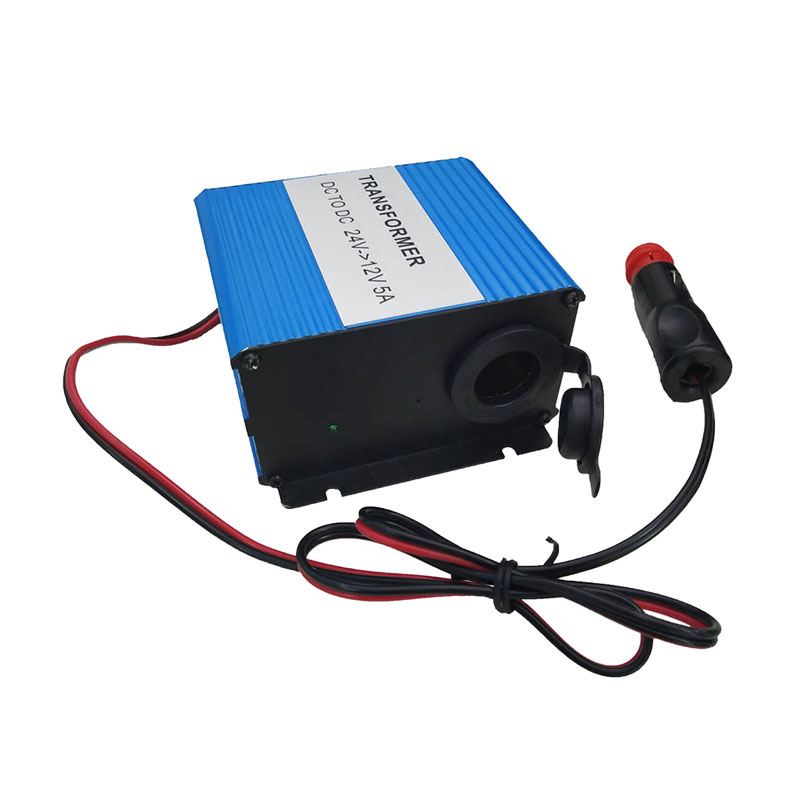
Key Selection Criteria for Industrial Converters
When evaluating a 24V to 12V 5A Converter, industrial engineers must consider several critical parameters. The table below outlines the essential specifications to examine before making a procurement decision.
| Parameter | Industrial Requirement | Why It Matters |
|---|---|---|
| Input Voltage Range | 18V to 36V (or wider) | Accommodates voltage dips and surges in industrial 24V systems |
| Efficiency | ≥ 92% at full load | Reduces heat generation and improves system longevity |
| Operating Temperature | -40°C to +85°C | Ensures reliable performance in harsh environments |
| Protection Features | Overload, short circuit, overvoltage, thermal shutdown | Prevents damage to both converter and downstream equipment |
| Isolation Rating | 1500V DC or higher | Protects sensitive control circuits from ground loops and transients |
| MTBF | > 500,000 hours | Minimizes downtime and maintenance costs |
Why Industrial Applications Demand Higher Reliability
Unlike consumer-grade power modules, industrial systems often operate 24/7 in environments with electromagnetic interference, vibration, and unstable mains power. A 24V to 12V 5A Converter used in factory automation, PLC systems, or telecommunications infrastructure must maintain stable output even when input voltage fluctuates between 18V and 36V. Kosun converters incorporate advanced synchronous rectification and robust EMI filtering to meet these stringent demands.
The mechanical construction is equally important. Industrial units should feature aluminum housings for effective heat dissipation, screw terminal connections for secure wiring, and conformal coating options for moisture-prone environments. These design choices directly impact the converter’s lifespan and the overall reliability of the power system.
Comparative Analysis of Converter Topologies
Different circuit topologies offer distinct advantages for industrial applications. The following comparison helps clarify which approach suits various scenarios.
| Topology | Efficiency | Isolation | Typical Application |
|---|---|---|---|
| Synchronous Buck | 93-96% | Non-isolated | Space-constrained control panels |
| Forward Converter | 88-92% | Isolated | Systems requiring input-output separation |
| Flyback | 85-90% | Isolated | Low-power auxiliary supplies |
| Full-Bridge | 92-95% | Isolated | High-reliability industrial power distribution |
For most industrial power systems requiring a 24V to 12V 5A Converter, a synchronous buck topology delivers the best combination of efficiency and compact size when isolation is not mandatory. Where galvanic isolation is required, Kosun offers forward converter designs that maintain high efficiency while providing safety isolation for sensitive control circuits.
24V To 12V 5A Converter FAQ
What protection features should an industrial 24V to 12V 5A converter include to prevent system failures?
A robust industrial converter must integrate multiple layers of protection. Overcurrent protection (OCP) ensures the output current does not exceed 5A by entering hiccup mode or current limiting, preventing damage to both the converter and connected loads. Short circuit protection (SCP) immediately shuts down the output when a direct short is detected and automatically resumes operation once the fault is removed. Overvoltage protection (OVP) clamps the output voltage if the feedback loop fails, safeguarding sensitive 12V devices from overvoltage damage. Thermal shutdown protection monitors internal component temperatures and reduces output or shuts down entirely when temperatures exceed safe thresholds. Additionally, input reverse polarity protection prevents installation errors from destroying the unit. Kosun integrates all these features into every industrial-grade converter, ensuring that the power system remains protected even under fault conditions.
How do I calculate the input current requirement for a 24V to 12V 5A converter in a 24V industrial system?
To determine the input current, you must account for both the output power and the converter’s efficiency. The output power is calculated as 12V multiplied by 5A, which equals 60 watts. Assuming an efficiency of 92%, the input power equals 60 watts divided by 0.92, yielding approximately 65.2 watts. The input current is then calculated by dividing the input power by the nominal input voltage: 65.2 watts divided by 24V equals approximately 2.72 amps. However, industrial engineers must consider the minimum input voltage scenario, as input current rises when voltage drops. At 20V input, the same 65.2 watts requires 3.26 amps. Therefore, the upstream power supply and wiring must be sized to handle at least 4 amps to provide adequate margin for startup surges and low-voltage conditions. Kosun provides detailed input current specifications in product datasheets to assist with accurate system sizing.
Can a 24V to 12V 5A converter be used in parallel to achieve higher output current for industrial loads?
Paralleling converters is technically possible but requires careful implementation to avoid reliability issues. Standard non-isolated converters cannot be directly paralleled because slight differences in output voltage cause one unit to supply most or all of the current, leading to thermal overload and premature failure. For reliable parallel operation, converters must feature active current sharing circuitry that balances load distribution between units. Some industrial-grade converters, including select models from Kosun, are specifically designed for parallel operation with built-in droop sharing or active current share pins. Alternatively, engineers can use a single higher-current converter rated for 10A or 15A to achieve simpler and more reliable power distribution. If paralleling is necessary, always verify that the converter datasheet explicitly supports parallel operation and follow the manufacturer’s wiring and derating recommendations.
Installation Best Practices
Proper installation significantly affects the long-term performance of any 24V to 12V 5A Converter. Mount the unit on a metal surface to utilize the chassis as a heat sink. Maintain at least 10mm of clearance around all sides for airflow. Use appropriately gauged wire—18 AWG or thicker for the input and output connections—to minimize voltage drop. If the converter lacks built-in input fusing, install a fast-acting 5A fuse on the input side to protect against upstream faults.
Why Choose Kosun for Industrial Power Conversion
Kosun specializes in DC-DC converters designed for the rigorous demands of industrial power systems. Every 24V to 12V 5A Converter from Kosun undergoes full-load burn-in testing and complies with international safety standards including CE, RoHS, and FCC. With MTBF ratings exceeding 500,000 hours and comprehensive protection circuitry, these converters deliver the uptime industrial operations require.
Contact Us
Selecting the right power conversion solution can determine the success of your industrial automation project. Contact Kosun today to discuss your specific voltage conversion requirements, request engineering samples, or receive application-specific recommendations from our technical support team.