

Article Summary:A Multi Functional Universal K8 Test Fixture for Antminer, Whatsminer and Innosil is designed to simplify the testing, diagnosis and maintenance of cryptocurrency mining hardware at the component and board level. Instead of relying on improvised wiring, repeated manual probing and separate test arrangements, a dedicated K8 fixture provides a more organized interface between the mining control board and testing equipment. This article explains its working concept, practical applications, key features, testing workflow, compatibility considerations and purchasing points for repair centers, mining farms, electronics technicians and equipment distributors.
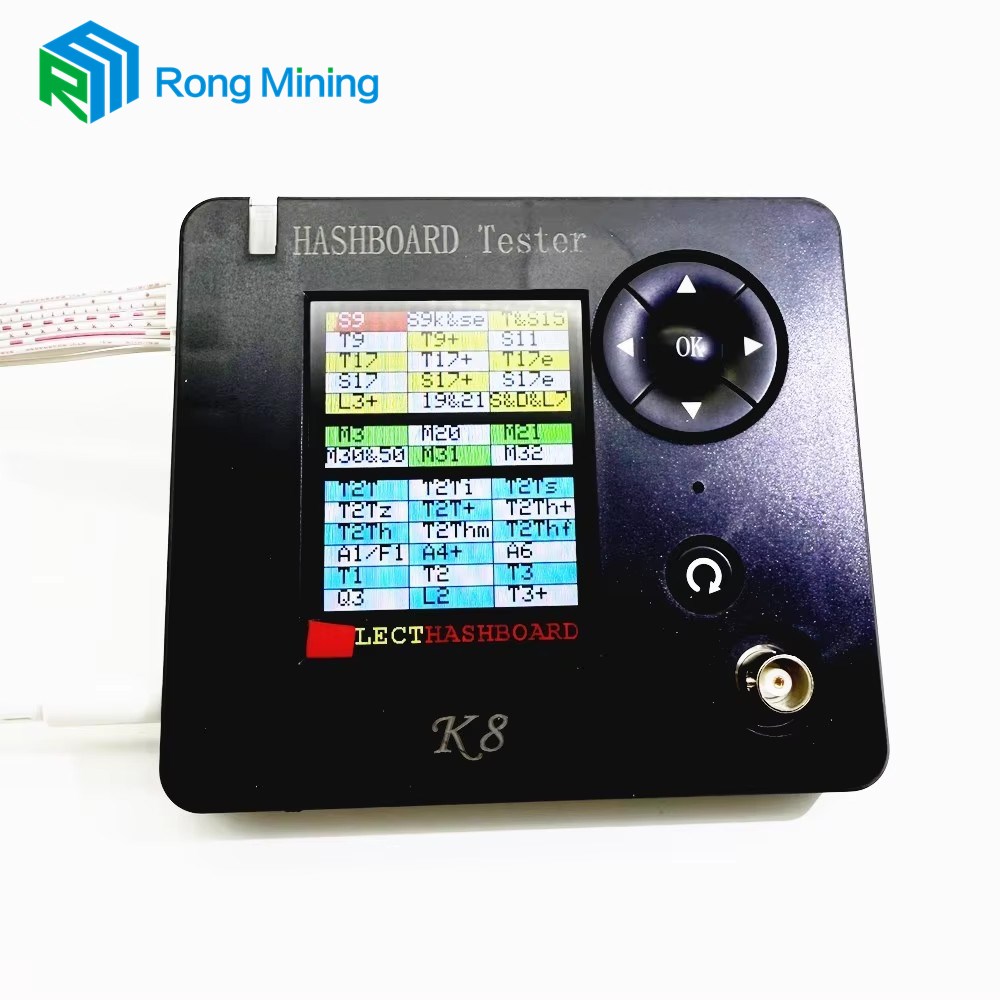
What Is a Universal K8 Test Fixture?
A universal K8 test fixture is a specialized testing platform developed to make the inspection and troubleshooting of mining machine control boards more convenient. In repair environments, technicians often need to connect a board to power supplies, diagnostic instruments, signal interfaces and other peripheral equipment before they can determine whether a suspected fault comes from the board itself or from another part of the miner.
The K8 fixture provides a structured testing interface that can reduce unnecessary temporary connections. It is particularly relevant to repair and maintenance work involving Antminer, Whatsminer and Innosil platforms, where technicians may handle multiple board versions and different generations of mining equipment.
More Than a Board Holder
A professional test fixture should be viewed as an interface between the device under test and the technician's diagnostic equipment. Mechanical positioning, electrical access, connector arrangement and testing convenience all influence the usefulness of the fixture.
For repair workshops processing a high volume of mining boards, this repeatability can be especially important. A standardized fixture reduces the need to rebuild a testing setup every time a new board enters the workbench.
Why Is a Dedicated Test Fixture Needed?
Mining machine repair can become inefficient when every diagnosis depends on loose cables and manual connections. A technician may spend considerable time identifying connectors, checking wiring and preparing the board before the actual diagnostic work begins. Poorly organized connections can also make troubleshooting more difficult because the technician has to distinguish between a board fault and a testing setup problem.
A dedicated interface can reduce repeated manual wiring during routine inspection and repair.
Using the same testing arrangement makes repeated board checks easier to compare.
Organized connections help technicians maintain a clearer and more manageable testing area.
Reducing Unnecessary Diagnostic Variables
Troubleshooting becomes more difficult when the testing environment changes from one board to another. A universal fixture helps establish a more consistent baseline. When a board shows an abnormal result, technicians can focus more directly on the board, components, power conditions and communication signals rather than repeatedly rebuilding the connection arrangement.
This is particularly useful for repair businesses that receive boards from mining farms, distributors or independent customers. Consistent testing procedures can make inspection records easier to maintain and support more systematic repair decisions.
How Does It Support Different Mining Platforms?
One of the main reasons buyers look for a Multi Functional Universal K8 Test Fixture for Antminer Whatsminer Innosil is the need to handle more than one mining hardware ecosystem. However, the word “universal” should not be interpreted as unlimited compatibility with every board ever produced.
Actual compatibility depends on the fixture's connector design, interface arrangement, supported board architecture and the specific version of the mining hardware being tested. Buyers should therefore confirm the applicable models and board revisions before placing an order.
| Platform Type | Typical Testing Requirement | What Buyers Should Confirm |
|---|---|---|
| Antminer | Control-board or related mining-board diagnosis | Supported models, board revision and interface configuration |
| Whatsminer | Inspection and troubleshooting during maintenance | Compatible board generation and connector arrangement |
| Innosil | Board testing and repair preparation | Applicable hardware version and fixture interface |
| Mixed Repair Work | Testing different mining hardware on one workbench | Actual supported models and interchangeable interfaces |
For distributors and professional repair centers, requesting a compatibility list from the supplier is an important step. A clear model list can prevent the common problem of purchasing a fixture that looks universal but does not physically match a particular board.
Where Is the K8 Fixture Used?
The fixture is mainly useful wherever mining hardware needs to be inspected, diagnosed, repaired or verified outside its normal operating configuration. Its value becomes more apparent when the same type of testing must be performed repeatedly.
- Mining machine repair centers: supports regular board inspection and troubleshooting.
- Mining farm maintenance teams: helps technicians process failed or unstable hardware more systematically.
- Electronics repair workshops: provides a dedicated interface for mining-board diagnosis.
- Equipment distributors: can be used during incoming inspection, after-sales support and technical service.
- Refurbishment operations: assists with board evaluation before equipment is returned to service.
- Technical laboratories: creates a repeatable platform for controlled diagnostic work.
High-Volume Repair Environments
A single board may be manageable with a manual setup, but the situation changes when technicians need to inspect dozens or hundreds of boards. A fixture becomes a productivity tool because the same basic procedure can be repeated without rebuilding the workbench each time.
For businesses handling mixed mining equipment, a multi-functional configuration can also reduce the number of separate testing accessories required. The actual benefit depends on the supported models and the quality of the fixture's interface design.
How Does a Typical Testing Process Work?
The exact testing procedure depends on the board and the diagnostic equipment being used. A fixture should never be treated as a substitute for the manufacturer's technical documentation or appropriate electrical safety procedures. Nevertheless, the general workflow can be organized into several stages.
- Identify the board. Confirm the mining machine family, board version and relevant interface requirements.
- Inspect the fixture. Check connectors, contact points, cables and mechanical parts for visible damage or contamination.
- Position the board. Secure the board correctly so that connectors and test interfaces align with the fixture.
- Connect diagnostic equipment. Use the appropriate power source, communication interface or measuring instrument according to the testing procedure.
- Perform controlled testing. Follow the applicable technical procedure and monitor electrical and communication conditions.
- Record the results. Document abnormal readings, communication behavior, error conditions and other relevant observations.
- Disconnect safely. Power down and remove the board according to the required procedure before beginning repair work.
What Features Matter in Daily Testing?
Buyers often focus on whether a fixture is compatible with a particular mining platform. Compatibility is important, but daily usability also depends on mechanical design, connector quality and how easily technicians can access the board.
| Feature | Why It Matters | What to Examine |
|---|---|---|
| Multi-model compatibility | Allows one fixture to support more repair tasks | Confirmed model and board list |
| Stable positioning | Helps maintain reliable contact during testing | Board support and mechanical structure |
| Connector accessibility | Makes setup and troubleshooting more convenient | Interface location and working clearance |
| Durable construction | Important for repeated workshop use | Materials, fasteners and overall build quality |
| Clear interface identification | Reduces connection mistakes | Labels, markings and documentation |
| Replaceable accessories | Can simplify long-term maintenance | Availability of cables, connectors and wear parts |
Mechanical Stability Matters
During repeated testing, a fixture may be handled many times each day. A weak structure, poor alignment or loose connection can turn a useful diagnostic platform into another source of uncertainty. Stable positioning is therefore important, especially when technicians need to connect and disconnect boards repeatedly.
Connector Quality Affects Practical Reliability
Interfaces are frequently handled during repair work. Connectors should maintain appropriate contact and should be positioned so technicians can work without excessive force or awkward cable routing. If a supplier offers replacement cables or interface components, that can also simplify long-term maintenance.
What Should Buyers Check Before Ordering?
Purchasing a mining-board test fixture is different from buying a generic electronics accessory. The most important question is whether the fixture actually matches the boards being repaired. Buyers should provide specific information to the supplier instead of relying only on a general product name.
1. Confirm the Exact Hardware Models
Provide the mining machine models, board versions and revision information whenever available. Even within one product family, connector arrangements and board designs can differ.
2. Ask for a Compatibility List
A supplier should be able to clarify which Antminer, Whatsminer and Innosil boards are supported. If compatibility depends on an additional adapter or cable, that should also be confirmed before purchase.
3. Check the Intended Testing Environment
A small repair shop may prioritize flexibility and compact size, while a high-volume service center may place greater emphasis on durability, repeatability and replacement accessories.
4. Consider After-Sales Technical Support
For specialized fixtures, documentation and technical communication can be as useful as the hardware itself. Ask whether the supplier provides connection instructions, compatibility information and assistance when a board version changes.
5. Discuss Bulk Orders and Custom Requirements
Distributors and repair companies purchasing multiple units may have different requirements from individual technicians. Before confirming an order, discuss quantity, packaging, accessories, labeling, connector configurations and possible customization with the supplier.
Common Testing Problems and Practical Solutions
Even a properly designed fixture cannot compensate for an incorrect board, unsuitable power source or damaged cable. When testing results appear abnormal, technicians should separate fixture-related issues from board-related faults.
| Observed Issue | Possible Cause | Recommended Check |
|---|---|---|
| No expected response | Incorrect connection, power issue or board fault | Verify wiring, power conditions and board documentation |
| Intermittent connection | Loose or contaminated interface | Inspect connectors and contact points |
| Wrong interface alignment | Different board revision | Confirm model and board version |
| Unstable test result | Power, connection or environmental variables | Repeat the test under controlled conditions |
| Fixture cannot accommodate board | Unsupported model or mechanical mismatch | Check the supplier's compatibility list |
Keeping a record of successful testing configurations can also help repair teams identify recurring problems. When the same board family is tested repeatedly, standardized procedures make it easier to distinguish normal variation from a genuine fault.
Frequently Asked Questions
It is primarily used to provide a structured testing interface for diagnosing and servicing compatible cryptocurrency mining boards. It can help technicians organize connections and establish a more repeatable testing process.
Not necessarily. Compatibility depends on the fixture design and the specific board models and revisions. Buyers should request a detailed compatibility list before ordering.
A properly matched fixture can be useful in professional repair environments because it can make repeated board testing more organized and consistent. The suitability depends on supported models, construction quality and the repair center's testing requirements.
Some configurations may support multiple generations, but this should be confirmed with the supplier. Changes in board layout, connectors or communication interfaces can affect compatibility.
A fixture primarily provides the physical and electrical interface needed for testing. Automatic diagnosis depends on the diagnostic equipment, software and testing procedure used with the fixture.
It is helpful to provide the mining machine brand, exact model, board model or revision, required quantity and intended testing application. Photos of the board and connectors can also help the supplier confirm compatibility.
Buyers can discuss quantity, packaging, accessory requirements and compatibility with Xinjinyi before placing a bulk order. For specialized equipment, confirming the intended application and supported models in advance is recommended.
Do not rely only on the general product name. Send the supplier the exact board model, revision and connector information, then request written confirmation of compatibility before purchasing.
A More Practical Approach to Mining Board Testing
The right test fixture should make a technician's work easier rather than introduce another complicated setup. For businesses servicing different mining platforms, a multi-functional K8 configuration can provide a practical way to organize board testing, particularly when compatibility has been clearly established.
The most useful purchasing decision starts with the actual repair workload. Consider which Antminer, Whatsminer and Innosil models are handled most often, how many boards are tested each day, what diagnostic instruments are already available and which accessories may need replacement over time.
Xinjinyi focuses on providing practical testing solutions for professional users who need dependable equipment interfaces for mining hardware maintenance. By matching the fixture configuration to the specific board and testing environment, buyers can establish a more efficient and repeatable workflow.
Need a K8 Test Fixture for Your Mining Hardware?
Whether you operate a mining repair center, maintain a large fleet of machines or distribute cryptocurrency mining equipment, choosing the correct fixture starts with accurate compatibility information. Share your Antminer, Whatsminer or Innosil model and board details with Xinjinyi to discuss the suitable configuration, available accessories and purchasing requirements.
For model confirmation, bulk requirements or technical inquiries, contact us and let our team help you identify a suitable testing solution.