

What Happens When Operators Mistake a Short Emergency Stop Button for a Normal Stop Control
2026-05-26
In modern industrial environments, the Short Emergency Stop Button is designed for immediate hazard intervention, yet its physical similarity to a normal stop control creates dangerous cognitive confusion. At Yijia, we have analyzed hundreds of incident reports where operators pressed a Short Emergency Stop Button expecting a routine machine pause, only to trigger unintended safety consequences. This blog explores the operational risks, human factors, and engineering solutions behind this critical design issue.
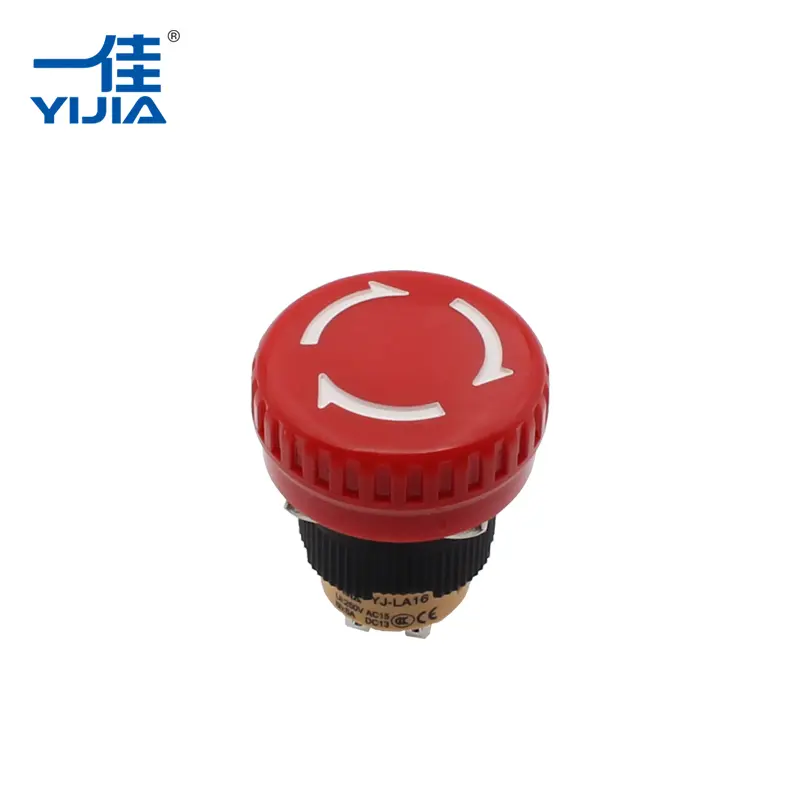
The Critical Difference: Normal Stop vs. Emergency Stop
| Feature | Normal Stop Control | Short Emergency Stop Button |
|---|---|---|
| Intended function | Pause routine cycle | Immediate power removal |
| Reset method | Turn or pull back | Twist or key reset required |
| Circuit logic | Controlled deceleration | Unsafe condition bypass |
| Operator expectation | Restart without delay | Full hazard assessment needed |
What Actually Happens During Misidentification
When an operator mistakes a Short Emergency Stop Button for a normal stop control, the following sequence typically occurs:
-
Immediate machine power removal – All motion stops abruptly, potentially damaging precision components.
-
No controlled braking – Conveyor belts, robotic arms, or spindles may experience mechanical shock.
-
Data loss – Unfinished cycles in CNC or injection molding machines corrupt workpieces.
-
Locked restart condition – The operator spends 3–5 minutes searching for the twist release, escalating frustration.
-
Production gap propagation – Each misidentification adds 4–8 minutes of unplanned downtime per shift.
Human Factors Behind the Error
Operators working under time pressure often rely on muscle memory. A Short Emergency Stop Button placed next to a normal stop button with similar color or travel distance invites confusion. Yijia recommends physical barriers, distinct haptic feedback, and mandatory button separation of at least 50mm.
Short Emergency Stop Button FAQ
Q1: Can a Short Emergency Stop Button be used as a normal stop control if pressed briefly?
A1: No. A Short Emergency Stop Button is electrically and mechanically designed for emergency circuits only. Its internal contacts are normally held closed by spring force and open immediately upon pressing. Unlike a normal stop control that sends a logical “pause” signal to the PLC, the emergency stop cuts power to actuators directly. Using it as a normal stop bypasses deceleration ramps, accelerates contact wear, and violates ISO 13850 clause 4.1.1, which requires emergency stops to be latched and dedicated.
Q2: How can an operator distinguish a Short Emergency Stop Button from a normal stop control without looking?
A2: By enforced tactile differentiation. A compliant Short Emergency Stop Button must have a mushroom-head actuator, red background, and a minimum reset force of 10N. Normal stop controls are typically black, flush or low-profile, and require less than 5N to press. Yijia suggests adding a textured flange or raised ridge around the emergency button. During training, operators should practice blind identification – reaching to the correct button within 2 seconds under simulated noise and low light conditions.
Q3: What immediate steps should a supervisor take after an operator mistakes a Short Emergency Stop Button for a normal stop?
A3: Four steps must occur in order. First, do not reset the machine – lock out the energy source. Second, interview the operator to document whether the button travel, color, or location caused confusion. Third, inspect the affected Short Emergency Stop Button for stuck contacts or damaged return springs. Fourth, review if any other operators have made similar errors in the past 30 days. Yijia provides a downloadable root-cause checklist for such incidents. Retraining must include both visual and written confirmation that an emergency stop is never a substitute for a normal stop.
Best Practices for Prevention
-
Install Short Emergency Stop Button at least 200mm above any normal stop control.
-
Use yellow warning signage directly above the emergency button stating “LATCHING – TWIST TO RELEASE”.
-
Perform weekly drills where operators demonstrate correct button selection under time pressure.
-
Retrofit older panels with Yijia push-button guards that physically block accidental pressing.
Contact Us
If your facility has experienced production stops due to Short Emergency Stop Button confusion, Yijia offers free control panel ergonomics audits and operator training templates. Contact us today to schedule a 20-minute safety walkthrough with our industrial controls team.