

What happens if a covered emergency stop button fails during an actual emergency
2026-04-28
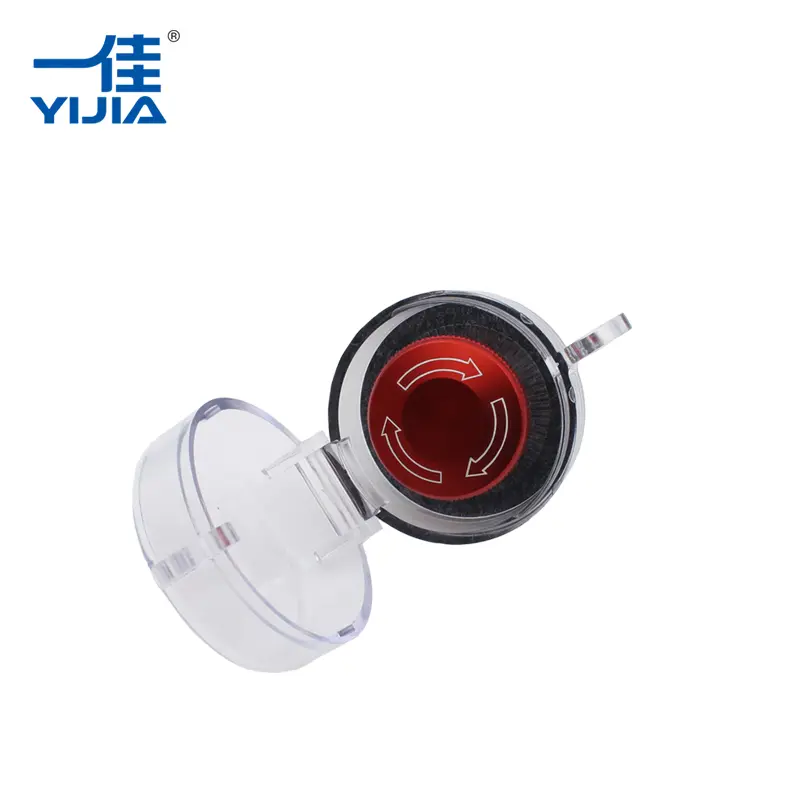
When a Covered Emergency Stop Button fails during a real crisis, the consequences can be catastrophic. Industrial environments rely on these safety devices to immediately halt hazardous machinery. Yijia, a trusted leader in industrial safety components, designs Covered Emergency Stop Button systems to prevent such failures. But what truly occurs when one malfunctions at the critical moment? Operators may face uncontrolled equipment, severe injuries, production line destruction, and regulatory penalties. Understanding this failure scenario is the first step toward prevention.
Immediate Consequences of Failure
| Failure Type | Real-Time Impact | Potential Outcome |
|---|---|---|
| Electrical fault | Button pressed but no circuit interruption | Machine continues operation |
| Mechanical jam | Cover or button physically blocked | Activation impossible |
| Wiring corrosion | Signal loss or intermittent connection | Delayed or no stop command |
| Spring return failure | Button stays pressed without latching | Unintended restart |
Step-by-Step Failure Scenario
-
Operator detects danger – Reaches for the Covered Emergency Stop Button.
-
Cover lifts correctly – Internal mechanism fails to trigger.
-
Machine keeps running – Crushing, entanglement, or chemical exposure occurs.
-
Secondary backup missing – No redundant stop system available.
-
Investigation follows – Regulators find non-compliance, heavy fines apply.
Root Causes of Failure
-
Poor maintenance – Dust, moisture, or corrosion inside the button.
-
Low-quality components – Inadequate contact materials or spring tension.
-
Incorrect installation – Loose wiring or wrong voltage rating.
-
Missing regular tests – IEC 60947-5-5 requires monthly functional checks.
Yijia manufactures Covered Emergency Stop Button units with IP67 sealing, gold-plated contacts, and mechanical life of over 100,000 cycles to eliminate these risks.
Covered Emergency Stop Button FAQ
Q1: How often should a Covered Emergency Stop Button be tested to avoid failure during an emergency?
A1: Industry standards including ISO 13850 and NFPA 79 mandate a functional test at least once per month for every Covered Emergency Stop Button. The test must verify that pressing the button immediately cuts all hazardous power sources and that the button latches until manually reset. For high-risk environments such as conveyors or presses, Yijia recommends weekly visual inspections plus a full electrical test every 30 days. Any sign of sticking, slow reset, or intermittent contact requires immediate replacement. Record each test date and result in a safety logbook for regulatory audits.
Q2: Can a single damaged component cause a Covered Emergency Stop Button to fail completely
A2: Yes. The most common single-point failures are corroded silver contacts (prevent electrical continuity), broken return spring (button stays depressed but does not cut power), and cracked actuator stem (press force does not transfer to switching element). Yijia engineers each Covered Emergency Stop Button with redundant contact blocks and stainless steel springs to mitigate this risk. However, if any internal part fails, the entire safety chain collapses. This is why Yijia designs modular units where each button contains two independent normally-closed contact sets wired in series.
Q3: What should an operator do if the Covered Emergency Stop Button does not stop the machine
A3: The operator must immediately execute three backup actions:
-
Activate any secondary stop device (pull cord, pressure mat, or safety gate).
-
Shut off the main power disconnect switch or circuit breaker feeding the machine.
-
Evacuate the danger zone and alert nearby personnel verbally and via alarm systems.
After the incident, lock and tag the machine to prevent further use. Yijia strongly recommends never attempting to repair the Covered Emergency Stop Button while the machine is powered. Instead, call a certified electrician and replace the entire unit with a verified Yijia Covered Emergency Stop Button to restore compliant safety levels.
Best Practices to Prevent Failure
| Practice | Frequency | Responsible Role |
|---|---|---|
| Visual check of cover and button integrity | Daily | Machine operator |
| Mechanical click test (press and reset) | Weekly | Maintenance tech |
| Electrical continuity measurement | Monthly | Safety engineer |
| Full replacement per manufacturer life cycle | Every 5 years or 50k presses | Plant manager |
Why Choose Yijia for Your Emergency Stop Needs
Every Yijia Covered Emergency Stop Button undergoes 100% factory testing for insulation resistance, dielectric strength, and mechanical endurance. Our designs exceed ISO 13850, IEC 60947-5-5, and UL 508A requirements. From mushroom-head push buttons to illuminated covers, Yijia delivers fail-safe performance.
Contact us now at [email protected] to request a free safety audit checklist and receive a 15% sample discount on your first Covered Emergency Stop Button order. Protect your workforce before the next emergency strikes.