

What Factors Should You Consider When Choosing High Power Ceramic Heating Elements for Plastic Welding
2026-03-19
Selecting the correct heating solution is critical for achieving durable and clean seams in thermoplastic fabrication. When your operation demands reliability, you need to understand the specific technical attributes that define performance. At GREENWAY, we specialize in manufacturing robust thermal components, and we have compiled a professional guide to help you evaluate High Power Ceramic Heating Elements for Plastic Welding.
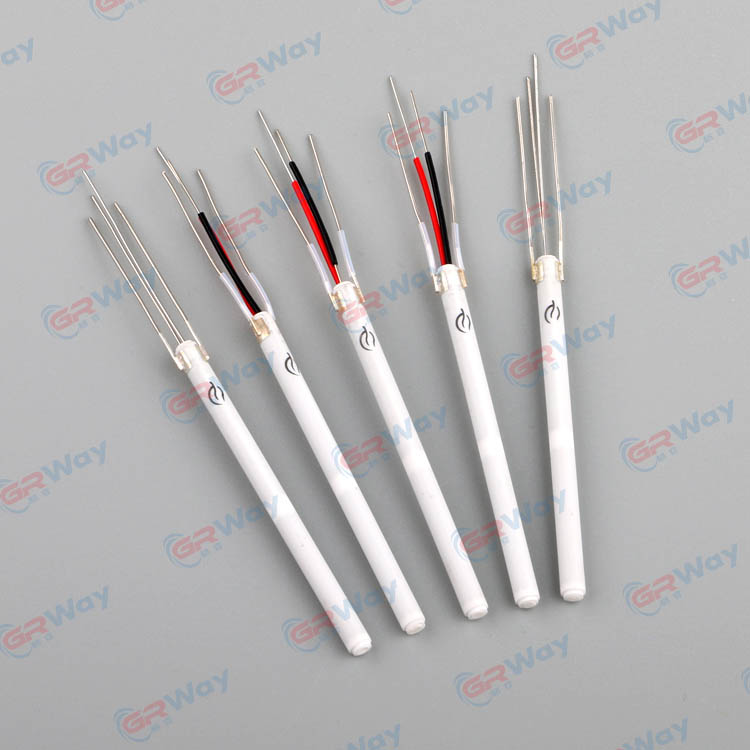
1. Material Composition and Thermal Conductivity
The efficiency of a welding process heavily depends on the substrate material. High Power Ceramic Heating Elements for Plastic Welding are typically made from advanced ceramics like alumina or silicon nitride. These materials offer excellent electrical insulation while maintaining high thermal conductivity.
-
Alumina (Al₂O₃): Offers great mechanical strength and is cost-effective for standard welding.
-
Silicon Nitride (Si₃N₄): Provides superior thermal shock resistance, ideal for high-cycle applications.
You must verify that the element’s material matches the thermal requirements of the plastic (e.g., Polypropylene vs. Polyamide) to prevent degradation or cold welds.
2. Power Density and Temperature Uniformity
Power density (W/cm²) determines how quickly the element reaches operating temperature. However, raw power is useless without uniformity. A hotspot on the element can burn the plastic, while a cold spot prevents fusion.
Why Uniformity Matters:
-
Prevents material degradation.
-
Ensures consistent weld strength across the seam.
-
Reduces cycle time by maintaining steady heat distribution.
Look for elements with embedded resistive coils that guarantee even heat distribution across the working surface.
3. Mechanical Durability and Configuration
Industrial environments expose heating elements to vibration, pressure, and constant thermal expansion. The structural integrity of the ceramic matrix is vital.
Below is a comparison of standard configurations available from GREENWAY:
| Feature | Standard Cartridge Heaters | GREENWAY High Power Ceramic Elements |
|---|---|---|
| Thermal Shock Resistance | Moderate | Excellent (High-Density Ceramic) |
| Max Operating Temperature | 600°C | 800°C+ |
| Surface Uniformity | +/- 5% Variance | +/- 2% Variance |
| Lifespan in Cycling | 3,000 Hours | 10,000+ Hours |
| Custom Wattage Availability | Limited | Fully Customizable |
As illustrated, investing in higher-grade ceramics reduces downtime caused by frequent replacements.
4. Electrical Termination and Safety
Safety is non-negotiable when dealing with high currents. Ensure the termination method (leads, lugs, or connectors) is rated for the amperage draw of the element.
-
IP Rating: For plastic welding, dust and fumes are common. Choose elements with sealed terminals to prevent arcing.
-
Grounding: Properly insulated ceramics prevent short circuits when in contact with metallic welding fixtures.
5. Form Factor and Geometric Compatibility
The element must fit the geometry of the weld head. Whether you need a cylindrical nozzle heater, a flat plate, or a custom contour, the physical fit ensures thermal transfer efficiency.
-
Customization: GREENWAY offers bespoke shapes to fit non-standard welding tools, ensuring that the High Power Ceramic Heating Elements for Plastic Welding integrate seamlessly with your existing machinery.
Frequently Asked Questions
Here are the top 3 FAQs regarding High Power Ceramic Heating Elements for Plastic Welding to help clarify common technical concerns.
Q1: How do I determine the correct wattage for my plastic welding application?
Determining wattage requires calculating the thermal mass of the weld tool and the specific heat of the plastic. A general rule is to allow 3-5 watts per cubic centimeter of tool steel, but ceramic elements are more efficient. For precise calculations, you must consider the desired cycle time. If the element is under-powered, the weld line will be cold; if over-powered, you risk degrading the plastic. It is best to consult with a manufacturer like GREENWAY, who can run thermal simulations based on your specific tool design to recommend the optimal wattage.
Q2: What is the typical lifespan of a ceramic heating element in a continuous plastic welding operation?
In a continuous operation cycling from ambient temperature to 350°C (common for plastics), standard metallic elements may fail due to oxidation or creep. However, High Power Ceramic Heating Elements for Plastic Welding are designed to withstand these cycles. At GREENWAY, our elements are rated for over 10,000 hours of operation under normal conditions. Lifespan can be extended further by ensuring the element is not subjected to mechanical impact and that the electrical supply is stable without voltage spikes.
Q3: Can these elements be used for both induction welding and contact welding?
No, they are distinct processes. High Power Ceramic Heating Elements for Plastic Welding are primarily designed for contact (conductive) welding. The ceramic head physically contacts the plastic or a release film to transfer heat via conduction. They are not designed for induction welding, which relies on electromagnetic fields. If you are using a hot plate welder, vibration welder, or a handheld welding gun, these ceramic elements are the ideal choice for the heating platen.
Conclusion
Choosing the right heating element is a decision that impacts your production quality, energy bills, and maintenance schedule. By focusing on material science, power density, and thermal uniformity, you ensure that your plastic welding operations run smoothly.
Ready to upgrade your thermal systems?
If you need durable, custom-engineered High Power Ceramic Heating Elements for Plastic Welding, the team at GREENWAY is here to help. We provide tailored solutions to meet your exact specifications.
Contact Us today for a consultation and request your free quote.