

What Factors Determine the Power Handling Capacity of an ETD Core Transformer
2026-03-02
When designing power electronics, understanding the capacity of your magnetic components is crucial. The power handling capacity of an ETD core transformer is not a fixed number; it is determined by a complex interaction of physical, electrical, and material properties. At Haoer, we specialize in manufacturing high-performance magnetic solutions, and we emphasize that selecting the right ETD core transformer requires a deep dive into these specific factors.
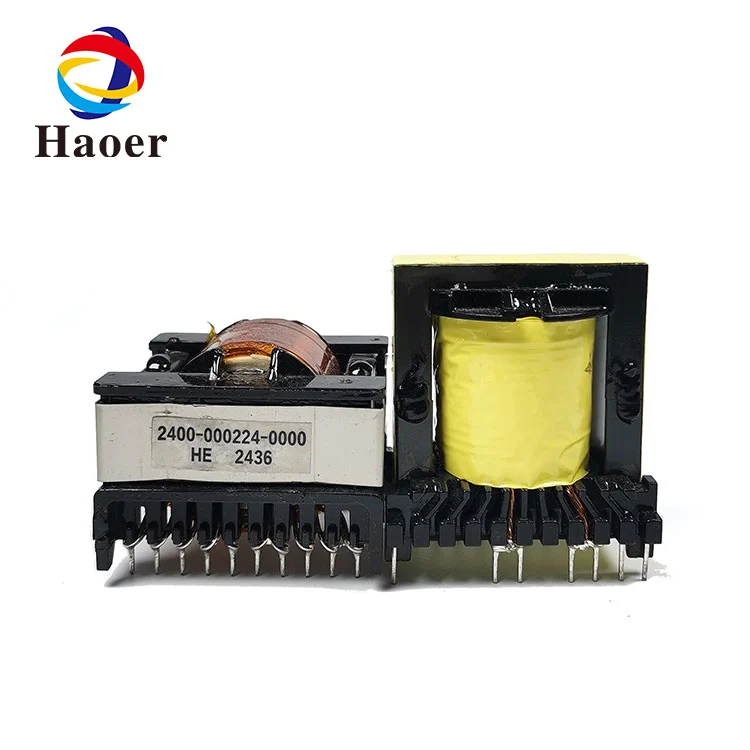
Key Determinants of Power Capacity
The ability of an ETD core transformer to handle power is governed by several core principles. Below, we break down the primary factors that engineers must evaluate.
1. Core Cross-Sectional Area (Ae)
The effective cross-sectional area of the core (Ae) is the most fundamental geometric factor. A larger Ae allows for a higher magnetic flux before the core reaches saturation, directly enabling higher voltage handling per turn.
2. Saturation Flux Density (Bs)
Every ferrite material has a maximum flux density it can support. Once exceeded, the core saturates, causing a drastic drop in inductance and potential circuit failure. Operating an ETD core transformer safely means staying well below the Bs limit at the maximum operating temperature.
3. Operating Frequency
Higher frequencies allow for higher power transfer for a given core size because the flux swing is completed more times per second. However, this also increases core losses, creating a trade-off that impacts the final power rating.
4. Temperature Rise (ΔT)
The permissible temperature rise is often the limiting factor. Power handling is ultimately limited by how quickly heat (from core and copper losses) can be dissipated without exceeding the insulation class or Curie temperature of the materials.
The Relationship Between Core Parameters
To illustrate how these factors interact, the following table outlines the relationship between core geometry and performance in a typical ETD core transformer design:
| Parameter | Impact on Power Capacity | Design Consideration |
|---|---|---|
| Core Area (Ae) | Directly Proportional | Larger Ae supports higher voltage and power. |
| Window Area (Aw) | Determines Copper Volume | More space for thicker wire reduces copper losses. |
| Magnetic Path Length (Le) | Affects Magnetizing Current | Shorter paths reduce core volume and losses. |
| Thermal Resistance (Rth) | Dictates Heat Dissipation | Lower Rth allows for higher power density. |
By optimizing these parameters, Haoer ensures that our ETD core transformer series delivers maximum efficiency and reliability for applications ranging from switch-mode power supplies to renewable energy inverters.
Common Questions About ETD Core Transformers
To further clarify the technical nuances, here are answers to frequently asked questions regarding ETD Ferrite Core High-Frequency Transformer technology.
What happens if I push an ETD core transformer beyond its power handling capacity?
Pushing an ETD core transformer beyond its rated capacity leads to excessive temperature rise and core saturation. Initially, you will see a sharp increase in the magnetizing current. As the core saturates, the inductance plummets, causing massive current spikes. This can lead to thermal runaway, where copper and core losses generate heat that further reduces the saturation flux density of the ferrite, ultimately destroying the transformer and potentially the switching transistors in the circuit.
How does the air gap in an ETD core affect its power handling?
The air gap in an ETD core is critical for power handling in applications like flyback converters. While a gap reduces the effective inductance (Al value), it dramatically increases the core's resistance to saturation. By adding a gap, the core can store significantly more energy (higher H-field before saturation) without increasing the core size. This makes the ETD Ferrite Core High-Frequency Transformer ideal for applications requiring high power density and stable inductance under DC bias.
Why is ferrite material selection so important for an ETD core in high-frequency applications?
Ferrite material selection dictates the core's performance regarding losses and saturation. For high-frequency applications, materials like Haoer's premium grades are optimized to have low hysteresis and eddy current losses at frequencies from 20kHz to over 500kHz. Using the wrong material leads to excessive core heating at high frequencies, negating the geometric advantages of the ETD Ferrite Core High-Frequency Transformer. The material's Curie temperature also defines the absolute thermal limit of the core's magnetic properties.
Conclusion and Call to Action
Understanding the factors of core area, flux density, frequency, and thermal limits is essential for leveraging the full potential of an ETD core transformer in your design. Proper selection ensures efficiency, longevity, and safety in your power electronics.
Selecting the right component can be complex, but you do not have to do it alone. Haoer provides expert engineering support and high-quality magnetic components tailored to your specifications. Contact us today for a consultation or to request a custom ETD core transformer sample for your next project.