

What Factors Affect the Long Term Reliability of Single Mode Fiber Coupled Lasers
2026-03-19
When investing in photonics technology, the long term reliability of Single Mode Fiber Coupled Laser Module systems is a primary concern for engineers and procurement specialists. At Wavespectrum Laser Group, we understand that system downtime or premature failure can lead to significant operational losses. The robustness of these precision tools is not accidental; it is determined by a combination of design choices, operational conditions, and manufacturing quality. Understanding these factors is essential for maximizing return on investment and ensuring consistent performance in demanding applications such as telecommunications, sensing, and material processing.
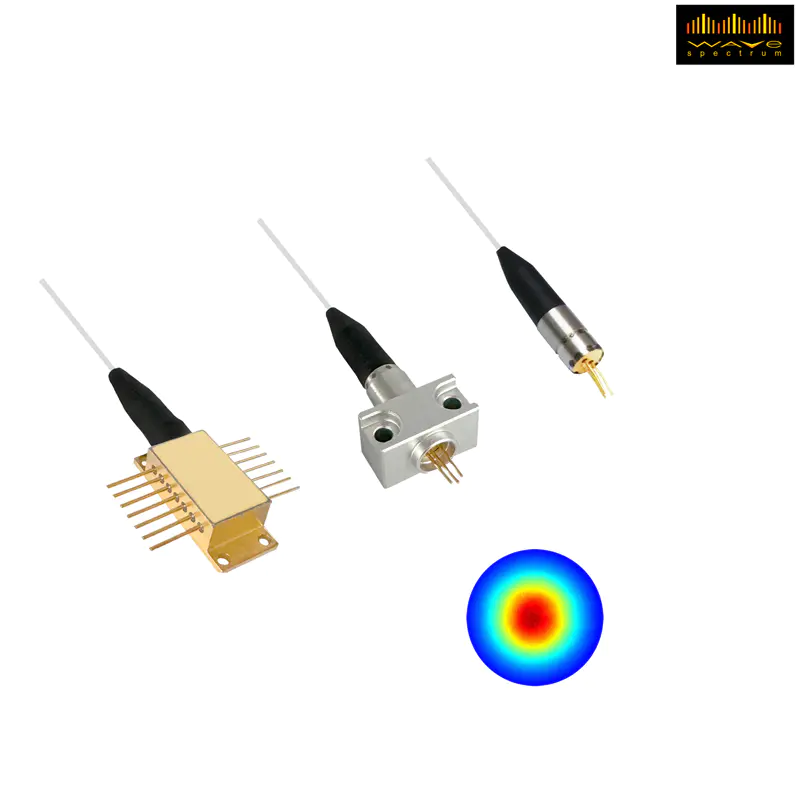
Key Factors Influencing Longevity
The operational lifespan of a Single Mode Fiber Coupled Laser Module is governed by several interdependent physical and environmental parameters. Below is a detailed analysis of the most critical factors.
1. Thermal Management
Heat is the primary enemy of semiconductor lasers. Excessive junction temperatures can accelerate defects within the laser diode, leading to a gradual decrease in light output or catastrophic failure.
-
Impact on Reliability: For every 10°C to 15°C increase in operating temperature, the mean time to failure (MTTF) can be cut in half.
-
Mitigation: Effective thermoelectric coolers (TECs) and thermally conductive packaging are crucial.
2. Optical Feedback and Isolation
Back reflections into the laser cavity can cause instability, wavelength shifts, and physical damage to the facet.
-
Impact on Reliability: Even 1% to 2% of reflected light can induce intensity noise and physically degrade the output facet over time.
-
Mitigation: High-quality optical isolators must be integrated to prevent destabilizing feedback.
3. Mechanical and Fiber-Coupling Stability
The alignment between the laser diode and the single mode fiber core (typically 5-9 µm) must be maintained with sub-micron precision over time.
-
Impact on Reliability: Vibration, thermal cycling, or epoxy shrinkage can cause "fiber-pigtail shift," resulting in power loss or complete failure.
-
Mitigation: Laser welding and solder-reflow techniques provide superior long-term mechanical stability compared to adhesive bonding.
Common Failure Modes and Prevention Strategies
To better understand how to select a reliable product, it is useful to review how these modules typically fail and how top-tier manufacturers address these risks.
| Failure Mode | Physical Cause | Prevention Strategy by Wavespectrum Laser Group |
|---|---|---|
| Facet Degradation (COD) | High optical power density at the mirror facet causes oxidation and melting. | Passivation layers and "window structure" designs on the laser chip. |
| Solder Fatigue | Thermal expansion mismatch between the submount and the chip causes cracks. | Use of hard solder (e.g., AuSn) with high thermal fatigue resistance. |
| Fiber Misalignment | Mechanical shock or adhesive curing stress shifts the fiber position. | Hermetic packaging with laser-welded fiber feedthroughs. |
| EOS/ESD Damage | Voltage spikes or improper handling destroy the delicate junction. | Integrated ESD protection diodes and strict handling protocols during assembly. |
Industry Standards and Qualification
Reliability is not merely a theoretical concept; it is validated through rigorous testing. A reputable Single Mode Fiber Coupled Laser Module should meet industry standards such as Telcordia GR-468. This involves extensive stress tests, including:
-
High-Temperature Operating Life (HTOL): Verifying operation at elevated temperatures.
-
Temperature Cycling: Exposing the module to rapid temperature changes to test mechanical integrity.
-
Mechanical Shock/Vibration: Simulating transportation and installation environments.
At Wavespectrum Laser Group, every module undergoes stringent burn-in and characterization to ensure it meets the highest benchmarks for field reliability.
Single Mode Fiber Coupled Laser Module FAQ
To further clarify the nuances of system longevity, here are answers to three frequently asked questions regarding the Single Mode Fiber Coupled Laser Module.
What is the typical lifespan of a Single Mode Fiber Coupled Laser Module, and how is it measured?
The typical lifespan is often rated in terms of Mean Time to Failure (MTTF), which frequently exceeds 100,000 to 250,000 hours for high-quality modules. This is measured by operating a sample group at a controlled temperature (usually 25°C) and monitoring for degradation. The end of life is generally defined as the point when the operating current increases by 20% to 50% above its initial value to maintain the same optical power, or when the power drops by a specific percentage. This accelerated life testing allows manufacturers like Wavespectrum Laser Group to predict field performance accurately.
Can I improve the reliability of my existing fiber-coupled laser through better handling?
Yes, absolutely. While the internal construction is the foundation of reliability, external factors are critical. Users must ensure strict adherence to Electrostatic Discharge (ESD) precautions during handling and installation. Furthermore, ensuring that the thermoelectric cooler controller is functioning correctly to maintain a stable temperature set point prevents thermal shock. It is also vital to keep the fiber connectors clean; microscopic dust on the connector end-face can burn into the surface when hit by high-power light, permanently reducing coupling efficiency and potentially causing back-reflection damage.
How does the choice of wavelength affect the long-term reliability of these modules?
Wavelength plays a role primarily due to material properties and application context. For example, Single Mode Fiber Coupled Laser Module systems operating at 980 nm (often used for pumping amplifiers) are highly mature and known for exceptional reliability due to decades of optimization in the InGaAs material system. In contrast, visible or mid-infrared wavelengths may use different semiconductor materials (e.g., GaN or GaSb) that are inherently more sensitive to defects and operating temperature. Therefore, the maturity of the specific wavelength's epitaxial design directly impacts the projected lifespan.
Conclusion
Selecting a high-performance laser requires looking beyond the initial optical specifications. The long term reliability of Single Mode Fiber Coupled Laser Module systems depends on sophisticated thermal management, robust mechanical design, and comprehensive qualification testing. By prioritizing these engineering principles, Wavespectrum Laser Group delivers modules that stand the test of time in the most demanding industrial environments.
If you are looking to integrate a high-reliability source into your next project, do not leave it to chance. Contact us today to discuss your specific requirements and learn how our solutions can provide the stability and performance your application demands.