

What Common Defects Occur During the Production of Metal Stamping Shells
2026-11-24
Qiren specializes in custom precision Metal Stamping Shells for electronics, sensors, power modules and automotive control assemblies. These enclosures demand tight dimensional control, smooth surfaces and stable forming quality, yet many process variables including material properties, die clearance, lubrication and press parameters can trigger visible or hidden flaws. Recognizing typical defects helps engineers optimize DFM drawings and reduces scrap rate during mass production.
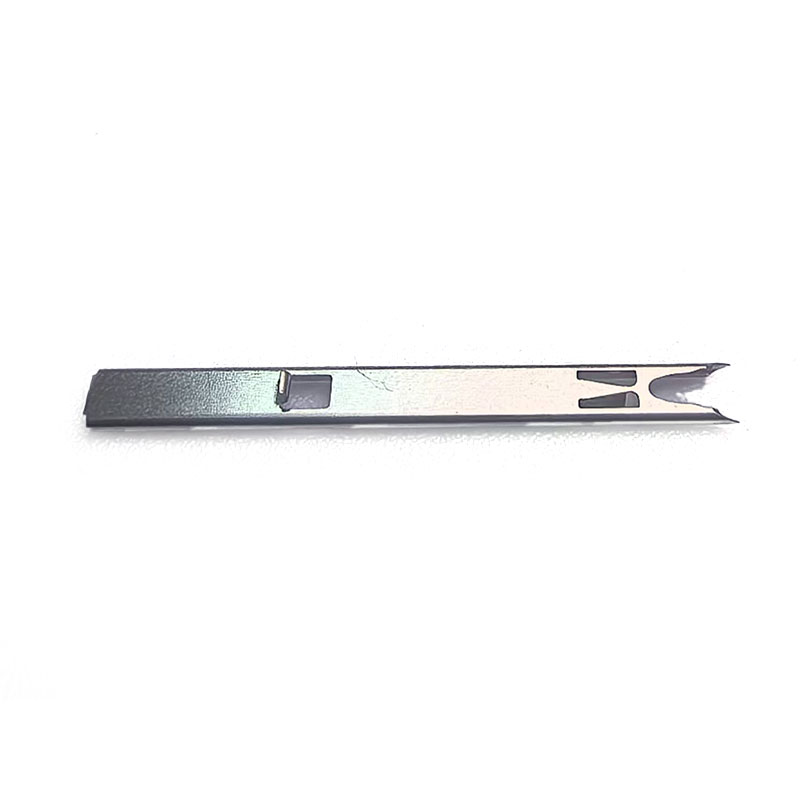
Main Defects Found in Metal Stamping Shells Production
- Burrs on cut edges: Sharp raised fragments at blanking or piercing positions, usually from dull cutting edges or mismatched punch-die clearance.
- Springback: Elastic rebound after bending or shallow drawing, leading to out-of-tolerance angles and uneven shell profiles.
- Wrinkling: Wave-shaped folds on side walls of deep-drawn shells, caused by unstable compressive stress and uncontrolled material flow.
- Cracking or tearing: Fractures at corners and transition zones when local tensile stress exceeds the material’s elongation limit.
- Surface scratches and dents: Marks from foreign particles on die surfaces, poor strip guiding or improper part ejection.
Defect Reference Table
表格
| Defect | Primary Root Cause | Recommended Improvement | Risk Level |
|---|---|---|---|
| Burrs | Worn punch and die, improper clearance | Sharpen cutting edges, adjust clearance, regular tool inspection | Medium |
| Springback | High-yield material, insufficient coining | Apply over-bending compensation, add coining structure | Medium |
| Wrinkling | Low blank holder force, unsuitable blank outline | Increase blank holder pressure, redesign draw beads | High |
| Cracking | Small corner radius, poor lubrication, wrong grain direction | Enlarge fillet radius, upgrade lubricant, adjust grain layout | High |
| Surface Scratches | Dirty die surface, rough guide rails | Polish mould surface, clean stamping oil and metal chips | Low |
Metal Stamping Shells FAQ
Q: Can springback of Metal Stamping Shells be fully eliminated by die adjustment? A: Complete elimination is impossible because all metallic materials retain elastic recovery after unloading. Qiren’s standard solution is to add pre-compensation in die design according to material test data. For stainless steel and high-strength steel Metal Stamping Shells, secondary coining operations are often adopted to stabilize final dimensions. Regular first-article inspection tracks springback variation between different raw material batches.
Q: Why do deep-drawn Metal Stamping Shells crack only occasionally instead of in every piece? A: Intermittent cracking usually relates to inconsistent material ductility, unstable lubrication or fluctuating press speed. Raw coil batches have minor differences in elongation value, and insufficient or uneven lubricant film creates local over-stretching. It is necessary to sample-test mechanical properties for each incoming coil and keep lubrication flow consistent during continuous stamping.
Q: Are burrs acceptable for Metal Stamping Shells used inside electronic equipment? A: It depends on the drawing tolerance. Loose commercial shells allow tiny burrs after manual deburring, but EMI shielding and waterproof Metal Stamping Shells require zero sharp burrs. Sharp burrs may pierce sealing gaskets, scratch internal circuit boards or fall off and cause short circuits. Qiren provides in-die deburring or secondary barrel finishing for high-reliability electronic shell orders.
Early detection of stamping defects greatly cuts production loss and avoids after-delivery quality complaints. Material selection, die design and process parameter calibration work together to keep Metal Stamping Shells within drawing specifications. If you need DFM feasibility reviews, prototype testing, or mass quotation for your custom stamping enclosure project, contact us today. The engineering team at Qiren delivers stable, low-scrap Metal Stamping Shells solutions for industrial and electronic applications.