

What Causes Poor Built-in FM Radio Antenna Reception and How Do You Troubleshoot It
2026-10-08
A Built-in FM Radio Antenna is one of the most convenient features in modern smartphones, tablets, and portable media players, yet it is also one of the most misunderstood. At Qianmu, we have spent years designing and testing compact wireless solutions, and poor FM reception remains one of the most common complaints we hear from users. The truth is that a Built-in FM Radio Antenna operates under strict physical and electrical constraints, and even a small change in your environment or device setup can dramatically affect performance. Understanding the root causes and following a structured troubleshooting process can restore clear, stable reception without replacing your device.
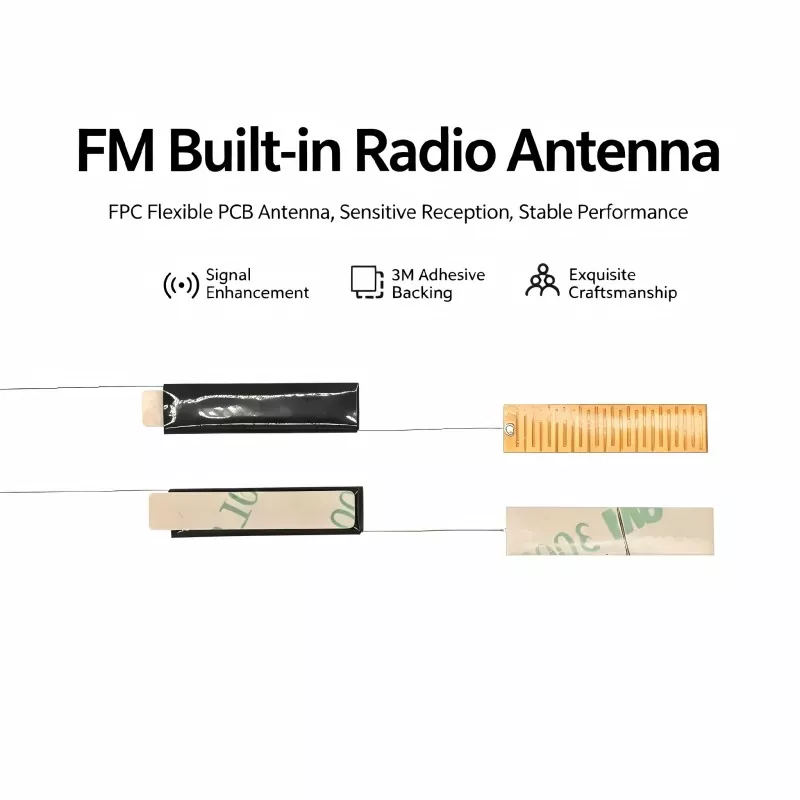
Common Causes of Poor Built-in FM Radio Antenna Reception
FM broadcasting typically operates between 87.5 MHz and 108 MHz, which means the wavelength is roughly 3 meters. A Built-in FM Radio Antenna inside a phone or tablet is only a few centimeters long, so it relies on external components, grounding, and signal conditions to function effectively. The table below summarizes the most frequent causes we diagnose at Qianmu.
| Cause | Why It Affects Reception | Typical Symptom |
|---|---|---|
| No headphone cable connected | Many devices use the headphone wire as the actual antenna element | No signal or only very strong stations |
| Poor grounding or shielding | Weak reference ground reduces signal-to-noise ratio | Constant static and hiss |
| Building interference | Concrete, metal, and energy-efficient glass block FM waves | Reception only near windows |
| Adjacent strong transmitters | Overload desensitizes the tuner front end | Distortion on weak stations |
| Software or firmware issues | Incorrect regional band or tuning step settings | Missing stations or failed scans |
| Damaged antenna trace or connector | Physical wear breaks the antenna path | Sudden loss of reception |
How to Troubleshoot a Built-in FM Radio Antenna
Follow these steps in order. Most users resolve the issue before reaching the final stage.
-
Connect a wired headphone or external cable. The headphone cord frequently serves as the antenna. A Built-in FM Radio Antenna often cannot work without it.
-
Rescan all stations. Move near a window, run a full scan, and save stations manually if automatic scanning misses weak signals.
-
Check regional settings. Confirm the tuner is set to the correct FM band and tuning step for your country.
-
Test in different locations. Compare indoor, outdoor, and upper-floor reception to rule out building interference.
-
Remove interfering devices. Keep chargers, USB 3.0 cables, and Wi-Fi routers away from the device during listening.
-
Update firmware. Manufacturers like Qianmu frequently release tuner stability improvements.
-
Inspect the headphone jack and antenna contact. Clean the port and check for corrosion or loose connections.
-
Use an external amplified antenna. If all else fails, a powered antenna can compensate for a weak Built-in FM Radio Antenna.
Built-in FM Radio Antenna FAQ
Q: Why does my Built-in FM Radio Antenna only work when headphones are plugged in?
A: On most phones and tablets, the headphone cable acts as the FM antenna, while the Built-in FM Radio Antenna circuitry handles tuning and amplification. Without the cable, the antenna element is too short to capture 3-meter FM waves efficiently, so reception drops or disappears entirely.
Q: Can a Built-in FM Radio Antenna be repaired or upgraded?
A: In most cases, no. The antenna is a printed trace or a small internal module soldered to the mainboard. Repair requires professional microsoldering, and upgrading is impractical. However, Qianmu recommends using a quality external antenna or a wired headset with a longer cable to improve performance.
Q: Why is reception better near a window than inside a room?
A: FM signals are easily attenuated by concrete, metal, and low-emissivity glass. A Built-in FM Radio Antenna has limited gain, so it depends on line-of-sight conditions. Placing the device near a window reduces structural attenuation and significantly improves signal strength.
Final Thoughts and Contact Us
Poor reception from a Built-in FM Radio Antenna is rarely a single failure. It is usually a combination of antenna length, grounding, environment, and tuner settings. By working through the causes and troubleshooting steps above, most users can achieve reliable FM listening. If you need expert guidance or want to explore high-performance antenna solutions, contact us at Qianmu today for a free consultation and product recommendation.