

What Causes an AC Cylindrical Fuse to Blow Frequently
2025-12-11
A frequently blowing AC Cylindrical Fuse is more than just an inconvenience; it’s a critical symptom of an underlying issue in your electrical system. Persistent fuse failure disrupts operations, risks damage to expensive equipment, and poses a safety hazard. Understanding the root causes is the first step toward a reliable and safe solution. At Yinrong, we specialize in manufacturing high-precision fuses designed to protect your assets without nuisance blowing, ensuring your systems run smoothly and safely.
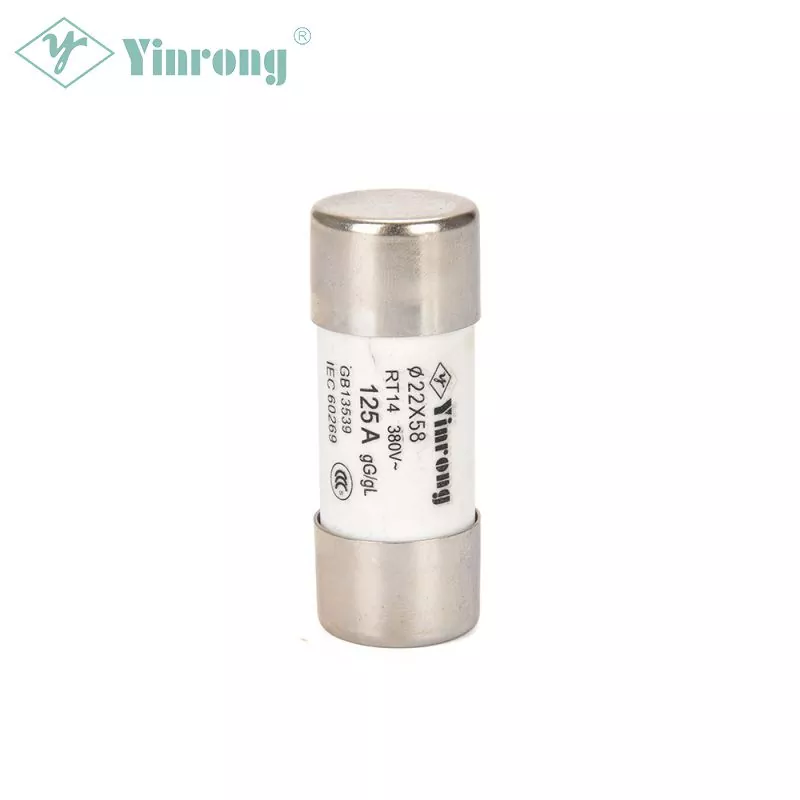
The most common reasons for a recurrent blown fuse include:
-
Overcurrent Conditions: This is the fuse’s primary purpose—to blow. It occurs when the circuit draws more current than the fuse’s rated capacity, often due to faulty equipment, sudden inrush currents, or circuit overloads.
-
Short Circuits: A severe overcurrent event caused by a direct connection between live and neutral conductors, resulting in a massive, instantaneous current surge.
-
Incorrect Fuse Rating: Using a fuse with an ampere rating too low for the normal operating current of the circuit will cause it to blow under regular load.
-
Degraded or Poor-Quality Fuses: Inferior fuses may not meet their stated specifications, leading to premature failure under normal conditions.
-
Weak or Loose Connections: Poor contact in the fuse holder or panel creates resistance, leading to heat buildup that can degrade and ultimately blow the fuse.
Choosing the right fuse is paramount. A Yinrong AC Cylindrical Fuse is engineered for precision and durability. Here are key parameters to verify:
| Parameter | Importance | Yinrong's Standard Assurance |
|---|---|---|
| Rated Current (In) | Must match or exceed the circuit's normal operating current. | Precision-calibrated to ensure accurate tripping at specified limits. |
| Rated Voltage (Un) | Must be equal to or greater than the system voltage. | Available for standard and high-voltage applications up to 500V AC. |
| Breaking Capacity (Icn) | The maximum fault current the fuse can safely interrupt. | High breaking capacity models ensure safety even under severe short circuits. |
| Time-Current Characteristic | Defines how fast the fuse blows under overcurrent (e.g., Fast-Acting, Time-Delay). | A range of characteristics (gG, aM) to match motor starts or resistive loads. |
| Certifications | Indicates compliance with international safety standards (IEC, UL, CCC). | All fuses are rigorously tested and certified for global market compliance. |
AC Cylindrical Fuse FAQ
Q: Can I temporarily replace a blown AC cylindrical fuse with one of a higher amp rating?
A: Absolutely not. This is a major safety risk. Using an overrated fuse removes the designed protection, allowing excessive current to flow, which can overheat wiring, damage equipment, and potentially cause a fire. Always replace with the correct specified rating.
Q: How can I tell if my AC cylindrical fuse has blown?
A: Visibly, the internal fusible element may appear melted or severed. The most reliable method is to use a multimeter set to continuity test. Place probes on each end cap; a lack of continuity (no beep) confirms the fuse is blown.
Q: What makes Yinrong AC Cylindrical Fuses more reliable?
A: Yinrong fuses are built with high-purity materials and stringent quality control. Our precise calibration ensures they only blow under genuine fault conditions, not from minor, harmless surges. Their robust construction provides stable performance and a longer service life, reducing downtime and maintenance costs.
Don’t let a repeatedly failing fuse compromise your safety and productivity. The solution lies in identifying the root cause and installing a reliably engineered protection device. For expert advice on selecting the perfect AC Cylindrical Fuse for your specific application, or to learn more about the full range of certified Yinrong circuit protection products, contact us today. Our technical team is ready to help you achieve optimal system protection and peace of mind.