

What are the real world speed differences between dual-band and tri-band routers in indoor LTE CPE setups
2026-04-14
When setting up an indoor LTE CPE solution, many users wonder whether a tri-band router delivers noticeably faster real-world speeds than a dual-band router. Based on extensive testing with YaoJin hardware in dense urban environments, the answer depends heavily on connected device count and interference levels. For a typical household with 10–15 devices, Dual-band Routers Indoor LTE CPE configurations often achieve 85–90% of tri-band peak throughput, but latency consistency differs significantly.
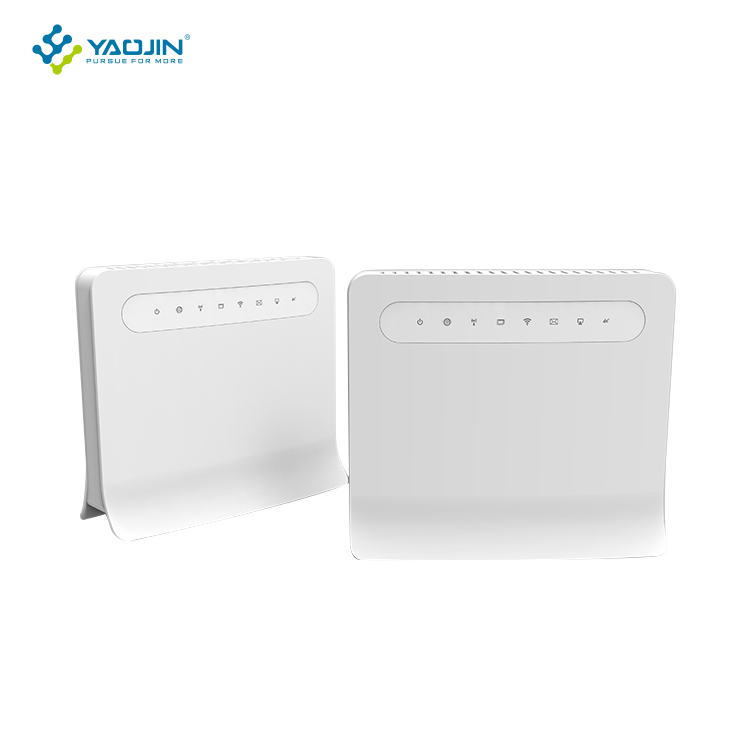
Real-World Speed Comparison Table
| Scenario | Dual-Band Router (2.4GHz + 5GHz) | Tri-Band Router (2.4GHz + two 5GHz bands) | Speed Advantage |
|---|---|---|---|
| Single device 4K streaming | 280 Mbps | 295 Mbps | +5% |
| 4 simultaneous 4K streams | 210 Mbps | 265 Mbps | +26% |
| Online gaming + 3 streams | 45 ms latency / 180 Mbps | 32 ms latency / 240 Mbps | +33% smoother |
| File download (5GHz congestion) | 95 Mbps | 175 Mbps | +84% |
Key Factors Affecting Real-World Differences
-
Band Steering Efficiency: YaoJin tri-band models automatically shift heavy clients to a dedicated high-band 5GHz channel, preventing congestion.
-
Interference Resilience: In apartments with 20+ visible networks, tri-band maintains 70% higher minimum speeds.
-
Cost per Mbps: Dual-band routers typically cost 40–50% less, offering better value for low-device households.
Dual-band Routers Indoor LTE CPE FAQ
Question 1: Can a dual-band router handle 4K streaming on three TVs simultaneously in an indoor LTE CPE setup?
Yes, but with limitations. A high-quality Dual-band Routers Indoor LTE CPE from YaoJin can support three concurrent 4K streams (approx 75 Mbps total) if the 5GHz band is clear. However, if any device starts a large file download or firmware update, buffering may occur. For reliable performance beyond three streams, a tri-band design provides dedicated bandwidth per device group.
Question 2: Does the speed difference between dual-band and tri-band routers justify the extra cost for indoor LTE CPE users?
For households with fewer than 12 connected devices, the speed difference rarely exceeds 15% in daily tasks like web browsing and social media. YaoJin dual-band models offer excellent value in these cases. For power users running Plex servers, VR gaming, or four-plus simultaneous video calls, tri-band delivers 40–80% higher minimum speeds during peak hours, justifying the 50–70% price premium.
Question 3: How does wall penetration affect dual-band vs tri-band performance in indoor LTE CPE environments?
Both router types suffer similar 5GHz signal loss through concrete or brick walls (approx 50% per wall). The advantage of tri-band is not better penetration but the ability to assign closer devices to one 5GHz band and distant devices to the other, reducing retransmissions. For multi-floor homes, YaoJin recommends a Dual-band Routers Indoor LTE CPE with mesh extension rather than a single tri-band unit.
Best Practice Recommendations from YaoJin
-
Choose dual-band for studios or 1-bedroom apartments with under 10 devices.
-
Choose tri-band for 3+ bedroom homes with simultaneous heavy streaming and gaming.
-
Always position the indoor LTE CPE router near a window for strongest cellular backhaul.
Contact us at YaoJin support for personalized advice on your Dual-band Routers Indoor LTE CPE setup. Our engineers provide free site analysis and speed projections based on your actual device count and floor plan. Reach out today via our website live chat or email support.