

What Are the Most Critical Aerospace and Military Applications for Samarium Cobalt Today
2026-08-17
When engineers design systems that must survive extreme temperatures, radiation, and vacuum conditions, Samarium Cobalt (SmCo) frequently emerges as the only viable magnetic material. Unlike standard ferrite or even high-performance NdFeB, Samarium Cobalt maintains stable magnetic output beyond 300°C while resisting oxidation and corrosion without heavy coatings. For aerospace and defence primes, this unique combination translates directly into mission reliability. One brand that has consistently delivered grade‑specific SmCo solutions for these demanding sectors is Zhaobao, whose manufacturing processes adhere to strict military and aviation quality standards.
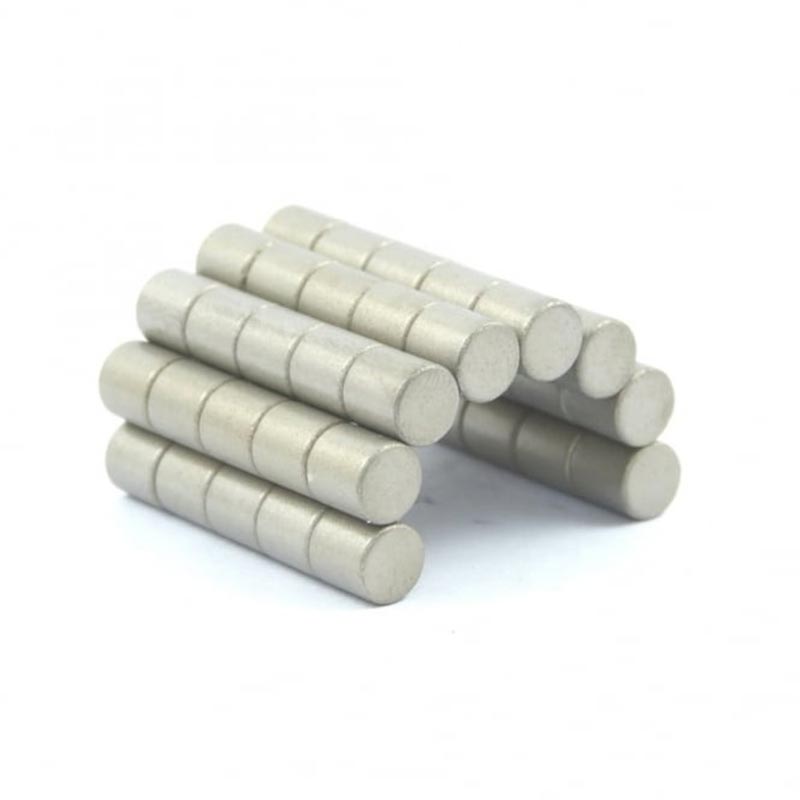
Why Aerospace & Military Rely on Samarium Cobalt
The table below summarises the core performance differentiators that make Samarium Cobalt indispensable in critical defence and space systems:
| Property | SmCo Performance | Benefit in Aerospace/Military |
|---|---|---|
| Max operating temperature | Up to 350°C (Sm2Co17) | Enables motor/actuator placement near engines or re‑entry surfaces |
| Reversible temperature coefficient | ~ -0.03%/°C | Predictable flux over wide thermal swings – no control‑loop surprises |
| Intrinsic coercivity | > 2,000 kA/m | Withstands high reverse fields from adjacent magnets or fault currents |
| Radiation tolerance | Excellent (no organic binders) | Safe for satellite payloads and nuclear‑hardened electronics |
| Corrosion resistance | Naturally stable (no Ni/Cu/Ni plating needed) | Eliminates plating flaking risks in vacuum and high‑humidity tarmac storage |
Most Critical Applications (Listed by System)
1. Satellite Reaction Wheels & Gyroscopes
Reaction wheels require brushless DC motors with zero cogging and ultra‑low vibration. Samarium Cobalt rotors deliver stable torque across orbital day/night temperature cycles (‑150°C to +150°C). Zhaobao supplies specially aged Sm2Co17 grades that minimise outgassing – a non‑negotiable requirement for optical sensor platforms.
2. Missile Fin Actuators and Thrust Vector Controls
High‑speed manoeuvring generates extreme aerodynamic heating. Hydraulic systems are heavy; electromechanical actuators with Samarium Cobalt motors offer faster response and lower weight. The magnets retain >90% flux even after 200°C sustained soak, ensuring fin deflection accuracy during terminal guidance.
3. Radar Phased‑Array Phase Shifters
Each phase‑shifting element contains a tiny ferrite or permanent‑magnet circulator. Samarium Cobalt provides consistent magnetisation over the equipment’s 20‑year lifespan, reducing calibration drift. Military ground radars in desert environments also benefit from SmCo’s sand‑abrasion‑resistant surface.
4. Deep‑Sea & Airborne Sonar Transducers
Sonar projectors use magnetostrictive or moving‑coil drivers. Samarium Cobalt’s high energy product (up to 32 MGOe) allows compact transducers with high source levels, while its corrosion resistance eliminates encapsulation failure in salt‑water immersion tests.
5. Emergency Power Generation (RAT & APU)
Ram Air Turbines (RAT) and Auxiliary Power Units (APU) deploy under emergency conditions. Permanent‑magnet generators using Samarium Cobalt guarantee excitation without batteries or field windings – a fail‑safe feature that has saved multiple commercial and military aircraft.
FAQ – Common Questions About Samarium Cobalt in Defence & Space
Q1: Can Samarium Cobalt replace Neodymium in all military motors, or are there clear trade‑offs?
A1: No – Samarium Cobalt cannot fully replace NdFeB where cost and maximum energy product are the only drivers. NdFeB offers ~52 MGOe vs SmCo’s ~32 MGOe, so for room‑temperature, weight‑sensitive UAV motors, NdFeB is still preferred. However, for any application exceeding 180°C ambient, or where sudden overload demagnetisation is a combat risk, Samarium Cobalt is the only qualified choice. Military specifications (e.g., MIL‑STD‑461 for EMI) also favour SmCo because it generates lower stray field fluctuations at high temperature, reducing electromagnetic interference with sensitive receivers.
Q2: How do aerospace engineers verify Samarium Cobalt’s long‑term stability over 15‑year satellite missions?
A2: Verification follows a three‑tier approach: (1) Accelerated life testing at 350°C for 2,000 hours to extrapolate flux loss (< 2% per decade); (2) Thermal‑vacuum cycling (‑196°C to +200°C for 500 cycles) to check for micro‑cracking; (3) Radiation exposure tests using Co‑60 gamma sources up to 100 Mrad. Reputable suppliers like Zhaobao provide a full test report with each batch, including magnetic moment mapping and irreversible loss coefficients. Additionally, designers always add a 15‑20% oversizing margin in the magnetic circuit to compensate for the worst‑case predicted degradation, ensuring end‑of‑life torque still exceeds specification.
Q3: Is Samarium Cobalt difficult to machine into complex shapes for custom military sensors?
A3: Yes – Samarium Cobalt is brittle and prone to chipping, making conventional milling or turning very challenging. The standard practice is to press‑to‑near‑net shape using isostatic or die‑compaction, followed by diamond grinding for final dimensions. For intricate multi‑pole rings, manufacturers use segment‑and‑bond or wire‑EDM techniques. Zhaobao offers custom tooling design and grinding services, holding tolerances of ±0.02 mm on diameter and ±0.05 mm on length – which is often sufficient for most gimbal and encoder applications. It is critical to specify magnetisation direction and pole count at the design stage, because post‑magnetisation machining is impossible without full demagnetisation and re‑magnetisation cycles.
Cost, Supply, and Future Outlook
Although Samarium Cobalt is 3‑5× more expensive than NdFeB per kilogram, its total cost‑of‑ownership (no plating, fewer replacements, higher reliability) often justifies the premium. With global defence budgets increasing for hypersonic and space‑based systems, demand for high‑temperature SmCo is projected to grow at 8‑10% CAGR through 2030. Leading producers, including Zhaobao, are investing in strip‑casting and hydrogen‑decrepitation technologies to improve coercivity consistency while reducing samarium usage – a critical step given rare‑earth supply concentration.
Ready to Specify Samarium Cobalt for Your Next Programme?
Selecting the correct grade, coating (or no coating), and magnetisation pattern requires domain expertise. Whether you are designing a cryogenic star‑tracker or a supersonic fin actuator, Zhaobao provides full technical support, from 3D field simulation to prototype sampling and full PPAP documentation for defence contracts.
Contact us today to discuss your performance envelope and delivery timeline – our engineering team will reply within 24 hours with grade recommendations, reference curves, and qualified test data tailored to your operating environment.