

What are the most common failure modes of a three position selector switch in automation systems
2026-04-14
In industrial automation, the Three Position Selector Switch is a critical component for mode selection, such as Manual-Off-Auto or Local-Remote-Off. Understanding its failure modes ensures system reliability and safety. YIJIA, a trusted name in industrial control components, provides high-performance selector switches engineered for longevity. Below is a professional analysis of the most frequent failure modes observed in automation environments.
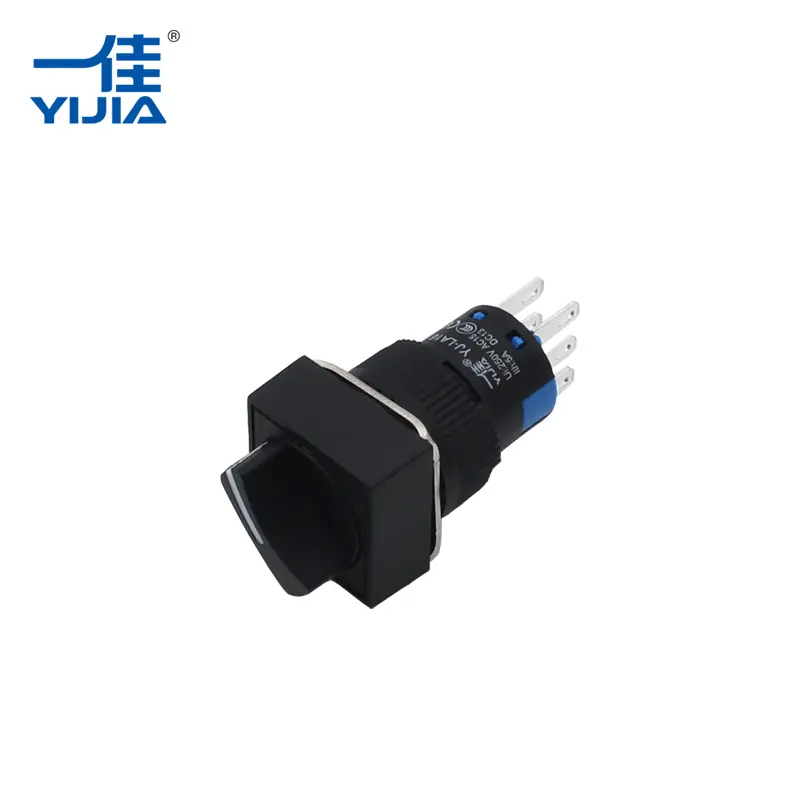
Common Failure Modes of a Three Position Selector Switch
| Failure Mode | Description | Typical Cause | Prevention Strategy |
|---|---|---|---|
| Contact corrosion | Oxidation or pitting on stationary or moving contacts | High humidity, chemical exposure | Use sealed switches like YIJIA’s IP65-rated series |
| Detent wear | Loss of tactile positioning between the three positions | Repeated mechanical cycling | Select switches with stainless steel detent mechanisms |
| Loose terminal connections | Intermittent signal or complete open circuit | Vibration, improper torque | Apply thread-locking compound and periodic re-torquing |
| Dielectric breakdown | Short circuit between adjacent contacts | Voltage spikes, contamination | Install surge suppression and clean environment |
| Cam fatigue | Incomplete rotation or stuck selector lever | Metal fatigue, debris ingress | Choose YIJIA switches with hardened cam profiles |
Why These Failures Disrupt Automation Systems
A Three Position Selector Switch often dictates safety circuits, logic controller inputs, or power contactors. For example, a stuck switch in “Auto” may prevent emergency manual override. Regular predictive maintenance—thermal imaging, contact resistance testing—can detect early degradation. YIJIA switches undergo 100,000+ mechanical operation tests to minimize field failures.
Three Position Selector Switch FAQ
Question 1: How can I diagnose a faulty Three Position Selector Switch without removing it from the panel
Answer: Use a multimeter in continuity mode. Connect probes to common (C) and normally open (NO) contacts for each position. Rotate the knob to position 1, 2, and 3 while observing resistance. Any reading above 0.5 ohms or unstable values indicates contact wear. For live circuits, measure voltage drop across closed contacts—exceeding 0.1V at rated current suggests degradation. YIJIA provides detailed test points in each product datasheet.
Question 2: Can environmental contaminants cause intermittent operation of a Three Position Selector Switch
Answer: Yes. Dust, oil mist, or moisture inside the enclosure can form conductive bridges between terminals or increase friction on the cam mechanism. This leads to “phantom switching” where the PLC reads a different position than the physical knob. YIJIA’s switches feature double-sealed shafts and gold-plated contacts, offering resistance to common industrial pollutants. Periodic cleaning with non-residue contact cleaner is recommended every 6 months in harsh environments.
Question 3: What is the typical lifespan of a Three Position Selector Switch in high-cycle applications
Answer: Mechanical lifespan ranges from 50,000 to 500,000 operations depending on build quality. Electrical lifespan is lower due to arcing—typically 10,000 to 100,000 cycles at rated load. YIJIA’s industrial-grade series guarantees 200,000 mechanical and 50,000 electrical cycles at full load. For high-cycle automation (e.g., packaging machines), select a switch with silver-alloy contacts and self-cleaning wiping action. Always derate current by 20% when cycle rate exceeds 10 operations per minute.
Best Practices to Extend Three Position Selector Switch Life
-
Proper mounting: Use anti-rotation washers and torque to manufacturer specs.
-
Environmental protection: Choose YIJIA switches with IP66 rating for washdown areas.
-
Load management: Never exceed 80% of rated current for continuous duty.
-
Regular inspection: Check detent feel and contact resistance quarterly.
Contact Us
Need a reliable Three Position Selector Switch for your automation system? YIJIA offers certified components with technical support and fast global shipping.