

What Are the Main Challenges in Modeling High-Frequency Transformers
2026-03-09
Modeling High-frequency Transformer behavior accurately is essential for engineers designing modern power electronics. However, as switching frequencies increase, parasitic elements that are negligible at lower frequencies become dominant. At Haoer, we specialize in overcoming these complex engineering hurdles. Understanding the core challenges in simulation and design is the first step toward building reliable, high-efficiency systems.
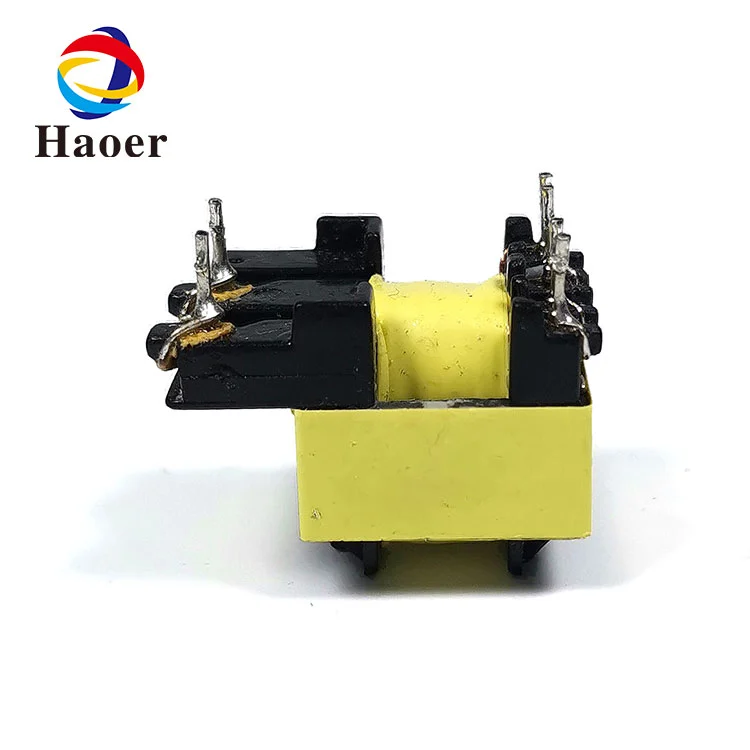
The Primary Modeling Complexities
The shift from traditional 50/60 Hz designs to applications like resonant converters and solid-state transformers introduces significant modeling difficulties. Below are the most critical issues engineers face when simulating a High-frequency Transformer.
| Challenge | Description | Impact on Model |
|---|---|---|
| Parasitic Capacitance | Inter-winding and intra-winding capacitances become significant at high frequencies. | Causes common-mode noise, resonant frequency shifts, and inaccurate transient simulations. |
| Skin & Proximity Effects | Current tends to flow on the conductor surface, and magnetic fields induce eddy currents in nearby conductors. | Dramatically increases AC resistance (R_ac), leading to higher copper losses than DC models predict. |
| Core Loss Modeling | Core loss is not linear; it depends on flux density, frequency, temperature, and waveform shape. | Standard Steinmetz equations often fail for non-sinusoidal excitation (e.g., square waves). |
| Thermal Coupling | Heat generated by losses changes material properties (permeability, resistivity). | Electrical and thermal models must be co-simulated to achieve accuracy; otherwise, thermal runaway risks are missed. |
| Leakage Inductance | The magnetic flux that does not link both windings stores energy. | Critical for soft-switching topologies (like LLC converters), but difficult to predict with simple geometry. |
Advanced Considerations in Parasitics
Beyond the basic losses, the interaction between components creates second-order effects. For instance, the leakage inductance does not exist in isolation; it resonates with the parasitic capacitance. This resonance defines the High-frequency Transformer impedance across the frequency spectrum. To build an accurate model, engineers must use Finite Element Analysis (FEA) tools rather than relying on simplified magnetic circuit equivalents. Haoer utilizes advanced 3D simulation to map these parasitic networks before physical prototyping begins.
High-frequency Transformer FAQ
How do I accurately measure the leakage inductance of a High-frequency Transformer?
To measure leakage inductance accurately, you must short-circuit the secondary winding. Then, measure the inductance looking into the primary winding at a frequency close to the intended operating frequency. Using a low frequency (like 1kHz) will yield inaccurate results because the flux distribution changes with frequency. It is also crucial to use an impedance analyzer that can subtract the DC resistance, ensuring you are measuring only the reactive parasitic component.
Why does the core temperature affect my High-frequency Transformer model so much?
Core materials, particularly ferrites, have a Curie temperature. As the core heats up, its permeability changes, and core losses per unit volume shift. If your model assumes constant material properties, you will mispredict the magnetizing inductance at full load. A robust model, such as those validated by Haoer, incorporates temperature coefficients so that the electrical behavior remains accurate across the entire operating range from cold start to steady-state thermal equilibrium.
Can I use the same model for both time-domain and frequency-domain simulations?
While you can use the same physical dimensions, you generally need different equivalent circuit models. For time-domain simulations (like SPICE transient analysis), a lumped-element model with capacitors and resistors is sufficient. For frequency-domain analysis (like impedance analysis), you need a distributed model to account for wave propagation effects, especially as the physical winding length approaches a significant fraction of the signal's wavelength.
Optimizing Your Design Cycle
Successfully navigating these challenges requires a partnership with a manufacturer who understands the physics of high-frequency magnetics. Relying on generic models or outdated formulas leads to multiple prototyping rounds, increasing development time and cost. Haoer provides expert design support and precision manufacturing to ensure your High-frequency Transformer performs exactly as simulated.
Contact Us today to discuss your project specifications and let our engineering team help you build a more efficient power system.