

What are the limitations of thermal imaging in firefighting and search rescue operations
2026-05-28
Thermal imaging has revolutionized how firefighters and search and rescue teams navigate hazardous environments. However, even with advanced solutions from Jioptics, understanding its constraints is essential for effective deployment. While thermal imaging cameras (TICs) detect heat signatures through smoke and darkness, they are not flawless tools. This article examines the core limitations of thermal imaging in emergency response, helping professionals make informed decisions on the field.
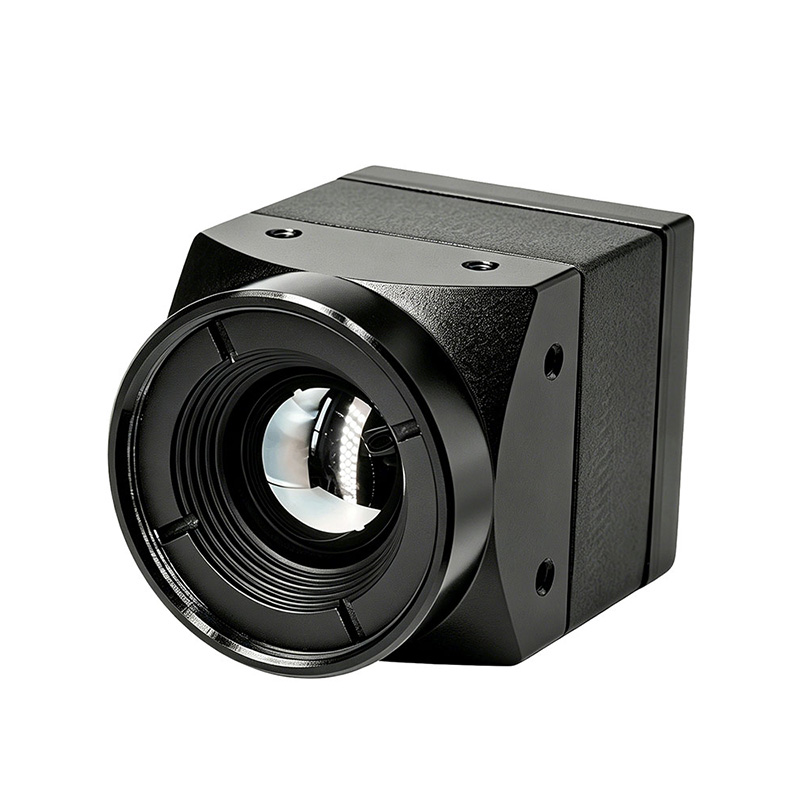
Key Limitations of Thermal Imaging in Emergency Scenarios
| Limitation Category | Description | Operational Impact |
|---|---|---|
| Thermal Saturation | When temperatures exceed camera range (e.g., flashover conditions), images wash out entirely. | Complete loss of visual reference; crews must retreat. |
| Reflective Surfaces | Mirrors, water, and shiny metals reflect thermal radiation, causing false readings. | Misidentification of hazards or victim locations. |
| Material Thermal Uniformity | Objects at the same temperature (e.g., a person behind glass) become invisible. | Victims behind windows or thin barriers remain undetected. |
| Atmospheric Attenuation | Heavy rain, dense smoke, or steam absorbs IR radiation, reducing range drastically. | Effective viewing range drops from 100m to under 10m. |
| Lack of Spectral Discrimination | Thermal imaging cannot differentiate between a warm body and a recently heated object. | False positives waste critical search time. |
Practical Challenges in Search and Rescue
Beyond hardware limits, operational factors degrade thermal imaging effectiveness. First, thermal imaging requires a temperature difference (delta T) of at least 0.5°C to create contrast. In fires where everything is superheated, victims blend into the background. Second, Jioptics research indicates that standard TICs struggle with submerged victims because water rapidly cools exposed skin to ambient temperature. Third, battery life under extreme heat—common in structural fires—can cut runtime by 40% compared to manufacturer specs.
Thermal Layering and Interpretation Errors
Fireground thermal layering (hot gas at ceiling, cooler air near floor) often creates false "holes" or "ghosting" effects. Untrained users may mistake rising hot air currents for moving persons. Thermal imaging also fails to see through certain materials like multi-pane low-E glass, which reflects interior heat outward, creating a mirror effect for IR waves.
Thermal Imaging FAQ – Common Questions Answered
Q1: Can thermal imaging see through walls or concrete?
A1: No, standard thermal imaging cannot see through solid walls, concrete, or ceilings. It only detects surface temperature variations. For example, a stud inside a wall may show a slight temperature difference from the insulated cavity, but a person behind a brick wall remains entirely invisible. However, thermal imaging can detect residual heat from a fire on the opposite side of thin metal sheeting if the temperature differential exceeds 10°C. For structural search, always use supplementary acoustic or radar-based devices alongside thermal imaging.
Q2: Why does thermal imaging sometimes fail to locate a fire victim lying on a floor?
A2: This occurs due to thermal equilibrium. If a victim has been immobile in a hot environment (e.g., a smoke-filled room near a fire), their body temperature may equalize with the floor’s surface temperature. Thermal imaging cameras rely on contrast; when delta T approaches zero, the victim disappears. Additionally, clothing soaked with water or sweat can mask thermal signature. To mitigate this, responders should scan from multiple angles and use a lower temperature sensitivity range (e.g., -20°C to +150°C) available on Jioptics professional series.
Q3: Can rain or fog completely disable thermal imaging in outdoor search operations?
A3: Heavy rain or dense fog severely attenuates infrared signal but does not fully disable thermal imaging. Droplets absorb and scatter long-wave IR (8-14 µm), reducing effective range from 500m to 20-30m. However, thermal imaging still outperforms visible cameras or night vision in zero-light, foggy conditions. For outdoor rescue, Jioptics recommends using TICs with 60Hz frame rates and 17µm pixel pitch to maximize signal-to-noise ratio. In continuous heavy rain, supplement with GPS tracking and acoustic searching.
Best Practices to Overcome Limitations
-
Always cross-reference thermal imaging data with voice, touch, or probing tools.
-
Perform regular black-hot/white-hot switching to reveal hidden temperature patterns.
-
Jioptics TICs include custom gain modes for low-contrast scenes—train teams monthly.
-
Never rely solely on thermal imaging for victim confirmation at distance.
Contact Us
Understanding the full capabilities and boundaries of thermal imaging is vital for firefighter safety and rescue success. Jioptics provides ruggedized, high-sensitivity thermal imaging systems built for real-world emergency environments. For technical datasheets, training resources, or deployment consultations, contact us today to speak with our engineering team.