

What Are the Key Features of a High-Quality HDMI to TTL Interface AD Board
2026-09-30
When selecting a display driver solution for embedded systems, industrial monitors, or custom LCD projects, understanding the core characteristics of a reliable HDMI To TTL Interface AD Board is essential. At SKY-TDM, decades of engineering experience in video interface technology have shaped the development of driver boards that meet rigorous professional standards. This article examines the features that distinguish a high-quality HDMI To TTL Interface AD Board from ordinary alternatives, helping engineers and integrators make informed decisions.
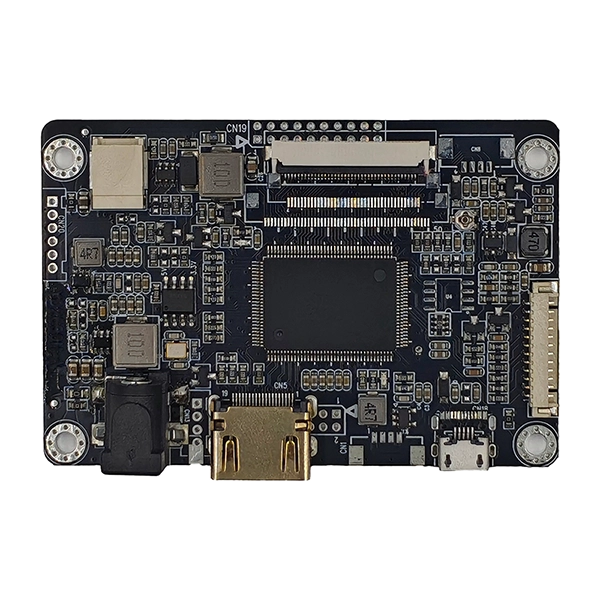
Core Features of a Professional-Grade HDMI To TTL Interface AD Board
A premium HDMI To TTL Interface AD Board is defined by several technical and build-quality attributes. The following list outlines the most critical ones:
-
Broad HDMI Input Compatibility: Support for HDMI 1.4 and above, including standard resolutions from 640×480 to 1920×1080, with automatic scaling to match the native resolution of the connected TTL panel.
-
Flexible TTL Output Configuration: Adjustable output voltage (3.3V, 5V, or 12V options), selectable color depth (18-bit or 24-bit), and support for common TTL pin mappings such as 40-pin and 50-pin connectors.
-
Advanced Signal Processing: Integrated scaling engine with low latency, de-interlacing, and frame rate conversion to ensure stable image quality across varied source devices.
-
On-Screen Display (OSD) and Control: Intuitive OSD menu for brightness, contrast, color temperature, and input selection, often accessible via IR remote, push buttons, or UART commands.
-
Robust Power Design: Wide input voltage range (typically 5V to 12V DC), reverse polarity protection, and efficient power regulation to minimize heat generation.
-
Firmware Customization: Ability to modify EDID, timing parameters, and boot logo through firmware updates, which is particularly valuable for OEM integration.
SKY-TDM designs every HDMI To TTL Interface AD Board with these features as baseline requirements, ensuring long-term reliability in demanding environments.
Comparative Overview: Standard vs. High-Quality HDMI To TTL Interface AD Board
| Feature | Standard Board | High-Quality Board (e.g., SKY-TDM) |
|---|---|---|
| HDMI Version | 1.2 or lower | 1.4 / 2.0 compatible |
| Maximum Resolution | 1280×1024 | 1920×1080 or higher |
| TTL Voltage Options | Fixed 5V | 3.3V / 5V / 12V selectable |
| Color Depth | 18-bit | 18-bit / 24-bit |
| OSD Control | Limited | Full OSD with IR, UART, and GPIO |
| Firmware Update | Not supported | Supported via USB or UART |
| Operating Temperature | 0°C to 50°C | -20°C to 70°C |
| MTBF | < 30,000 hours | > 50,000 hours |
This table illustrates why professionals often choose a HDMI To TTL Interface AD Board from SKY-TDM for mission-critical applications.
HDMI To TTL Interface AD Board FAQ
Q1: What types of TTL LCD panels are compatible with a high-quality HDMI To TTL Interface AD Board?
A1: A high-quality HDMI To TTL Interface AD Board typically supports TFT LCD panels with TTL interfaces, including common resolutions such as 800×480, 1024×600, 1280×800, and 1920×1080. Compatibility depends on matching the panel's pin definition, voltage requirements, and timing specifications. SKY-TDM boards include adjustable timing parameters and multiple connector options to accommodate a wide range of panels from major manufacturers.
Q2: Can a HDMI To TTL Interface AD Board handle audio output alongside video?
A2: Yes, most professional HDMI To TTL Interface AD Board solutions extract audio from the HDMI stream and output it via I2S, SPDIF, or analog stereo headers. This allows integrators to drive external amplifiers or speakers without a separate audio decoder. SKY-TDM boards provide dedicated audio output pins and configurable audio gain settings for seamless integration.
Q3: How do I update the firmware on a HDMI To TTL Interface AD Board?
A3: Firmware updates on a HDMI To TTL Interface AD Board are usually performed through a USB port, UART interface, or SD card slot, depending on the model. The process involves loading a binary file provided by the manufacturer and following a specific sequence to enter bootloader mode. SKY-TDM supplies detailed update guides and firmware packages for every board, ensuring that engineers can modify EDID, scaling behavior, and OSD parameters as needed.
Conclusion
Choosing the right HDMI To TTL Interface AD Board directly impacts display performance, system stability, and long-term maintainability. By prioritizing the features outlined above—broad compatibility, flexible output, advanced processing, and robust firmware support—integrators can avoid common pitfalls. SKY-TDM remains committed to delivering high-quality HDMI To TTL Interface AD Board solutions backed by technical expertise and responsive service.
Contact us today to discuss your specific display interface requirements and receive a tailored recommendation from the SKY-TDM engineering team.