

What are the key differences between Lithium Polymer and Lithium Ion batteries
2026-06-01
When choosing a rechargeable power source for modern electronics, two technologies dominate the conversation: Lithium Ion battery and Lithium Polymer battery. Understanding their structural and performance distinctions is critical for engineers and hobbyists alike. At VCELL POWER, we specialize in both chemistries, helping clients select the optimal solution for their specific voltage, capacity, and form-factor requirements. Below is a professional breakdown of how these two battery types compare.
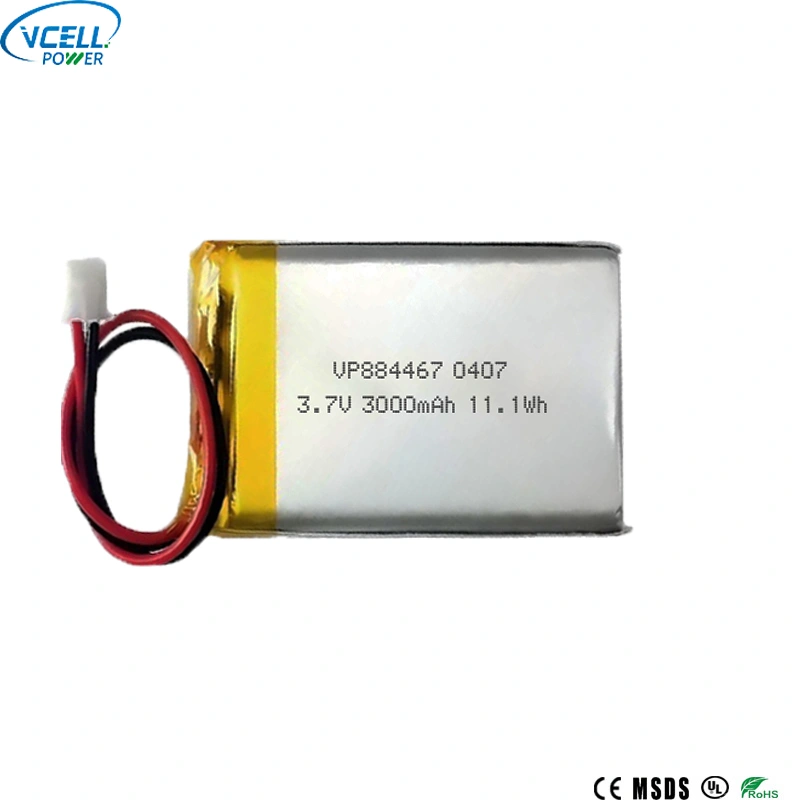
Key Differences at a Glance
| Feature | Lithium Ion battery | Lithium Polymer battery |
|---|---|---|
| Electrolyte | Liquid organic electrolyte | Gel-like or solid polymer electrolyte |
| Casing | Rigid metal cylinder or prismatic can | Flexible aluminum foil pouch |
| Shape | Cylindrical (18650, 21700) or fixed prismatic | Customizable thin or curved shapes |
| Energy Density | High (250–300 Wh/kg) | Slightly lower (200–260 Wh/kg) |
| Safety Risk | Higher leakage/explosion risk if punctured | Lower flammability, but prone to swelling |
| Cycle Life | 500–1000 cycles | 300–700 cycles |
| Cost | Lower manufacturing cost per Wh | Higher cost due to complex lamination |
Detailed Performance Comparison
Lithium Ion batteries offer superior volumetric energy density and longer cycle life, making them ideal for laptops, power tools, and electric vehicles. However, their rigid metal case limits design flexibility. In contrast, a Lithium Polymer battery eliminates liquid electrolyte, enabling ultra-thin (as slim as 0.5 mm) and custom-shaped packs for drones, wearables, and medical devices. VCELL POWER produces both types with matched cells to ensure consistent discharge rates.
Three Common FAQs about Lithium Polymer Battery
Question 1: Is a Lithium Polymer battery safer than a Lithium Ion battery under normal use?
Answer: Yes, generally. A Lithium Polymer battery uses a gel or solid electrolyte that is less likely to leak or catch fire when physically damaged. However, it remains sensitive to overcharging and deep discharge. The primary safety risk for Lithium Polymer battery packs is swelling (gassing) caused by moisture ingress or voltage abuse. VCELL POWER incorporates multiple protection circuits (over-voltage, over-current, and short-circuit) in every Lithium Polymer battery assembly to mitigate these risks. For high-vibration environments like drones, LiPo is often preferred over Li-ion despite lower cycle life.
Question 2: Can I replace a Lithium Ion battery with a Lithium Polymer battery of the same voltage rating
Answer: Not without verifying the charging algorithm and physical constraints. While both chemistries have similar nominal voltages (3.6V–3.7V per cell), their charge termination currents differ. A Lithium Polymer battery typically requires a lower constant voltage (4.2V) and stricter CC/CV cut-off at 0.05C compared to some Li-ion variants. Additionally, the flexible pouch of a Lithium Polymer battery cannot withstand external pressure points. VCELL POWER recommends reviewing the device’s battery management system (BMS) before swapping chemistries. We offer custom BMS integration for Lithium Polymer battery retrofits.
Question 3: How should I store a Lithium Polymer battery to maximize its service life
Answer: Store a Lithium Polymer battery at 40–60% state of charge in a cool, dry environment between 5°C and 20°C. Unlike Li-ion, a fully charged Lithium Polymer battery degrades faster due to electrolyte oxidation. Use a fireproof LiPo bag for long-term storage, and never store a swollen or physically damaged Lithium Polymer battery. VCELL POWER provides storage voltage pre-set (3.8V per cell) on all our Lithium Polymer battery packs, extending shelf life to over 12 months with minimal capacity loss.
Why Choose VCELL POWER for Your Battery Needs
For applications demanding high discharge rates (50C+), custom dimensions, or lightweight construction, a Lithium Polymer battery from VCELL POWER outperforms rigid Li-ion cells. Our factory audits each cell for internal resistance and self-discharge, ensuring fewer than 0.1% field failures. Whether you need a cylindrical Lithium Ion battery for energy storage or a pouch Lithium Polymer battery for a compact IoT device, VCELL POWER delivers ISO-certified solutions with full UL, CE, and RoHS compliance.
Contact us today for a free technical consultation and quote. Email VCELL POWER or visit our website to request datasheets, samples, or custom assembly drawings for your next project.