

What Are the Key Differences Between Li-SOCL2 and Other Lithium Battery Chemistries
2026-02-04
In the diverse landscape of energy storage, selecting the right lithium chemistry is crucial for optimal device performance. Among the most robust solutions is the Li-SOCL2 battery, renowned for its unique characteristics that set it apart from common lithium-ion variants. At VCELL POWER, we specialize in providing advanced battery solutions, and a clear understanding of these key differences empowers engineers and developers to make informed decisions for their applications.
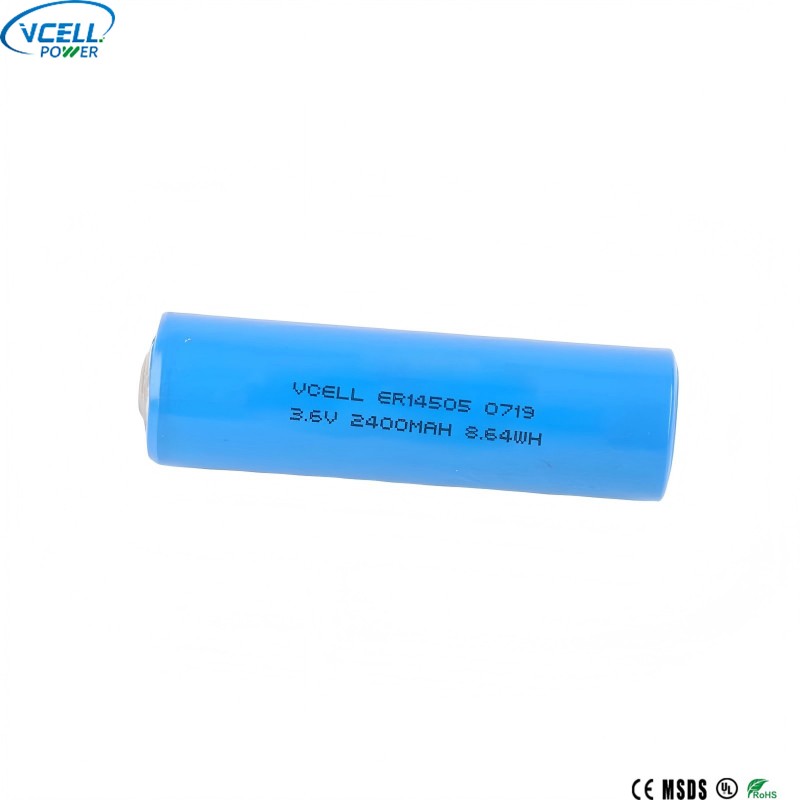
The fundamental disparities stem from chemistry, design, and performance metrics. Here is a comparative overview presented in a table format for clarity:
| Feature | Li-SOCL2 Battery (Thionyl Chloride) | Typical Li-ion Battery (e.g., LCO, NMC) |
|---|---|---|
| Nominal Voltage | 3.6V (Very high and stable) | 3.6V - 3.7V (Declines with discharge) |
| Energy Density | Exceptionally High (Up to ~700 Wh/kg) | High (150-250 Wh/kg) |
| Operating Temp. Range | Extremely Wide (-60°C to +150°C possible) | Standard (-20°C to +60°C) |
| Self-Discharge Rate | Extremely Low (<1% per year) | Moderate (~2-3% per month) |
| Primary/Rechargeable | Primary (Non-rechargeable) | Secondary (Rechargeable) |
| Typical Applications | Utility Metering, Medical Devices, Military, IoT | Consumer Electronics, EVs, Power Tools |
To further elucidate the practical implications of this chemistry, let's address some common FAQs about the Li-SOCL2 battery.
FAQ 1: Why is the shelf life of a Li-SOCL2 battery so long?
The exceptionally long shelf life, often exceeding 10 years, is due to the formation of a protective lithium chloride layer on the lithium anode. This passive layer minimizes chemical reactions during storage, leading to an annual self-discharge rate of less than 1%.
FAQ 2: Can a Li-SOCL2 battery be recharged?
No, standard Li-SOCL2 batteries are strictly primary (non-rechargeable) cells. Attempting to recharge them can lead to severe safety hazards, including rupture or thermal runaway, due to their specific chemical construction.
FAQ 3: What causes voltage delay in some Li-SOCL2 batteries?
Voltage delay is a temporary dip in voltage under high pulse loads after prolonged storage. It is caused by the protective passivation layer on the anode, which must be broken down before optimal current flow resumes. VCELL POWER engineers can design solutions to minimize this effect for specific pulse profiles.
In summary, the choice hinges on your application's core needs. If your project demands ultra-long life, unparalleled energy density, and reliable operation in harsh environments, the Li-SOCL2 battery is the definitive choice. For high-cycle-life, rechargeable needs in moderate conditions, Li-ion reigns supreme.
Contact Us at VCELL POWER Today!
Navigating the complexities of battery selection requires expert guidance. Whether you are developing a new IoT sensor, a medical implant, or critical industrial equipment, our team at VCELL POWER is here to provide the technical expertise and reliable Li-SOCL2 battery solutions your innovation deserves. Reach out to our engineering specialists for a consultation to power your most challenging applications with confidence.