

What are the Key Differences Between EV and HEV High-Current Fuse Requirements
2025-12-19
When engineering the electrical architecture for electric and hybrid vehicles, the protection strategy is paramount. A critical, yet often underestimated, component in this system is the high-current fuse. While both EV and HEV Power Fuse solutions serve the fundamental purpose of safeguarding against catastrophic overloads, their operational demands diverge significantly. At Yinrong, we specialize in developing precise fusing solutions tailored to these distinct requirements, ensuring optimal safety and system longevity for modern vehicles.
The core difference stems from the voltage and power distribution design. A Battery Electric Vehicle (EV) relies solely on a high-voltage (typically 400V-800V) battery pack, resulting in a relatively simpler but higher-energy DC link. In contrast, a Hybrid Electric Vehicle (HEV) features a complex interplay between a high-voltage battery, an internal combustion engine, a generator, and often a lower-voltage network. This complexity dictates unique fuse needs.
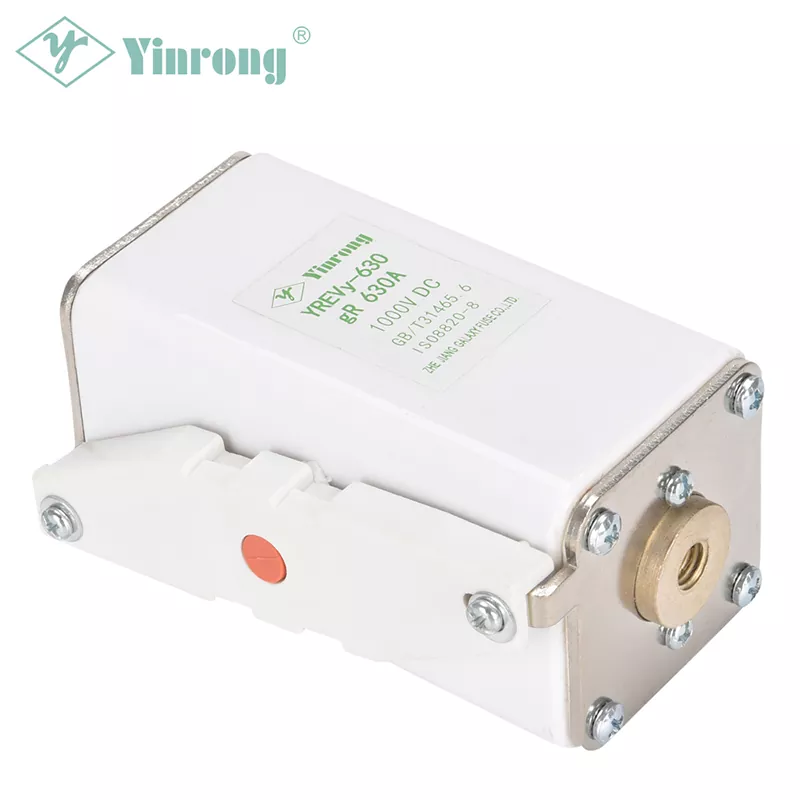
Key Comparative Requirements:
-
Fault Current Interruption: EV fuses must interrupt extremely high fault currents from a large, centralized battery. HEV fuses often deal with fault sources from both the battery and the generator, requiring careful coordination.
-
Voltage Rating: With the advent of 800V+ EV architectures, Yinrong fuses are engineered for higher steady-state and transient voltage ratings compared to most HEV systems.
-
Power Cycling Endurance: HEV systems frequently cycle power as the engine starts/stops, subjecting fuses to more thermal stress cycles. Yinrong designs account for this fatigue.
-
Space Constraints: HEV engine compartments are densely packed, demanding more compact fuse form factors without compromising performance.
To illustrate the specification differences, consider the following Yinrong product parameters:
| Parameter | Yinrong EV Series Fuse (e.g., YR-EV800) | Yinrong HEV Series Fuse (e.g., YR-HEV500) |
|---|---|---|
| Rated Voltage (VDC) | 800 | 500 |
| Current Rating Range | 150A - 400A | 80A - 250A |
| Interrupting Capacity | Ultra-high (100kA+) | Very High (50kA+) |
| Key Design Focus | High-energy interruption, arc quenching | Power cycling endurance, compact size |
| Typical Location | Main battery disconnect, charger circuit | Battery branch, inverter/generator circuit |
EV and HEV Power Fuse FAQ
Q: Can I use an HEV-rated fuse in a pure EV application?
A: It is strongly discouraged. An HEV fuse may not have the voltage rating or interrupting capacity to safely handle a full EV battery pack fault, posing a significant safety risk. Always use a fuse specified for the correct platform.
Q: How does fuse response time (I²t value) matter for EV vs. HEV systems?
A: The I²t (let-through energy) is critical. EV systems, with massive stored energy, require very fast-acting fuses with a low I²t to protect sensitive powertrain components like the inverter. HEV circuits may allow for slightly slower action to avoid nuisance blowing during motor-generator transients.
Q: Why choose Yinrong for both EV and HEV fuse solutions?
A: Yinrong doesn't offer a one-size-fits-all solution. Our dedicated EV and HEV Power Fuse lines are independently developed and tested against the specific real-world stress profiles of each vehicle type. We provide the precise blend of rapid protection, durability, and compact design that each complex system demands.
Selecting the correct high-current fuse is a critical engineering decision that impacts vehicle safety, reliability, and performance. Don't compromise with generic protection. Contact us today to discuss your specific EV or HEV project requirements. Our Yinrong technical team is ready to provide expert support and specification guidance to ensure your design is protected by the best.