

What Are the Key Differences Between Diamond Dotted Paper and Kraft Paper in Transformers?
2026-09-18
1. What Is the Functional Role of Kraft Paper in a Transformer Winding?
Kraft paper is the foundational solid insulation material in oil-immersed transformers. It is produced from unbleached wood pulp and is characterized by high mechanical strength and good dielectric properties when impregnated with insulating oil. In a transformer winding, kraft paper serves three primary functions: it insulates conductors from each other, it provides a dielectric barrier between winding layers, and it serves as a spacer to create oil channels. The key characteristic of kraft paper is that it is a passive material. It does not bond to adjacent surfaces. The winding structure must be held together by external clamping forces. When engineers evaluate Electrical Insulation Materials On Oil Type Transformers, kraft paper is always the baseline against which other materials are compared.
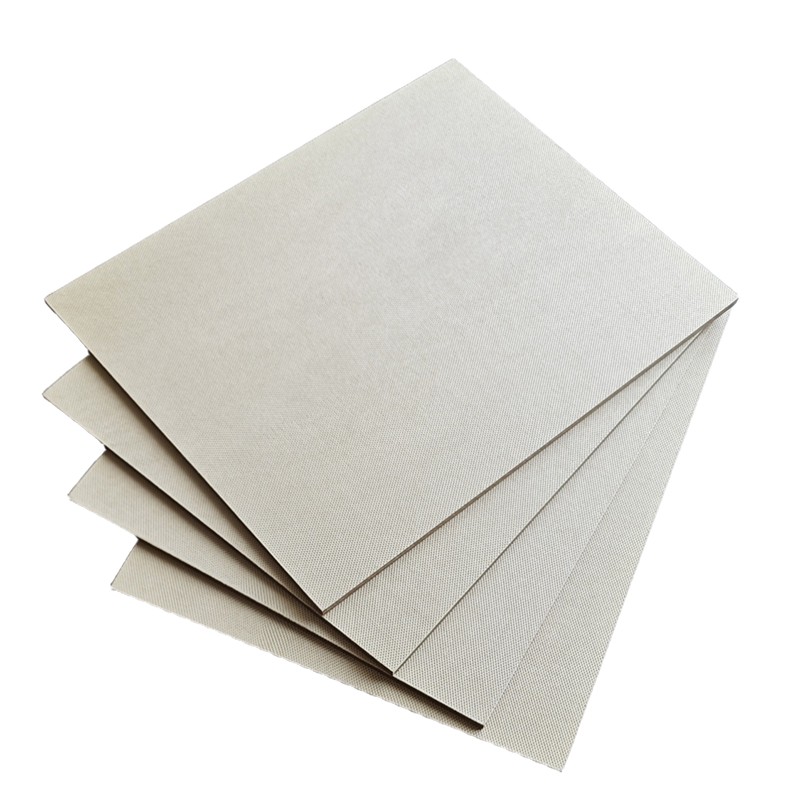
The table below summarizes the typical specifications for electrical-grade kraft paper used in transformers.
| Parameter | Typical value for transformer kraft paper | Significance |
| Thickness range | 0.05 – 0.25 mm | Layer insulation and conductor wrapping |
| Density | 0.75 – 0.90 g/cm³ | Lower density aids oil impregnation |
| Tensile strength (MD) | 60 – 100 MPa | Resists winding tension and short-circuit forces |
| Dielectric strength (oil-impregnated) | 30 – 50 kV/mm | Insulation between conductors |
| Moisture content (as supplied) | 6 – 8% | Must be dried before oil impregnation |
Suzhou Hanyao New Materials Co., Ltd. supplies electrical-grade kraft paper that meets the requirements of IEC 60455 and ASTM D202. Our factory sources kraft paper from mills that use virgin wood pulp and strict quality control to ensure consistent dielectric properties. These materials form the backbone of the Electrical Insulation Materials On Oil Type Transformers that we supply to manufacturers worldwide.
2. What Is Diamond Dotted Paper and Why Does It Exist?
Diamond dotted paper is a composite material that addresses a specific limitation of kraft paper: the lack of mechanical bonding between winding layers. It consists of a base kraft paper coated with discrete dots of B-stage epoxy resin in a diamond pattern. When the winding is heated during the drying process, the resin dots melt and cure, creating permanent bonds between adjacent paper layers and conductors. The uncoated areas remain open, allowing oil to penetrate and providing channels for moisture to escape during drying. This dual function—bonding and oil impregnation—is what makes diamond dotted paper unique. It is not a replacement for kraft paper; it is a supplement that adds structural integrity where needed. Among the various Electrical Insulation Materials On Oil Type Transformers, diamond dotted paper is the only one that provides both dielectric insulation and mechanical bonding in a single layer.
Why the diamond pattern matters: The discrete dots (typically 10 mm x 10 mm diamonds spaced 7 mm apart) allow the paper to be wound tightly without blocking oil channels. The B-stage resin is partially cured so it is dry to the touch during winding, but flows and cures when heated to 120-140°C during the drying cycle.
The mechanical bonding provided by diamond dotted paper significantly increases the short-circuit withstand strength of the winding. When a fault occurs, the electromagnetic forces try to deform the winding. The bonded structure resists this deformation better than a non-bonded structure, reducing the risk of insulation damage and conductor displacement. Our factory produces diamond dotted paper with controlled resin dot size and distribution to ensure consistent bonding performance.
3. How Do the Two Materials Differ in Thermal Aging Behavior?
The thermal aging behavior of kraft paper and diamond dotted paper differs because of the resin content. Kraft paper ages by depolymerization of cellulose chains, which reduces its mechanical strength (measured by degree of polymerization, DP). Diamond dotted paper ages by the same cellulose mechanism, but the epoxy resin dots also undergo aging. The resin is generally more thermally stable than cellulose, so the bonding strength degrades more slowly than the paper strength. When selecting Electrical Insulation Materials On Oil Type Transformers for long-life applications, the aging behavior of both the paper and the bonding resin must be considered. The table below compares the aging behavior of the two materials under accelerated thermal aging at 150°C.
| Aging parameter | Kraft paper (in mineral oil) | Diamond dotted paper (in mineral oil) |
| DP after 1000 hours | ~650 | ~680 |
| DP after 3000 hours | ~400 | ~420 |
| Tensile strength retention after 3000h | ~55% | ~60% |
| Bond strength retention (DDP only) | N/A | ~75% |
The data shows that diamond dotted paper has a slight advantage in DP retention, likely because the resin dots provide some protection to the cellulose beneath them. However, the more important finding is that the bond strength of the resin dots remains high even after significant cellulose aging. This means that diamond dotted paper continues to provide mechanical support even as the base paper ages. Research on thermal aging of these Electrical Insulation Materials On Oil Type Transformers in both mineral oil and natural ester confirms that diamond dotted paper exhibits similar or slightly better aging characteristics compared to kraft paper.
4. When Should Each Material Be Specified in a Transformer Design?
The specification decision is based on the location within the winding and the mechanical requirements. Kraft paper is specified for conductor wrapping, layer insulation in the body of the winding, and barrier insulation between windings. Diamond dotted paper is specified in locations where mechanical bonding is needed to resist short-circuit forces. These locations include the outer layers of the winding, the ends of the winding where axial forces are highest, and any location where the winding must be self-supporting. The table below provides guidance for selecting Electrical Insulation Materials On Oil Type Transformers for different winding locations.
| Winding location | Recommended material | Reason |
| Conductor wrapping | Kraft paper | Flexibility for tight bends around conductors |
| Layer insulation (body) | Kraft paper | Adequate dielectric strength, lower cost |
| Outer winding layers | Diamond dotted paper | Bonds outer layers to resist radial forces |
| Winding ends | Diamond dotted paper | Bonds end turns to resist axial forces |
| Barrier between windings | Kraft paper or pressboard | Dielectric barrier, no bonding required |
Design principle: Use diamond dotted paper only where the mechanical bonding function is needed. Over-specifying diamond dotted paper throughout the winding increases cost without proportional benefit and may reduce oil flow if the resin dots block too much of the channel area.
Suzhou Hanyao New Materials Co., Ltd. supplies both electrical kraft paper and diamond dotted paper to transformer manufacturers. Our technical team can assist with material selection based on the winding design and the short-circuit withstand requirements. We also provide testing services to verify the performance of Electrical Insulation Materials On Oil Type Transformers under accelerated aging conditions.
Frequently Asked Questions About Diamond Dotted Paper and Kraft Paper in Transformers
Summary for Transformer Design Engineers
Kraft paper and diamond dotted paper serve different functions in an oil-immersed transformer winding. Kraft paper is the baseline insulation material, providing dielectric strength and oil channels. Diamond dotted paper adds mechanical bonding through discrete resin dots that cure during the drying process. The two materials are complementary, not interchangeable. Correct specification requires understanding the mechanical forces at each location in the winding and selecting the material that provides the needed function without over-engineering. Suzhou Hanyao New Materials Co., Ltd. has been supplying Electrical Insulation Materials On Oil Type Transformers since 2012 and provides technical support for material selection.
Suzhou Hanyao New Materials Co., Ltd. manufactures diamond dotted paper, electrical kraft paper, and pre-compressed pressboard for oil-immersed transformers. We provide full technical specifications and material certificates for all products.