

What Are the Environmental Considerations When Using a 24kV Pole Mounted SF6 Load Break Switch
2026-10-20
As utilities and EPC contractors expand overhead distribution networks, the 24kV Pole Mounted SF6 Load Break Switch has become a practical choice for reliable load breaking and fault isolation. Anqiang Power has supported numerous rural and urban feeder projects with this equipment, and environmental performance is now a central topic in specification meetings. Below is a structured look at the key considerations, from SF6 gas management to end-of-life planning.
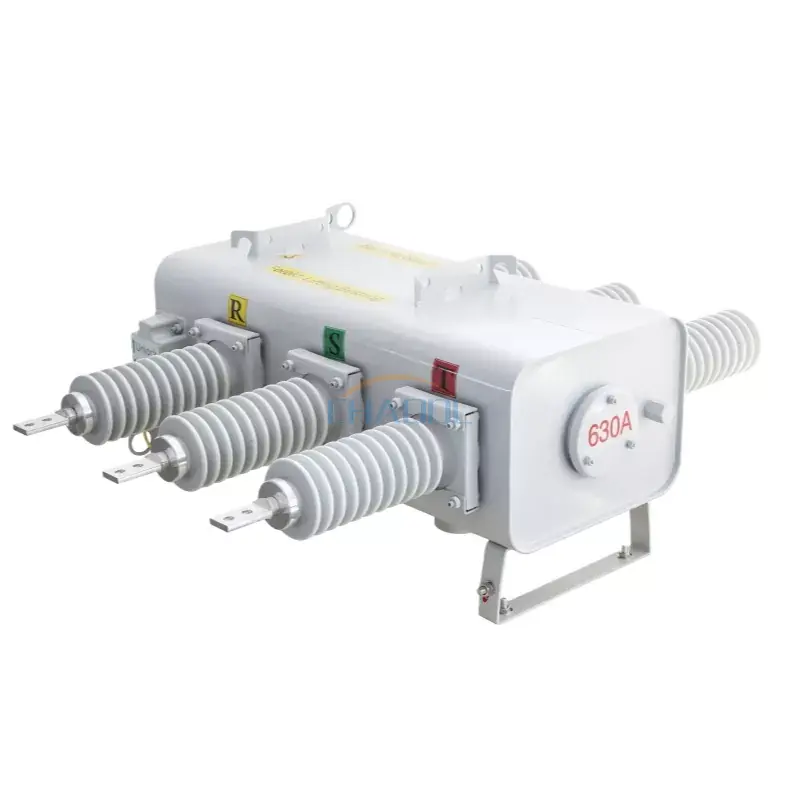
1. SF6 Gas: The Dominant Environmental Factor
Sulfur hexafluoride is the insulating and arc-quenching medium inside the switch. Its global warming potential is approximately 23,500 times that of CO₂, so even small leakage rates matter. A well-designed 24kV Pole Mounted SF6 Load Break Switch should be sealed for life, with annual leakage below 0.1% per IEC 62271-1 requirements.
| Consideration | Typical Requirement | Why It Matters |
|---|---|---|
| Leakage rate | ≤0.1% per year | Limits cumulative GWP impact |
| Sealing method | Laser-welded or double O-ring | Prevents moisture ingress and gas loss |
| Gas pressure monitoring | Pressure gauge or sight glass | Enables early detection |
| Recovery at end of life | Certified SF6 recovery unit | Avoids direct atmospheric release |
Anqiang Power uses helium leak testing on every sealed tank before shipment, which helps utilities document compliance during environmental audits.
2. Insulation and Clearance Design
The 24kV Pole Mounted SF6 Load Break Switch is often installed on narrow poles in space-constrained areas. Compact SF6 insulation reduces phase-to-phase clearance, which lowers the required pole height and right-of-way. This indirectly reduces vegetation clearing and land disturbance — a genuine environmental benefit that is sometimes overlooked in tender evaluations.
3. Materials, Recycling, and End-of-Life
-
Housing: Hot-dip galvanized steel or stainless steel for corrosion resistance and longer service life.
-
Bushings: Cycloaliphatic epoxy, which is recyclable and has good tracking resistance.
-
Contacts: Copper-tungsten arcing contacts, recoverable through standard metal recycling.
-
SF6 recovery: Nameplate gas quantity should be recorded so decommissioning crews can prepare recovery cylinders.
Anqiang Power provides a decommissioning data sheet with each unit, listing gas mass, material composition, and recovery instructions.
4. Operational Emissions and Site Impact
Remote operation and motorized options reduce vehicle trips for manual switching, cutting site access emissions. Selecting a 24kV Pole Mounted SF6 Load Break Switch with visible isolation and mechanical indicators also reduces unnecessary re-visits for verification.
5. Regulatory and Standards Alignment
Specifiers should confirm compliance with IEC 62271-103 for load break switches, IEC 62271-1 for common specifications, and local SF6 reporting rules such as EU F-gas regulations where applicable. Anqiang Power supplies type test reports and gas handling documentation to support permitting.
FAQ
Q: How much SF6 gas is typically contained in a 24kV Pole Mounted SF6 Load Break Switch, and does that affect environmental reporting?
A: Most 24kV pole-mounted units contain roughly 0.5–2 kg of SF6 depending on rated current and configuration. Because the GWP of SF6 is about 23,500, even 1 kg equals roughly 23.5 tonnes CO₂-equivalent, so the gas charge must be recorded in asset registers and included in leakage-based emissions reporting under schemes such as the EU F-gas Regulation or local equivalents. Anqiang Power stamps the exact gas mass on the nameplate and provides a declaration document for each 24kV Pole Mounted SF6 Load Break Switch, making carbon accounting straightforward.
Q: What end-of-life procedures are required for a 24kV Pole Mounted SF6 Load Break Switch?
A: At decommissioning, the unit should be isolated, and the SF6 must be recovered using certified recovery equipment rather than vented. The gas can then be purified and reused, while metal housings, copper contacts, and epoxy bushings enter separate recycling streams. Documentation of recovered gas mass should be retained for regulatory records. Anqiang Power supplies a decommissioning guide and gas quantity record with every 24kV Pole Mounted SF6 Load Break Switch to simplify this process.
Q: Are there lower-GWP alternatives to SF6 for a 24kV Pole Mounted SF6 Load Break Switch, and when should they be considered?
A: Vacuum interruption combined with solid or air insulation, and g3 or fluoronitrile gas mixtures, are emerging alternatives. However, for 24kV overhead applications requiring compact pole-top footprints and proven arc-quenching performance, the SF6 design remains widely deployed. Specifiers should evaluate alternatives where leakage risk is high or local regulations restrict SF6. Anqiang Power can advise on both SF6 and vacuum-based options so the selected 24kV Pole Mounted SF6 Load Break Switch matches the project's environmental targets and budget.
Conclusion
Environmental performance of pole-mounted switching equipment is determined by gas tightness, material choices, documentation, and end-of-life planning — not by a single specification line. Anqiang Power supports utilities with leak-tested 24kV Pole Mounted SF6 Load Break Switch units, full gas data, and recovery guidance. Contact us today to request type test reports, gas mass declarations, or a project-specific environmental compliance checklist for your next overhead distribution project.