

What Are the Differences Between Signal Relays and Power Relays
2025-12-12
In the intricate world of electronic control, selecting the correct type of relay is paramount for system reliability and performance. Two fundamental categories, Signal Relays and Power Relays, often cause confusion despite their distinct roles. Understanding their differences is crucial for optimal circuit design. At Forward, we specialize in engineering both types to meet precise application demands, ensuring your projects benefit from superior switching technology.
The core distinction lies in their primary function and construction. Signal Relays are designed to switch low-current, low-voltage signal paths, typically in logic circuits, telecommunications, or data acquisition systems. Their focus is on maintaining signal integrity with minimal interference. Conversely, Power Relays are built to handle high-current loads, directly controlling motors, solenoids, heaters, or lighting systems. They act as robust intermediaries between a low-power control circuit and a high-power load.
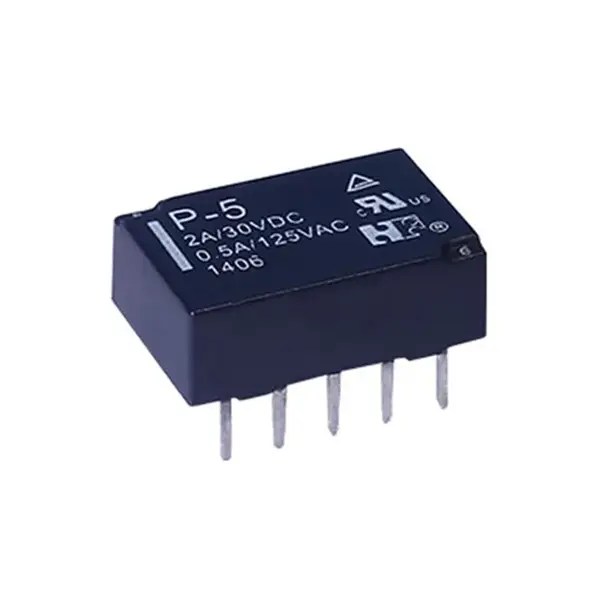
Key differentiating factors include:
-
Contact Rating: This is the most critical parameter. Signal Relays generally manage currents from microamps up to 2A, with voltages below 250VAC/30VDC. Forward signal relays excel in this range with ultra-low contact resistance. Power Relays are rated for loads from 5A to 100A+ at voltages of 250VAC or higher.
-
Physical Size & Construction: Due to their lower current handling, Signal Relays are often compact, such as Forward's subminiature PCB-mount models. Power Relays require larger contacts, more robust housings, and often include arc suppression features to manage the energy of breaking high-current circuits.
-
Application Focus: Use a Signal Relay for clean switching in measurement, test equipment, or communication devices. Choose a Power Relay for control panels, industrial automation, appliance control, or any primary power switching duty.
Signal Relay FAQ
Q: Can a Signal Relay be used to switch a mains-powered light bulb?
A: No, this is a common misapplication. A standard Signal Relay is not rated for the inrush current and steady-state load of a mains-voltage lamp. Using it in this way poses a serious safety risk, including contact welding or fire. Always use a properly rated Power Relay for mains load control.
Q: Why is contact material important in a Signal Relay?
A: Contact material is critical for signal integrity. Forward utilizes gold-clad or silver-palladium alloys in its Signal Relays to ensure stable, low-contact resistance. This prevents signal attenuation, minimizes noise, and provides reliable performance for low-energy circuits, which is not the primary concern for the larger, often silver-based contacts in Power Relays.
Q: How do I choose between a sealed and non-sealed Signal Relay?
A: The choice depends on your operating environment. A sealed Signal Relay, like many in the Forward catalog, is filled with an inert gas and is resistant to flux intrusion, dust, and humidity during PCB washing and in harsh conditions. A non-sealed relay is suitable for controlled, clean environments and may offer slightly lower cost. For long-term reliability in most applications, a sealed relay is recommended.
Comparison Table: Forward Signal Relays vs. Power Relays
| Feature | Forward Signal Relay | Forward Power Relay |
|---|---|---|
| Primary Function | Switching low-energy signals | Switching high-power loads |
| Typical Contact Rating | ≤ 2A, ≤ 30VDC / 250VAC | 10A - 40A, 250VAC+ |
| Contact Material | Gold-clad, Silver Alloy | Silver Tin Oxide, Silver Cadmium Oxide |
| Size/Form Factor | Subminiature, PCB Mount | Larger, PCB or Panel Mount |
| Key Application | Telecom, Test Gear, Data Acquisition | Industrial Controls, Appliances, HVAC |
| Coil Power Consumption | Very Low (e.g., 150mW) | Higher (e.g., 400mW - 1.2W) |
| Arc Suppression | Not typically required | Often integrated or required externally |
Choosing the right component is the foundation of durable electronics. Whether your design demands the precision of a Signal Relay or the robust control of a Power Relay, Forward provides engineered solutions with proven reliability. Our technical support team is ready to help you navigate these specifications.
Contact us today to discuss your specific requirements and request samples from the industry-leading Forward relay portfolio.