

What Are the Common Mistakes to Avoid When Using a Multi-Holes Nylon Cable Gland 8 Holes for Cable Management
2026-08-11
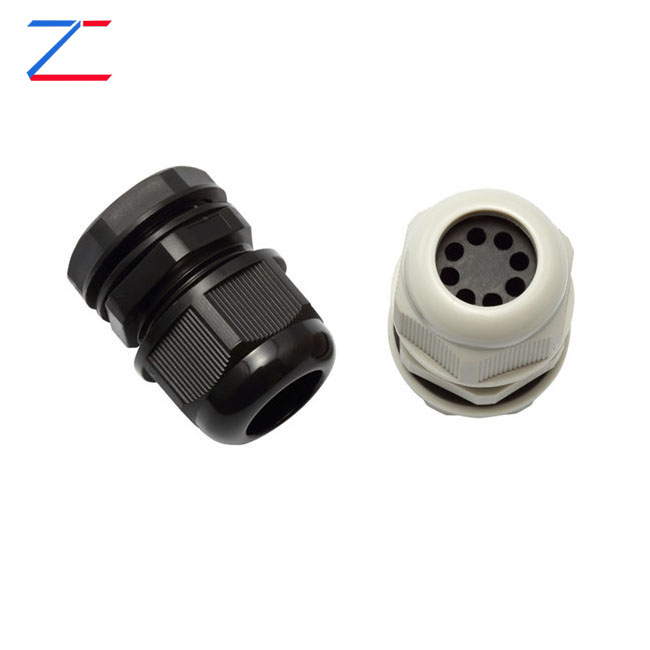
When managing multiple cables through a single enclosure panel, the Multi-Holes Nylon Cable Gland 8 Holes from Zhechi is often the go-to solution for engineers and installers. It promises IP68-rated sealing, excellent strain relief, and organized cable routing. Yet, in real-world installations, even experienced technicians make errors that compromise safety, sealing integrity, and long-term durability. Understanding these pitfalls is the first step toward a flawless installation. Below, we dissect the most frequent mistakes and provide actionable solutions, backed by Zhechi’s engineering standards.
1. Overlooking Cable Diameter Compatibility
The most common error is assuming that all 8 holes accept the same cable size. The Multi-Holes Nylon Cable Gland 8 Holes is designed with specific hole diameters—typically ranging from 3 mm to 8 mm per hole, depending on the model. Forcing a thicker cable into a smaller hole deforms the internal rubber grommet, creating micro-gaps that allow water and dust ingress. Conversely, using a cable that is too thin fails to activate the compression seal, resulting in zero strain relief.
| Cable Diameter | Hole Size | Consequence of Mismatch |
|---|---|---|
| > Hole diameter by >1 mm | 3–8 mm | Grommet tear, permanent seal failure |
| < Hole diameter by >1.5 mm | 3–8 mm | No compression, cable pulls out easily |
| Within ±0.5 mm tolerance | 3–8 mm | Optimal IP68 seal and grip |
Solution: Always measure the outer sheath diameter of each cable with a caliper before installation. Refer to Zhechi’s specification sheet for the exact hole diameter range of your specific Multi-Holes Nylon Cable Gland 8 Holes model.
2. Ignoring Unused Hole Sealing
Many installers leave unused holes open, assuming the gland body itself offers enough protection. This is a critical error. An unsealed hole is a direct entry point for moisture, insects, and conductive dust. Even if the gland is mounted on a vertical panel, condensation can travel through an open hole into the control cabinet.
Best Practice: Use the supplied blanking plugs or fill unused holes with a compatible sealing compound approved by Zhechi. For temporary installations, cap each unused hole individually. Remember, the IP rating of the entire assembly is only as strong as its weakest opening.
3. Improper Torque Application – Under-Tightening and Over-Tightening
This mistake is so prevalent that it deserves a dedicated breakdown. Under-tightening the cap nut fails to compress the rubber insert against the cables, leading to poor pull-out resistance. Over-tightening, on the other hand, shears the nylon threads or cracks the gland body—especially in cold environments where nylon becomes more brittle.
| Torque Level | Symptom | Long-term Effect |
|---|---|---|
| Too Loose (< 1.5 N·m) | Cables slide under 50 N pull test | Loss of strain relief, cable chafing |
| Optimal (2.0–2.5 N·m) | Firm grip, slight rubber bulging | IP68 seal maintained for 10+ years |
| Too Tight (> 3.0 N·m) | Visible stress marks on nylon | Thread stripping, sudden fracture |
Pro Tip: Use a torque wrench set to Zhechi’s recommended value (usually 2.2 N·m for M20×1.5 sizes). Tighten gradually in a star pattern if your gland has a split rubber design.
4. Failing to Account for Cable Bend Radius
Once cables are secured inside the Multi-Holes Nylon Cable Gland 8 Holes, installers often bend the cables sharply just outside the panel. This creates a lever effect, transferring mechanical stress directly to the gland’s internal gripping teeth. Over time, this stress can pull the grommet out of alignment, breaking the internal seal.
Rule of Thumb: Maintain a bend radius of at least 10× the cable’s outer diameter from the exit point of the gland. Use cable ties or support bars to relieve tension within 5 cm of the gland outlet.
5. Using the Wrong Mounting Hole Size
The panel cut-out must match the gland’s thread size precisely (e.g., M20, M25, or PG threads). A cut-out that is too large prevents the locknut from creating a flush seal against the panel surface. A cut-out that is too small forces the thread, causing cross-threading and permanent damage to the nylon threads.
Checklist Before Mounting:
-
Verify thread type (metric or PG) on your Zhechi gland.
-
Use a stepped drill or chassis punch for a burr-free hole.
-
Deburr both sides of the panel to avoid cutting into the O-ring.
6. Mixing Cable Types Without Electrical Separation
Although the Multi-Holes Nylon Cable Gland 8 Holes is mechanically excellent, it does not provide intrinsic electrical isolation between cables. Running AC power lines alongside sensitive signal cables through adjacent holes can induce electromagnetic interference (EMI). Moreover, if a power cable’s insulation gets nicked during insertion, the nylon body does not act as a ground—creating a shock hazard.
Recommendation: Segregate power and signal cables into separate glands if possible. If they must share the same Multi-Holes Nylon Cable Gland 8 Holes, maintain at least one empty hole between them and use shielded cables for signal lines.
7. Neglecting Environmental Temperature Ratings
Nylon 6/6, the material used in Zhechi’s Multi-Holes Nylon Cable Gland 8 Holes, performs exceptionally between -40°C and +100°C. However, many installers overlook the combined effect of ambient heat and internal cable self-heating. When installed near motors or direct sunlight, the gland’s rubber grommet can soften, reducing clamping force.
Action Step: For high-temperature environments, choose Zhechi’s heat-stabilized variant. Always leave a 20% safety margin below the maximum continuous operating temperature.
8. Not Performing a Post-Installation Pull Test
A surprising number of professionals skip the pull test, assuming visual inspection is sufficient. The Multi-Holes Nylon Cable Gland 8 Holes must withstand a pull force of at least 100 N per cable (per IEC 62444). Without testing, you risk discovering loose cables only after the equipment is shipped or powered on.
Quick Test: After tightening, gently tug each cable individually with a spring scale. If any cable moves more than 2 mm, re-tighten the cap nut incrementally.
FAQ – Common Questions About the Multi-Holes Nylon Cable Gland 8 Holes
Q1: Can I reuse a Multi-Holes Nylon Cable Gland 8 Holes after removing cables for maintenance?
A1: Yes, but with conditions. The rubber grommet may have taken a compression set from the previous cables. If the new cables have the exact same diameter, reuse is acceptable. If you change cable sizes, replace the internal rubber insert. Zhechi offers spare grommet kits for this purpose. Always inspect the nylon threads for wear—if they show discoloration or flattening, discard the gland and use a new one to guarantee IP68 integrity.
Q2: How do I properly clean a Multi-Holes Nylon Cable Gland 8 Holes before installation in a food-processing or medical environment?
A2: Use isopropyl alcohol (70% concentration) and a lint-free cloth. Wipe the external body, the rubber grommet, and the O-ring. Avoid acetone, benzene, or petroleum-based solvents, as they degrade nylon and swell the rubber. Allow all components to air-dry completely for at least 5 minutes before assembly. For sterile environments, Zhechi recommends autoclave-compatible versions—check the product label before sterilizing.
Q3: What is the maximum number of insertion/removal cycles a Multi-Holes Nylon Cable Gland 8 Holes can withstand before the seal degrades?
A3: Based on Zhechi’s internal testing, the gland maintains its original sealing class (IP68) for up to 50 insertion-removal cycles, provided you do not exceed the recommended torque. After 50 cycles, the rubber grommet’s elastic memory diminishes, and the nylon threads may show micro-wear. For applications requiring frequent re-cabling (e.g., test benches), we advise replacing the gland after 40 cycles or switching to Zhechi’s metal-threaded hybrid series for extended durability.
Final Checklist for a Flawless Installation
-
□
Measure each cable diameter and match to the correct hole.
-
□
Seal all unused holes with plugs or compound.
-
□
Apply torque within 2.0–2.5 N·m using a calibrated wrench.
-
□
Maintain minimum bend radius outside the gland.
-
□
Confirm panel cut-out matches the thread size exactly.
-
□
Separate power and signal cables by at least one empty hole.
-
□
Derate temperature rating for hot zones.
-
□
Perform a 100 N pull test on every cable.
Contact Us
A successful cable management system starts with the right product and the right technique. Zhechi manufactures premium Multi-Holes Nylon Cable Gland 8 Holes designed for industrial longevity, and our technical team is ready to assist with sizing, torque values, and custom configurations. Whether you need a sample for testing or bulk order support, reach out to our engineering support desk via the contact form on our official website. Let Zhechi help you seal every connection with confidence—get in touch today.