

What Are the Common Materials Used in Multilayer PCB Fabrication
2026-01-27
When designing and manufacturing a Multilayer PCB, the choice of materials is paramount to achieving performance, reliability, and cost objectives. At Akeson, we understand that the foundation of any advanced electronics project lies in its core materials. These materials dictate the board's electrical properties, thermal management, mechanical strength, and overall manufacturability. This guide will explore the essential materials used in Multilayer PCB fabrication, providing a clear overview for engineers and procurement specialists.
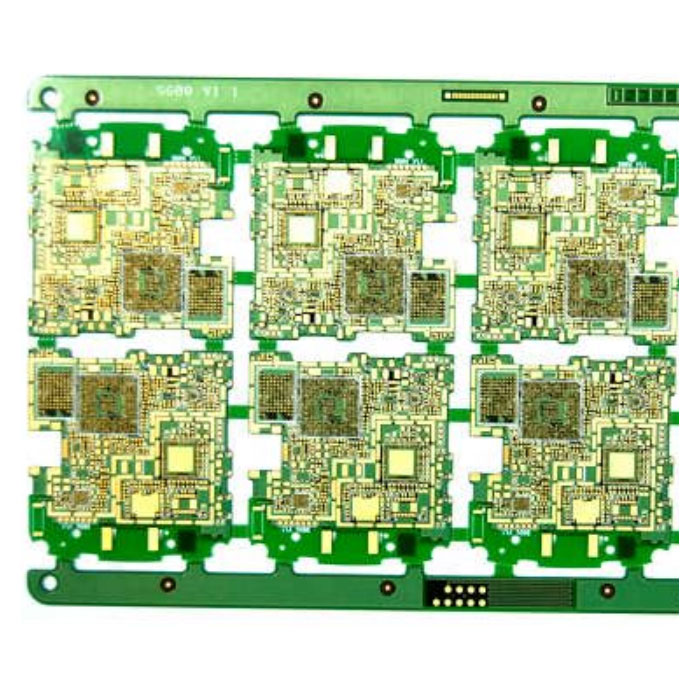
Core Material Components for Multilayer PCBs
A typical Multilayer PCB is a complex sandwich of conductive and insulating layers. The primary material categories include:
-
Substrate/Dielectric Materials: These are the insulating layers that separate the conductive copper traces. Their properties are critical.
-
Conductive Material: Almost exclusively copper, which forms the circuit traces and planes.
-
Bonding Materials: Used to laminate multiple layers together under heat and pressure.
-
Surface Finishes: Applied to exposed copper to prevent oxidation and ensure solderability.
-
Reinforcements: Provide the structural backbone for rigid PCBs.
Detailed Breakdown of Key Materials
The following table outlines the most common materials, their primary role, and key characteristics.
| Material Category | Specific Material | Primary Role in Multilayer PCB | Key Properties & Notes |
|---|---|---|---|
| Substrate/Dielectric | FR-4 (Flame Retardant 4) | Standard rigid core and prepreg material. | Excellent strength, low cost, good electrical insulation. Tg (Glass Transition Temp) varies (130°C-180°C+). |
| High-Speed Laminates (e.g., Rogers, Isola) | Signal layers in high-frequency/RF applications. | Stable Dk (dielectric constant), low Df (dissipation factor) for minimal signal loss. | |
| Polyimide | Flexible PCBs or boards requiring high thermal endurance. | High heat resistance (Tg > 250°C), flexible, excellent chemical resistance. | |
| Conductor | Electro-Deposited (ED) Copper | Standard foil for inner and outer layers. | Good conductivity, readily bonds to substrates. Thickness measured in ounces (oz). |
| Rolled Annealed Copper | Flexible circuits and high-reliability dynamic flex areas. | Superior flexibility and fatigue resistance compared to ED copper. | |
| Bonding Material | Prepreg (Pre-impregnated) | Adhesive layer that bonds cores together during lamination. | FR-4 or other resin (e.g., epoxy) impregnated into glass fabric. Flows and cures under heat. |
| Surface Finish | ENIG (Electroless Nickel Immersion Gold) | Common for fine-pitch components and gold wire bonding. | Flat surface, excellent oxidation resistance, good shelf life. |
| HASL (Hot Air Solder Leveling) | Traditional, cost-effective finish. | Good solderability, but less planar for fine-pitch parts. Lead-free (LF-HASL) is standard. | |
| Immersion Silver / Tin | RoHS-compliant finishes with good performance. | Provides a flat, solderable surface at a moderate cost. |
Multilayer PCB FAQ
What is the difference between core and prepreg in a Multilayer PCB?
A core is a rigid, cured laminate with copper on one or both sides, acting as a foundational layer. Prepreg is a thin, uncured (or partially cured) fiberglass sheet pre-impregnated with resin. During lamination, heat and pressure cause the prepreg's resin to melt, flow, and then cure, effectively gluing multiple cores and foil layers together into a single, solid board.
Why would I choose a high-speed laminate over standard FR-4 for my Multilayer PCB?
Standard FR-4 has a dielectric constant (Dk) and dissipation factor (Df) that can vary with frequency, causing signal integrity issues like attenuation, skew, and crosstalk in high-speed digital or RF designs. High-speed laminates offer tightly controlled, stable electrical properties across a wide frequency range, ensuring predictable impedance and minimal signal loss, which is critical for applications like network switches, servers, and communication devices.
How does material selection affect the thermal management of a Multilayer PCB?
Material selection directly impacts heat dissipation. A standard FR-4 has a relatively low thermal conductivity. For power-dense designs, materials with higher thermal conductivity (like certain ceramic-filled or metal-clad laminates) can be specified for cores. Furthermore, using thicker copper planes (e.g., 2 oz instead of 1 oz) significantly improves in-plane heat spreading. At Akeson, we often recommend and implement strategic material stacks and thermal vias to manage heat effectively.
Selecting the right materials is a strategic decision that defines your product's capabilities and longevity. As this overview shows, from the ubiquitous FR-4 to specialized high-speed laminates, each choice carries implications for performance and cost. At Akeson, our expertise lies in guiding you through these critical selections, ensuring your Multilayer PCB is built on the most suitable foundation for its specific electrical, thermal, and mechanical demands.
Contact us today to discuss your next project. Let our team of specialists at Akeson partner with you to optimize your material stack-up and deliver a high-performance, reliable Multilayer PCB.