

What Are the Common Failure Modes of Signal Relays
2025-12-11
In the precise world of low-current switching, the reliable operation of Signal Relays is critical for system integrity. Understanding their potential failure modes is key to designing robust circuits and ensuring longevity. As a leader in component manufacturing, Huaguan designs its Signal Relays to mitigate these very risks through superior engineering and stringent quality control.
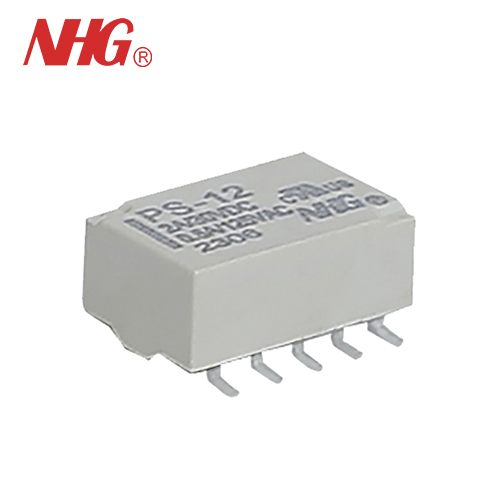
The most common failure modes for Signal Relays typically stem from mechanical, electrical, and environmental factors.
-
Contact Degradation: This includes contact welding (from inrush current), oxidation (leading to high contact resistance), and material transfer (causing sticking).
-
Coil Failure: Open circuits due to wire breakage or insulation breakdown from overheating or voltage surges.
-
Mechanical Wear: The physical wear of moving parts like the armature and springs over millions of cycles can lead to malfunction.
-
Contamination & Corrosion: Ingress of dust, moisture, or corrosive gases can insulate contacts or degrade internal materials.
Huaguan Signal Relays: Engineered for Reliability
Our relays are built to withstand these challenges. Key parameters include:
-
Superior Contact Material: Using gold-clad or silver alloys to minimize oxidation and ensure stable low-energy switching.
-
Robust Coil Design: Featuring high-grade enameled copper wire and enhanced insulation to prevent thermal and voltage breakdown.
-
Sealed Construction: Many models offer flux-resistant or fully sealed housings to protect against environmental contamination.
-
Extended Mechanical Life: Precision-molded parts and optimal spring design ensure reliable operation for up to 100 million operations.
Huaguan Signal Relay Product Specifications (Example Series: HG-SR72)
| Parameter | Specification | Benefit |
|---|---|---|
| Contact Rating | 1A @ 30VDC / 0.5A @ 120VAC | Ideal for low-power signal and data switching. |
| Contact Material | Gold-clad Silver Alloy | Provides low and stable contact resistance. |
| Coil Voltage | 3V, 5V, 12V, 24VDC | Broad compatibility with standard logic levels. |
| Insulation Resistance | 100 MΩ min. | Excellent isolation between coil and contacts. |
| Expected Life | 100M (Mechanical), 100K (Electrical) | Ensures long-term reliability in demanding applications. |
Signal Relays FAQ
Q: What is the main cause of contact failure in Signal Relays?
A: The primary cause is arcing during switching, which leads to oxidation and material erosion. For low-energy circuits, contamination from the operating environment is also a major factor. Huaguan relays use specialized contact materials and sealed designs to drastically reduce these risks.
Q: Can a Signal Relay fail due to incorrect voltage?
A: Absolutely. Applying voltage above the coil rating can cause overheating and insulation breakdown, leading to an open circuit. Under-voltage may prevent proper pull-in, causing the relay to chatter, which erodes contacts. Always operate within the specified coil voltage range.
Q: How does environmental temperature affect Signal Relay performance?
A: Extreme temperatures affect both the coil resistance and mechanical properties. High temperatures can accelerate oxidation and weaken spring force, while very low temperatures can cause materials to contract and stiffen, affecting operation speed. Huaguan specifies a wide operating temperature range (typically -40°C to +85°C) to guarantee performance.
Selecting the right component is the first defense against system failure. By choosing Huaguan Signal Relays, you integrate components crafted with precision, built to endure common failure triggers, and backed by deep engineering expertise.
Contact us today to discuss your application requirements. Let our technical team help you select the optimal Huaguan Signal Relay to enhance the reliability and performance of your designs.