

What Are the Common Failure Modes in Round Fiber Optic Drop Cable and How Can They Be Prevented
2026-03-25
In modern fiber-to-the-home (FTTH) networks, the Round Fiber Optic Drop Cable serves as the critical last-mile link that determines long-term service reliability. As a leading provider of premium connectivity solutions, Xuben emphasizes that understanding failure mechanisms is essential for network operators seeking to minimize downtime and maintenance costs. While the Round Fiber Optic Drop Cable is engineered for durability, improper handling, environmental stress, and manufacturing inconsistencies can lead to predictable failure modes. Identifying these vulnerabilities early allows for proactive prevention strategies that extend infrastructure lifespan.
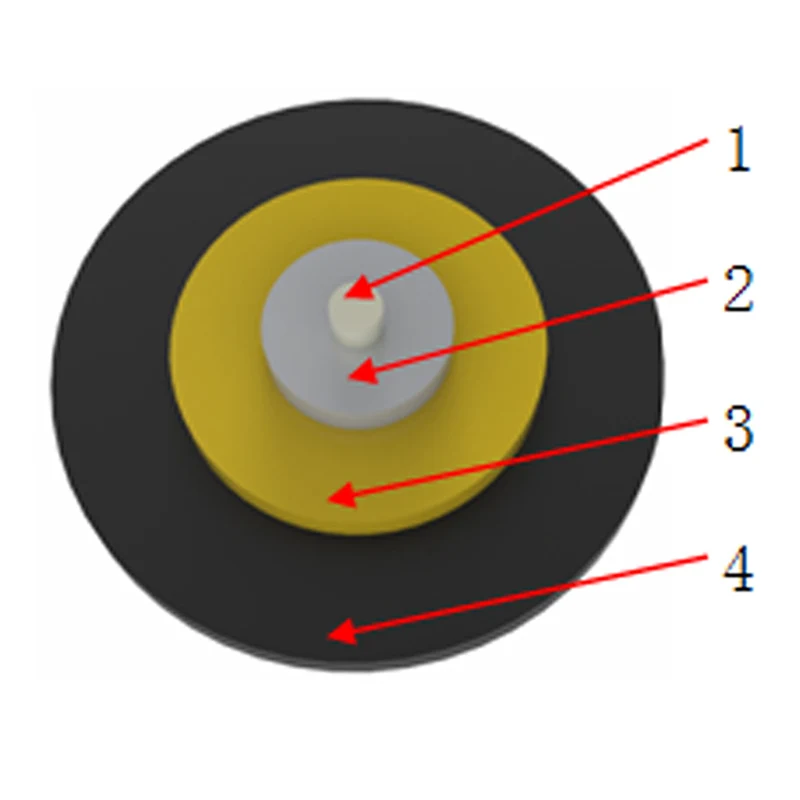
Common Failure Modes and Prevention Strategies
The table below outlines the most frequent failure modes observed in field deployments of Round Fiber Optic Drop Cable, along with their root causes and recommended prevention methods from Xuben’s engineering team.
| Failure Mode | Root Cause | Prevention Method |
|---|---|---|
| Microbending Loss | Excessive tensile stress during pulling or improper bend radius management | Use cable tension monitoring tools; adhere to minimum bend radius specifications; deploy Xuben’s reinforced bend-insensitive designs |
| Water Ingress | Damaged jacket or improperly sealed closure points | Install gel-sealed or dry water-blocking variants; perform end-to-end closure integrity tests |
| Fiber Fracture | Impact damage during aerial installation or rodent attacks | Utilize steel-armored or rodent-resistant versions; apply protective conduits in high-risk zones |
| Connector Degradation | Contamination or repeated mechanical stress at termination points | Factory-terminated options from Xuben; routine cleaning with certified fiber optic cleaning kits |
| Jacket Cracking | UV exposure and temperature cycling in outdoor environments | Select UV-stabilized, outdoor-rated cables; verify compliance with GR-20 or IEC 60794 standards |
Key Prevention Principles
Preventing failures begins with selecting a Round Fiber Optic Drop Cable that matches the specific deployment environment. Aerial installations require cables with high tensile strength and UV protection, while direct-buried applications demand robust crush resistance and water-blocking capabilities. Xuben recommends conducting a pre-installation site survey to identify potential mechanical hazards, such as sharp edges in ducts or animal activity zones.
Proper installation practices are equally critical. Tension should never exceed the cable’s rated pulling force, and bend radius must be consistently maintained throughout the pathway. Using Xuben-certified installation tooling and trained technicians reduces the risk of micro-damage that may not be detectable until after system commissioning. Post-installation, OTDR (Optical Time-Domain Reflectometer) testing should be performed to establish a baseline for future diagnostics.
Round Fiber Optic Drop Cable FAQ
Q: What is the maximum allowable tensile load for a Round Fiber Optic Drop Cable during installation, and why does exceeding it cause failure?
A: The maximum allowable tensile load for a Round Fiber Optic Drop Cable typically ranges from 200 to 400 Newtons depending on the armor and strength member configuration, such as the dielectric central strength member or steel wire armor used by Xuben. Exceeding this threshold applies excessive strain to the optical fibers, causing microcracks or fractures that manifest as high attenuation or complete signal loss. Even if the cable appears intact externally, internal fiber stress can lead to delayed failure months after installation. To prevent this, installers must use tension-monitoring equipment and never pull beyond the manufacturer’s specified limit. Xuben designs its drop cables with clear tension markings and pull-resistant structures to help field teams maintain safe operating margins.
Q: How does water ingress affect the long-term performance of Round Fiber Optic Drop Cable, and what water-blocking technologies are most effective?
A: Water ingress is a primary cause of premature failure in Round Fiber Optic Drop Cable, as moisture accelerates corrosion of metallic components, promotes hydrogen-induced attenuation, and causes freeze-thaw damage in cold climates. When water penetrates the jacket, it migrates along the cable core, gradually degrading optical performance and compromising dielectric strength. Xuben employs two advanced water-blocking strategies: superabsorbent polymer (SAP) yarns that swell upon contact with water, creating a physical barrier, and fully dry water-blocking tape systems that eliminate the need for messy gels. Both methods provide reliable protection while simplifying connectorization and splicing. For buried installations, ensuring that closure seals and transition points are properly sealed is equally essential to maintaining the cable’s long-term integrity.
Q: What are the most common signs of degradation in Round Fiber Optic Drop Cable before a complete failure occurs, and how can they be detected early?
A: Early degradation in a Round Fiber Optic Drop Cable often presents as intermittent signal loss, gradual increase in link attenuation, or erratic OTDR traces showing localized event points. These symptoms typically indicate microbending, kinking, or connector contamination before complete failure occurs. Xuben recommends implementing proactive monitoring through periodic OTDR testing and maintaining baseline reference traces for every deployed segment. Visual inspections should focus on jacket abrasion, loose closures, and areas where the cable may have been subjected to unexpected stress, such as after severe weather events. By identifying these warning signs early, network operators can schedule targeted repairs rather than responding to unplanned outages, significantly reducing mean time to repair (MTTR) and overall operational costs.
Conclusion
Minimizing failure risks in fiber optic networks starts with selecting a high-quality Round Fiber Optic Drop Cable engineered for the specific application environment. Xuben combines rigorous material selection, precision manufacturing, and comprehensive testing to deliver drop cables that consistently outperform industry standards. From rodent-resistant armor to advanced water-blocking technologies, every design element is focused on long-term reliability in real-world deployment scenarios.
For network operators, engineers, and system integrators seeking dependable infrastructure solutions, partnering with a manufacturer that prioritizes quality assurance is essential. Xuben supports every project with technical expertise, field-proven products, and dedicated customer service.
Contact us today to discuss your FTTH deployment requirements or request a consultation on selecting the ideal Round Fiber Optic Drop Cable for your network architecture.