

What Are the Common Applications for a Three Way Selector Switch in Modern Automation
2026-03-17
In the rapidly evolving landscape of industrial automation, the Three Way Selector Switch remains a cornerstone component for manual control and mode selection. At YIJIA, we specialize in manufacturing high-grade switching solutions that ensure operational precision and safety. Understanding where and how these devices function is critical for engineers and procurement specialists looking to optimize their control panels.
The primary function of a Three Way Selector Switch is to allow operators to choose between different operational states, typically Hand, Off, and Auto modes. This manual intervention capability is vital for system overrides, maintenance procedures, and initial setup configurations. Below, we explore the most common applications of this versatile component.
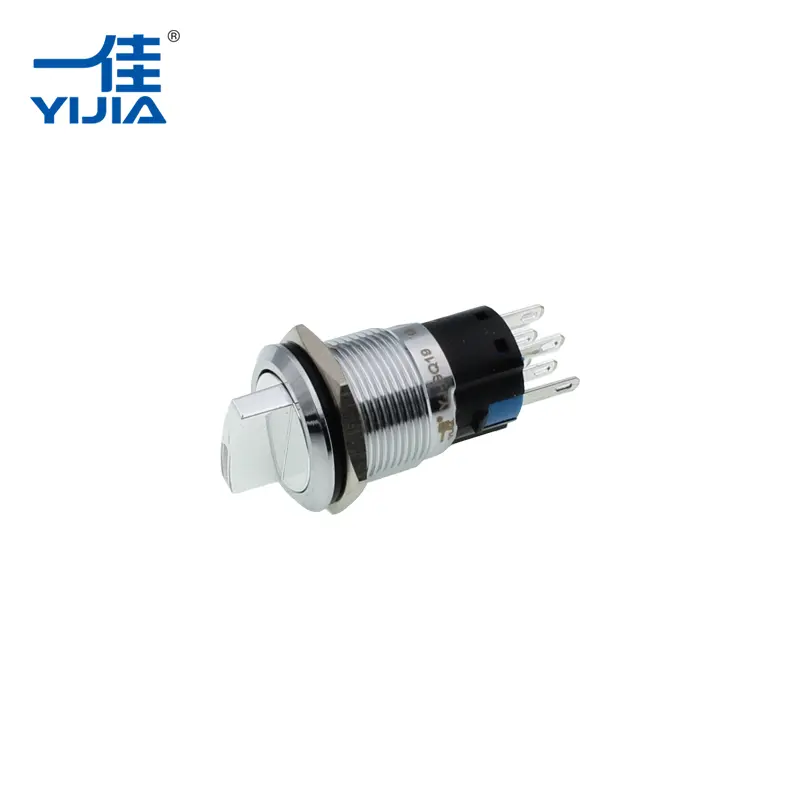
Key Applications in Automation
Modern automation relies on redundancy and flexibility. The Three Way Selector Switch provides a tangible interface between human operators and complex machinery. Here are the primary sectors where these switches are indispensable:
-
Manufacturing Assembly Lines: Used to select between "Manual," "Single Cycle," and "Automatic" operation modes for robotic arms and conveyor belts.
-
HVAC Systems: Integrated into large air handling units to switch between "Cooling," "Fan Only," and "Heating" modes.
-
Material Handling: Found on cranes and hoists to select directional control or speed settings.
-
Pump and Valve Control: Utilized in water treatment facilities to toggle between duty pumps, standby pumps, and wash cycles.
Technical Specifications Overview
To ensure you select the correct Three Way Selector Switch for your application, understanding the technical nuances is essential. Below is a comparison of typical configurations offered by YIJIA.
| Feature | Configuration A (Standard) | Configuration B (Heavy-Duty) |
|---|---|---|
| Contact Blocks | 1 NO + 1 NC | 2 NO + 2 NC |
| Material | High-Grade Plastic | Nickel-Plated Metal |
| Typical Use Case | Control Cabinets & Panels | Outdoor Machinery & Mining |
| IP Rating | IP65 | IP67 |
Why Select YIJIA for Your Automation Needs?
The reliability of your control system hinges on the quality of its components. A faulty switch can lead to mode confusion, resulting in production downtime or safety hazards. YIJIA ensures that every Three Way Selector Switch undergoes rigorous testing to meet international standards, providing consistent haptic feedback and electrical continuity. We prioritize durability to withstand the high-cycling demands of modern factories.
Frequently Asked Questions (FAQ)
To further clarify the utility of this device, here are answers to common technical inquiries regarding the Three Way Selector Switch.
What is the difference between a maintained and a momentary Three Way Selector Switch?
A maintained Three Way Selector Switch holds its position after the operator releases the knob. For example, if you turn it to the "Auto" position, it stays there until physically moved again. This is used for setting operational modes. Conversely, a momentary Three Way Selector Switch springs back to a default position when released. This is typically used for jogging motors or initiating temporary commands, requiring the operator to hold the switch for the action to continue.
How does a Three Way Selector Switch integrate with a PLC?
In modern automation, the Three Way Selector Switch is often wired to the digital input module of a Programmable Logic Controller (PLC). When an operator turns the switch to a specific position, it closes a circuit, sending a 24V DC signal to a specific input on the PLC. The PLC then executes the corresponding logic, such as starting a sequence or enabling a specific subroutine. This provides a physical safety backup to software-based controls.
Can a Three Way Selector Switch be used for speed control of a motor?
Indirectly, yes. While the switch itself does not vary voltage or frequency, it can select different contactors or activate different preset speeds on a Variable Frequency Drive (VFD). For instance, turning the Three Way Selector Switch to position 1 might engage a slow-speed contactor, while position 2 engages a high-speed contactor. This makes it an effective and simple solution for step-based motor control.
Optimize Your Control Panel Today
Selecting the right interface components is the first step toward building a robust and efficient automation system. Whether you need a standard configuration or a custom solution, YIJIA provides the durability and precision your operations demand. Do not compromise on the quality of your control systems.
Contact us today to discuss your requirements or to request a quote for our range of Three Way Selector Switches.