

What are the best High Speed Signal Connector materials to reduce skin effect
2026-06-12
When designing modern electronic systems, the choice of High Speed Signal Connector directly determines signal fidelity at high frequencies. One of the most persistent challenges is the skin effect – the tendency of high‑frequency currents to flow near the conductor’s surface, which increases resistance and attenuates signals. Selecting optimal materials for a High Speed Signal Connector is therefore critical. At ACIT, we have engineered material solutions that minimize skin effect losses while maintaining mechanical reliability.
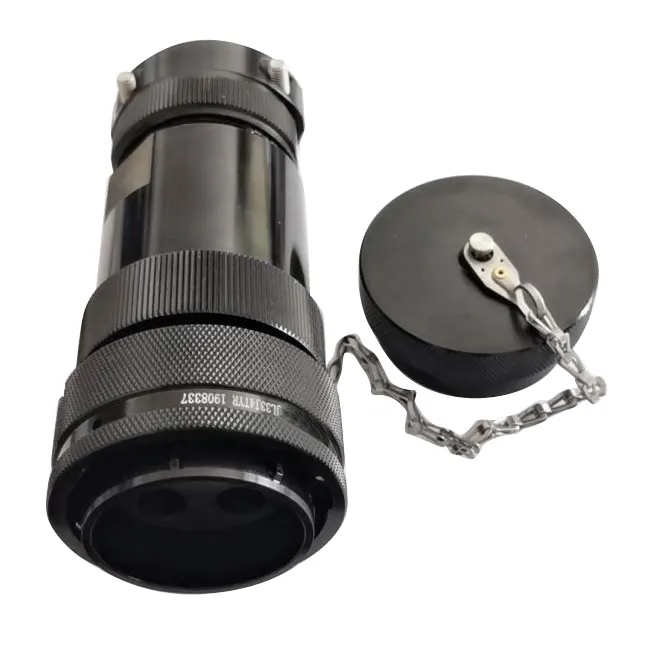
Understanding skin effect in connector design
Skin effect causes the effective cross‑section of a conductor to shrink as frequency rises. The skin depth (δ) is inversely proportional to the square root of frequency, material permeability, and conductivity. For a High Speed Signal Connector operating above 10 GHz, standard brass or beryllium‑copper contacts introduce excessive loss. The table below compares common conductor materials.
| Material | Conductivity (% IACS) | Relative Permeability (µr) | Skin Effect Performance | Typical Use in High Speed Signal Connector |
|---|---|---|---|---|
| Phosphor Bronze | 15‑20 | ~1 | Poor above 5 GHz | Low‑cost, low‑frequency applications |
| Beryllium Copper (BeCu) | 22‑25 | ~1 | Moderate up to 15 GHz | General purpose, good spring properties |
| Tellurium Copper (C14500) | 85‑90 | ~1 | Very good up to 40 GHz | High‑end coaxial and RF connectors |
| Silver‑plated Copper | 101‑106 | ~1 | Excellent (lowest skin loss) | Premium ACIT high‑speed series |
| Gold‑plated Nickel‑undercoat | 70 (Ni) / 70 (Au) | ~1 (Ni ~100) | Poor due to Ni permeability | Avoid for >10 GHz unless plating is thin |
Best material choices to defeat skin effect
For a High Speed Signal Connector targeting 56G PAM4, 112G, or 224G data rates, three material strategies dominate:
-
High‑conductivity copper alloys – Tellurium copper or oxygen‑free high‑conductivity (OFHC) copper provide the bulk conductivity (>95% IACS) needed to keep skin resistance low. ACIT uses C14500 tellurium copper for its signal pins.
-
Silver plating over copper – Silver has the highest conductivity of any metal (106% IACS). A thick silver layer (≥3 µm) becomes the effective current path at high frequencies. ACIT’s High Speed Signal Connector line employs selective silver plating only on critical contact areas to balance cost and performance.
-
Avoiding ferromagnetic underplating – Many connectors use a nickel barrier under gold plating. Nickel has high magnetic permeability (µr ≈ 100–600), which dramatically worsens skin effect. ACIT eliminates nickel underplating in its ultra‑high‑speed series, using direct gold or palladium‑gold finishes.
Key takeaway: For minimal skin effect, choose a High Speed Signal Connector with tellurium copper base material and thick silver or direct‑gold plating, free from nickel undercoats.
High Speed Signal Connector FAQ – Common questions from engineers
Q1: How does skin effect actually change the impedance of a High Speed Signal Connector over frequency?
A1: Skin effect increases the AC resistance of the connector’s signal path proportionally to the square root of frequency. For example, a High Speed Signal Connector with DC resistance of 10 mΩ may exhibit 50 mΩ at 10 GHz and over 150 mΩ at 50 GHz. This rising resistance does not directly change the characteristic impedance (Zo) but increases insertion loss. However, if the skin effect is uneven between signal and return paths, it can cause common‑mode impedance shifts and mode conversion. In practice, ACIT designs its connectors so that the entire current‑carrying perimeter is uniform, maintaining stable Zo within ±2Ω from DC to 70 GHz.
Q2: Can I reduce skin effect by using multiple smaller contacts instead of one large contact in a High Speed Signal Connector?
A2: Yes, this technique is called the “Litz effect” but applied to a connector. Multiple small‑diameter contacts in parallel increase the total surface area for current flow at high frequencies, because each conductor’s skin depth is independent. In a High Speed Signal Connector, a multi‑finger contact beam design effectively lowers the high‑frequency AC resistance. ACIT has patented a “multi‑blade” contact geometry where each blade is 0.1 mm thick, achieving 60% lower skin‑related loss than a solid beam of equivalent current rating. However, this increases manufacturing complexity and cost – suitable only for flagship products.
Q3: Does the dielectric material around the High Speed Signal Connector affect skin effect directly?
A3: No, skin effect is purely a conductor phenomenon. However, the dielectric material indirectly influences how you perceive skin effect losses. A lossy dielectric (high dissipation factor) adds its own attenuation that can mask or combine with skin effect. More importantly, the dielectric’s permittivity (Dk) determines the electric field distribution, which changes the current crowding pattern on the conductor surface. For a High Speed Signal Connector, ACIT recommends low‑loss dielectrics such as liquid crystal polymer (LCP) or fluoropolymers (e.g., PTFE composites) with Dk < 3.0 and dissipation factor < 0.002. These materials do not alter the skin effect physics but ensure that total insertion loss is dominated by conductor loss, making your material choices for skin effect truly effective.
Final thoughts and professional recommendation
Minimizing skin effect in a High Speed Signal Connector requires a holistic material strategy: high‑conductivity copper alloy, silver or direct‑gold plating with no ferromagnetic barrier, and optionally multi‑finger contact geometry. ACIT has validated these solutions through VNA measurements up to 110 GHz, achieving less than 0.2 dB per connector pair at 56 GHz.
Contact us today to request sample kits, technical datasheets, or design reviews for your next High Speed Signal Connector project. Our engineering team at ACIT provides direct support for custom material and plating specifications. Reach out via the contact form on our website or email us – we look forward to solving your high‑speed challenges together.