

What are the advantages and limitations of using a Rogowski coil compared to a conventional Current Transformer
2026-05-13
When selecting an appropriate device for measuring alternating current, engineers often compare a Rogowski coil with a conventional Current Transformer. Both serve critical roles in power monitoring and protection, yet they operate on fundamentally different principles. The Rogowski coil outputs a voltage proportional to the rate of change of current, while a Current Transformer produces a secondary current directly proportional to the primary current. Understanding their respective strengths and weaknesses is essential for reliable system design. At Comewill, we regularly support clients in making this technical choice based on application-specific requirements.
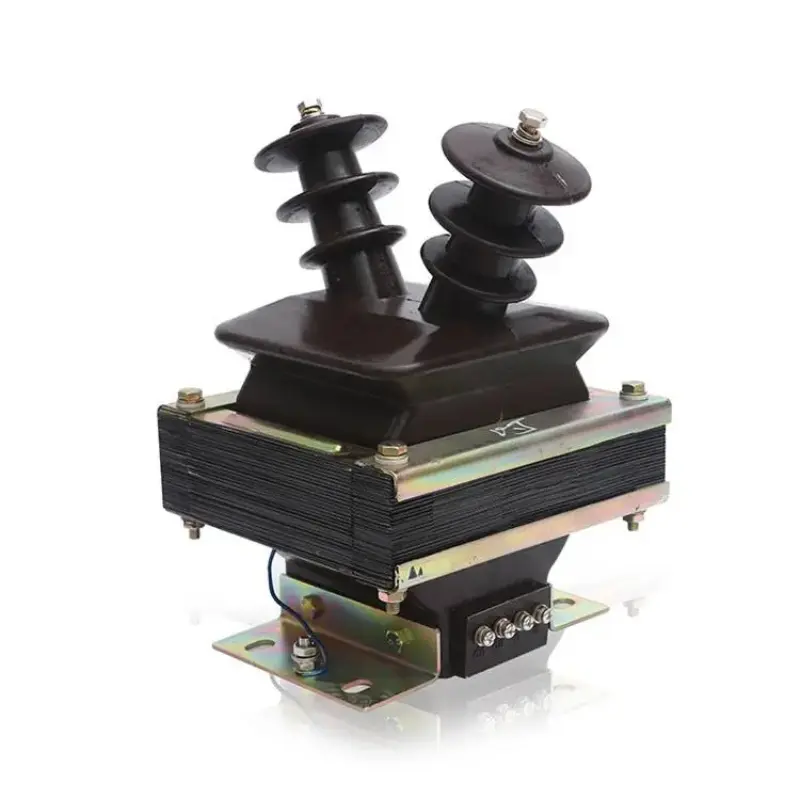
Key Advantages and Limitations
| Feature | Rogowski Coil | Conventional Current Transformer |
|---|---|---|
| Core material | Air-cored, no saturation | Ferromagnetic core, saturates under high current |
| Linearity | Excellent over wide range | Limited by core characteristics |
| Weight | Lightweight and flexible | Heavy due to iron core |
| Secondary output | Low voltage (mV range) | High current (1A or 5A standard) |
| Open circuit hazard | Safe if left open | Dangerous high voltage |
| Power requirement | Requires external integrator | Self-powered (passive) |
| Frequency response | Wide bandwidth (Hz to MHz) | Narrow, typically 50/60 Hz |
| External field sensitivity | Moderate (needs careful return path) | Low (shielded by core) |
Practical Considerations for System Design
The Rogowski coil excels in applications involving high fault currents, temporary installation, or limited space. Because it has no saturable core, it provides accurate measurement even when hundreds of times the rated current flows. This makes it ideal for power quality monitoring and large industrial drives. However, the need for an integrator circuit adds complexity and cost, and the millivolt output is more susceptible to electromagnetic interference in noisy environments.
A conventional Current Transformer, on the other hand, remains the standard choice for revenue metering and protection relays that expect a 1A or 5A secondary signal. Its robust, passive nature means no external power is required for basic operation. Comewill often recommends conventional Current Transformer designs for utility applications where long-term reliability under predictable load profiles is paramount. The main limitation remains core saturation, which can blind protection systems during severe faults.
Current Transformer FAQ Common Questions
What happens if the secondary of a conventional Current Transformer is left open while the primary is energized?
If the secondary of a conventional Current Transformer is left open during primary current flow, the core flux rises dramatically because there is no opposing magnetomotive force from secondary current. This leads to severe core saturation, distortion of the flux waveform, and generation of a dangerously high voltage at the secondary terminals—often reaching several thousand volts. This voltage can puncture insulation, destroy the Current Transformer, create an arc flash, and present a lethal shock hazard to personnel. Therefore, secondary terminals must always be shorted before disconnecting any load. In contrast, a Rogowski coil is inherently safe when left open because it produces only a low voltage proportional to di/dt.
How do I choose between a Rogowski coil and a conventional Current Transformer for energy monitoring in a facility with variable frequency drives?
For variable frequency drive (VFD) applications, a Rogowski coil is generally the preferred choice because conventional Current Transformer devices suffer from reduced accuracy at non-rated frequencies (e.g., 5 Hz to 400 Hz) and can exhibit core heating at higher frequencies. The Rogowski coil offers excellent linearity across a wide bandwidth, capturing harmonics and fundamental components accurately. However, if your monitoring system expects a 5A secondary input directly and you cannot add external integrators or signal conditioners, a conventional Current Transformer might still be used provided the frequency remains close to nominal (50/60 Hz). Comewill provides both solutions and can advise based on your existing metering hardware.
What is the typical accuracy comparison between a Rogowski coil and a conventional Current Transformer under normal load conditions?
Under normal sinusoidal load conditions at rated current, a high-quality conventional Current Transformer achieves accuracy classes from 0.1% to 0.3% for metering applications, which is generally superior to most Rogowski coil systems that achieve 0.5% to 1% accuracy after integration. However, when loads contain significant DC offset or harmonic distortion, the conventional Current Transformer may saturate and produce errors exceeding 10%, while the Rogowski coil maintains linearity and yields errors still within 1-2%. Thus, the conventional Current Transformer wins for pure sinusoidal revenue metering, and the Rogowski coil wins for distorted or fault-level waveforms.
Contact Us
Choosing between a Rogowski coil and a conventional Current Transformer ultimately depends on your current range, frequency content, space constraints, and safety requirements. Comewill specializes in both technologies and offers engineering support to match the right sensor to your protection and metering panels. Contact us today for a technical consultation or to request sample units for your specific application.