

Is Tall Heatsink DDR5 Desktop Memory RAM Worth It Compared to Low-Profile Modules
2026-11-17
When building or upgrading a high-performance desktop, enthusiasts often face a critical decision: choosing between tall heatsink and low-profile modules. GUDGA has extensive experience in thermal design for DDR5 Desktop Heatsink Memory RAM, and the answer is rarely one-size-fits-all. Tall heatsinks promise superior heat dissipation, while low-profile designs offer better clearance for large CPU coolers. This article breaks down the trade-offs with data-driven insights to help you decide which configuration suits your build.
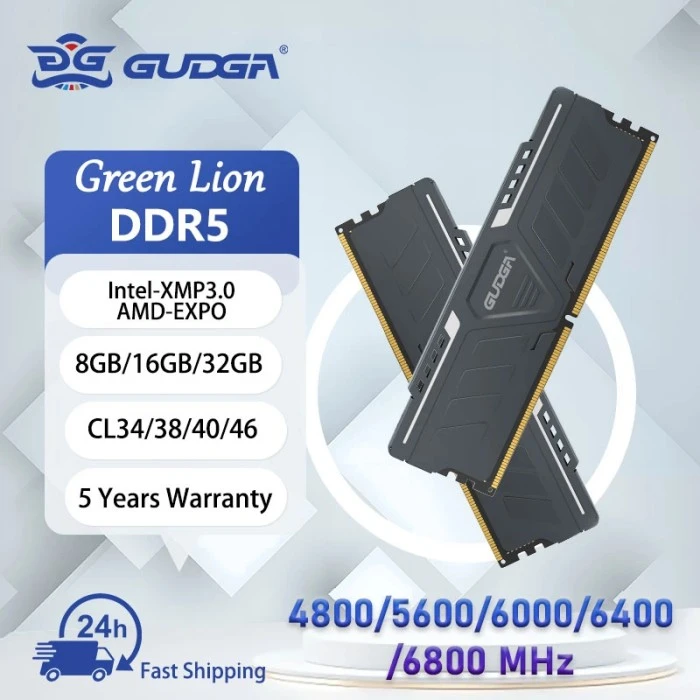
Understanding the Thermal Challenge of DDR5
DDR5 Desktop Heatsink Memory RAM operates at higher voltages and densities than previous generations, generating more heat per module. A well-designed heatsink is not optional; it is essential for sustained stability. The question is how much heatsink surface area you actually need.
Key Thermal Factors
-
Power draw per module: DDR5 modules typically draw 1.1V–1.4V, with overclocked kits pushing higher.
-
Ambient airflow: Case ventilation and CPU cooler proximity directly affect heatsink effectiveness.
-
Module density: 32GB and 64GB kits generate more heat than 16GB kits.
-
Overclocking headroom: Higher frequencies and tighter timings increase thermal load.
Tall vs. Low-Profile Heatsink: A Direct Comparison
| Feature | Tall Heatsink | Low-Profile Heatsink |
|---|---|---|
| Heat dissipation surface area | Larger, better for sustained loads | Smaller, adequate for stock speeds |
| CPU cooler clearance | Risk of conflict with large air coolers | Universal compatibility |
| Airflow disruption | Can block airflow to CPU cooler | Minimal interference |
| Overclocking potential | Higher thermal headroom | Limited but sufficient for mild OC |
| Aesthetic impact | Dominant visual presence | Clean, understated look |
| Typical height | 40–50mm | 30–35mm |
GUDGA engineers both configurations with precision-machined aluminum and optimized fin density, ensuring that DDR5 Desktop Heatsink Memory RAM from our lineup delivers reliable performance regardless of form factor.
When Tall Heatsinks Make Sense
Tall heatsinks are the right choice when:
-
You run sustained heavy workloads such as 4K video editing, 3D rendering, or scientific simulations.
-
You overclock aggressively and need maximum thermal headroom to maintain stability.
-
Your case has excellent airflow and your CPU cooler does not overhang the memory slots.
-
You use a liquid cooling solution that eliminates clearance concerns entirely.
When Low-Profile Modules Win
Low-profile DDR5 Desktop Heatsink Memory RAM is preferable when:
-
You use a large tower air cooler that extends over the DIMM slots.
-
You build in a small-form-factor case where every millimeter counts.
-
You prioritize a clean, minimalist aesthetic without sacrificing thermal performance.
-
You run at stock or mild overclock speeds where thermal load remains manageable.
The GUDGA Advantage
GUDGA designs DDR5 Desktop Heatsink Memory RAM with a focus on thermal efficiency and compatibility. Our tall heatsink modules feature high-density fin arrays and direct-contact heat spreaders, while our low-profile variants use advanced thermal pads and compact fin geometry to maximize dissipation within constrained dimensions. Every module undergoes rigorous thermal testing to ensure stable performance under real-world conditions.
Frequently Asked Questions
Q: Does a tall heatsink DDR5 Desktop Heatsink Memory RAM module improve overclocking stability?
A: Yes, a tall heatsink provides greater surface area for heat dissipation, which lowers operating temperatures during overclocking. Lower temperatures translate to more stable voltage delivery and reduced risk of thermal throttling, allowing you to push higher frequencies and tighter timings with confidence.
Q: Can low-profile DDR5 Desktop Heatsink Memory RAM modules handle high-frequency XMP profiles?
A: Absolutely. Low-profile modules from GUDGA are engineered to handle XMP profiles up to and beyond 6000MHz. While they offer less thermal headroom than tall heatsinks, proper case airflow and a well-ventilated setup ensure stable performance even at aggressive factory overclock settings.
Q: Will a tall heatsink DDR5 Desktop Heatsink Memory RAM module block my CPU air cooler?
A: It depends on your cooler design. Tower coolers with wide overhangs may conflict with tall heatsink modules. Check your cooler's memory clearance specification before purchasing. If clearance is tight, low-profile DDR5 Desktop Heatsink Memory RAM from GUDGA offers a reliable alternative without compromising thermal performance.
Conclusion
Choosing between tall heatsink and low-profile DDR5 Desktop Heatsink Memory RAM comes down to your specific build requirements. Tall heatsinks excel in high-performance, liquid-cooled setups with aggressive overclocking ambitions. Low-profile modules deliver universal compatibility and clean aesthetics without sacrificing reliability. GUDGA offers both configurations, each engineered to the highest thermal standards.
Contact us today to discuss your memory requirements with our technical team and find the perfect DDR5 Desktop Heatsink Memory RAM solution for your next build.