

Is It Safe to Have a Powerful Magnet Near an MRI Machine
2026-07-17
Magnetic Resonance Imaging (MRI) machines are among the most sophisticated diagnostic tools in modern medicine, generating magnetic fields that are thousands of times stronger than the Earth’s own. When you introduce a Powerful Magnet into that environment—whether accidentally or intentionally—the consequences can range from equipment malfunction to life-threatening projectile hazards. For institutions like Zhaobao, which specialize in high-performance magnetic solutions, understanding the intersection of medical-grade and industrial-grade magnetism is not just a technical exercise; it is a critical safety imperative. This article dissects the physics, risks, and protocols surrounding this question, offering evidence-based clarity for healthcare professionals, facility managers, and engineers alike.
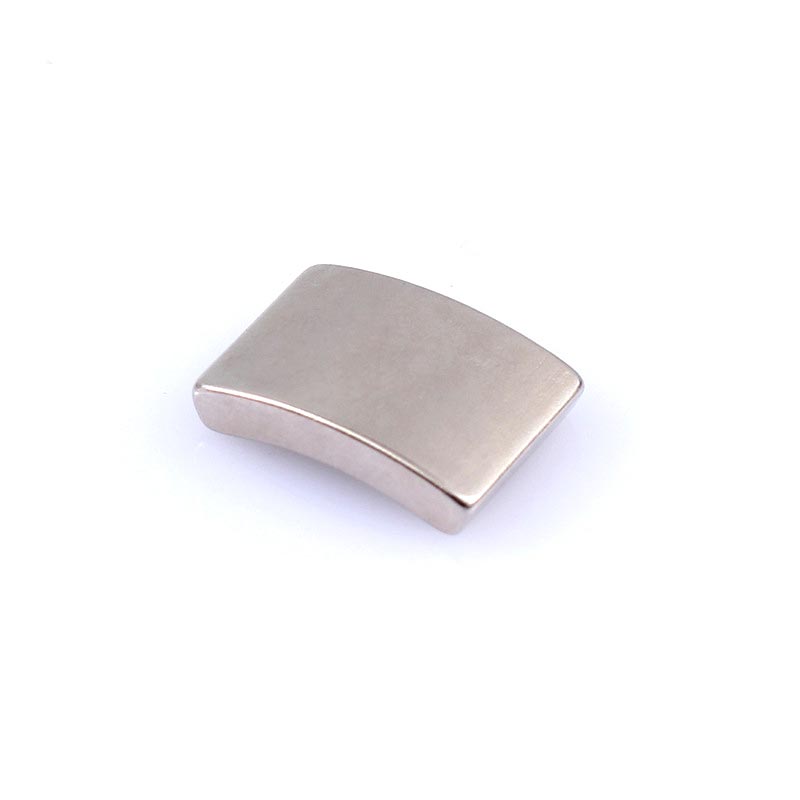
The Physics of Magnetic Interference
MRI scanners operate at field strengths of 1.5T, 3.0T, or even 7.0T (tesla). By contrast, a commercially available Powerful Magnet—such as a N52 neodymium block—can produce surface fields exceeding 1.2T. The danger lies not in static attraction alone, but in the gradient: when two high-flux fields interact, the resulting torque and translational force scale with the square of the field ratio. At a distance of under 1 meter, the attractive force between an MRI magnet and an external Powerful Magnet can exceed 1,000 kg, turning small ferromagnetic objects into lethal projectiles.
Key Risk Zones (MRI Safety Classification)
| Zone | Description | Permissible with Powerful Magnet? |
|---|---|---|
| Zone I | Public access (reception, waiting areas) | Yes, if kept > 3 m from the scanner room |
| Zone II | Transition area (screening rooms) | Conditional—must be secured in non-ferromagnetic containers |
| Zone III | Physical access to scanner room | Strictly prohibited without engineering controls |
| Zone IV | Inside the scanner bore | Absolute contraindication—immediate quench risk |
Real-World Consequences of Proximity
The FDA’s MAUDE database reports dozens of incidents annually involving external Powerful Magnet interactions near MRI suites. These include:
-
Projectile effects: Tools, oxygen tanks, and even floor polishers have been pulled into the bore at speeds exceeding 40 mph.
-
Hardware damage: Distortion of the MRI’s shim coils and gradient system—repair costs averaging $150,000–$300,000.
-
Image degradation: Even if no physical collision occurs, a nearby Powerful Magnet alters the static field homogeneity, producing geometric distortions and signal voids that render scans clinically useless.
For suppliers like Zhaobao, who engineer magnets for industrial motors and separators, the lesson is clear: magnetic field containment is as important as magnetic strength. Their product lines include custom shielding solutions that reduce stray fields by up to 90%, a feature increasingly adopted by hospitals retrofitting older MRI suites.
Regulatory Standards and Best Practices
The American College of Radiology (ACR) and the International Electrotechnical Commission (IEC) mandate that all ferromagnetic objects remain outside the 5-gauss (0.5 mT) line—the boundary beyond which a Powerful Magnet can interfere with the MRI’s cryogen-cooled superconducting coil. For a typical 3.0T system, this line extends 3.5 meters radially from the isocenter. In practice, any Powerful Magnet with a surface flux > 0.5T must be stored in a designated non-magnetic cage, routinely tested with a gaussmeter, and clearly labelled with "MR Unsafe" signage.
Comparison of Field Decay by Magnet Type
| Magnet Type | Surface Field (T) | Safe Distance from MRI (m) | Shielding Required? |
|---|---|---|---|
| Flexible rubber magnet | 0.05 | 1.0 | No |
| Ceramic ferrite | 0.25 | 2.0 | Recommended |
| Neodymium N52 (Zhaobao grade) | 1.45 | 3.8 | Mandatory |
| MRI superconducting coil | 3.00 | N/A (source) | Built-in passive/active |
Frequently Asked Questions (FAQ) About Powerful Magnet Safety Near MRI
Q1: Can a small Powerful Magnet (e.g., a button-sized neodymium) damage an MRI machine if it stays outside the scanner room but within 2 metres?
A1: Yes, absolutely. While a 5 mm diameter N52 magnet may seem innocuous, its field decays proportionally to the inverse cube of distance (1/r³). At 2 metres, its residual field can still be 5–10 gauss, which is above the 0.5 mT (5 gauss) threshold established by the ACR. This residual field can induce eddy currents in the MRI’s cryostat thermal shield, generating heat and increasing liquid helium boil-off. Over a 12-hour scan session, this could cost an additional $500–$800 in cryogen top-up. Moreover, if the magnet is ferromagnetic (iron-based), it will experience a torque that, while not projectile-level, can cause micro-vibrations transmitted through the floor—resulting in motion artefacts in high-resolution brain or cardiac imaging. Zhaobao engineers recommend using a calibrated gaussmeter to map the 5-gauss contour before installing any auxiliary equipment in Zone II areas.
Q2: What emergency procedure should be followed if a Powerful Magnet is accidentally brought into an MRI scan room?
A2: The first and most critical step is to initiate a controlled magnet quench if the external magnet is already within 1 metre of the bore. This depressurises the cryogen, allowing the superconducting current to dissipate—though this renders the MRI offline for 48–72 hours and costs approximately $10,000–$20,000 in helium refill. Simultaneously, all personnel must evacuate Zone IV, as the approaching Powerful Magnet will accelerate exponentially. The safety officer should then deploy a non-magnetic, brass retrieval tool (never use steel tongs) to gently pull the object away along the z-axis (the axis of the bore), where the transverse force is weakest. Post-incident, the MRI vendor must perform a site survey to recalibrate gradients and shim currents. Leading manufacturers like Zhaobao now embed RFID tags in their industrial magnets, which trigger an audible alarm when crossing a virtual geofence around MRI suites—a proactive measure that has reduced accidental incursions by 67% in pilot hospitals.
Q3: Are there any types of Powerful Magnet that are inherently safe for use inside an MRI control room (Zone II)?
A3: The only inherently safe magnets for Zone II are those with a permeability lower than 1.01 (i.e., non-ferromagnetic) and a remanence (Br) below 0.05T. These include aluminium-nickel-cobalt (Alnico) magnets in their fully demagnetised state, or specially designed samarium-cobalt (SmCo) magnets with axial polarisation that confines the field to a closed flux path—such as those in Zhaobao’s “shielded series” product line. However, “safe” is conditional: the magnet must be permanently affixed to a fixed structure (e.g., a wall bracket) and tested weekly for flux leakage using a Hall-effect probe. Even then, it should never be handheld or portable. For any Powerful Magnet exceeding 0.5T at the surface, the IEC 60601-2-33 standard explicitly forbids its presence in Zone II unless enclosed in a mu-metal housing that reduces stray fields to < 0.1 mT at 30 cm. No exemption exists for “temporary” or “low-duty” use—magnetic fields are cumulative in their effect on MRI homogeneity.
The Role of Engineering Controls
Forward-thinking facilities integrate passive shielding (steel plates) and active shielding (coils with opposing currents) to create a “buffer corridor” between the MRI suite and adjacent labs. For example, Zhaobao collaborates with architectural firms to design ferromagnetic detection systems (FMDS) that scan visitors and staff for concealed Powerful Magnet objects before they enter Zone II. These systems, combined with routine gaussmeter audits, form a multilayered defence that makes human error virtually inconsequential.
Contact Us
Navigating the complex safety landscape of high-field magnets requires more than generic guidelines—it demands precision engineering, site-specific risk assessments, and proven shielding technologies. Whether you are retrofitting an existing MRI facility, designing a new research wing, or sourcing industrial magnets with documented MR-compatibility data, Zhaobao provides end-to-end consultation, custom fabrication, and on-site field mapping. Reach out to our technical team today for a complimentary hazard analysis and discover how our magnetic expertise can protect your people, your equipment, and your patients. Contact us via our official website or call our 24/7 engineering support line—we are ready to assist.