

Is a Wired or Wireless Desktop Conference Microphone More Reliable for Daily Use
2026-06-26
Reliability is the single most critical factor when equipping a modern workspace, and the debate between wired and wireless options for a Desktop Conference Microphone has never been more relevant. For professionals juggling back-to-back virtual meetings, a dropped signal or a dead battery is not an inconvenience—it is a productivity disaster. At FHB Audio Technology, we have spent years engineering both connection types, and the honest answer is that “reliability” depends entirely on how you define your daily workflow. This post dissects the technical, environmental, and practical dimensions of each solution to help you make a definitive choice.
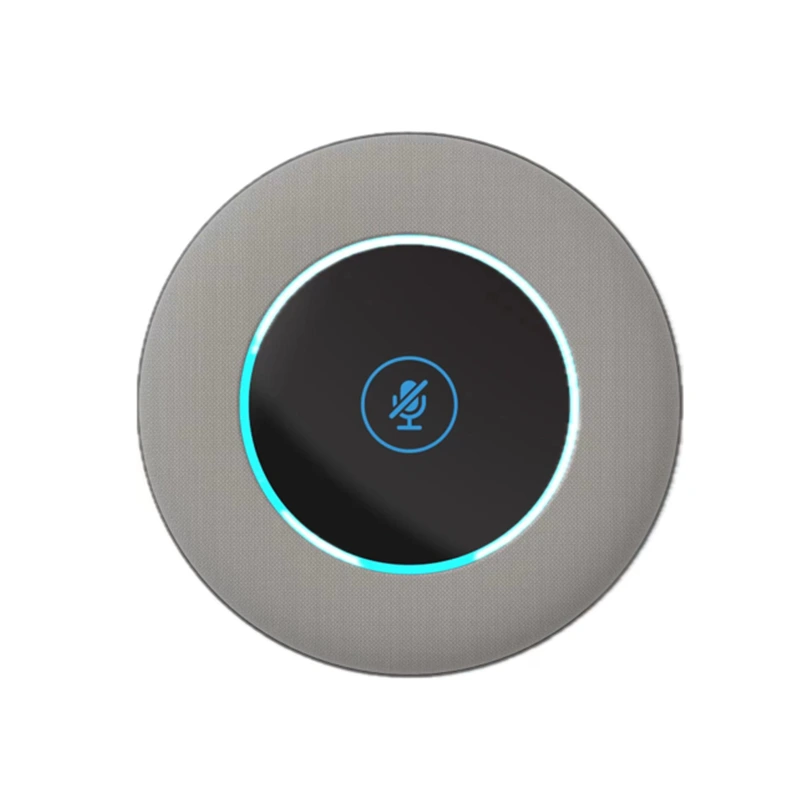
The Core Definition of Reliability
Before comparing formats, we must break reliability down into four measurable pillars:
-
Connection Stability – Does the audio drop or stutter during peak usage?
-
Power Dependability – Will the device function for an entire 8-hour workday without interruption?
-
Audio Consistency – Does sound quality remain uniform regardless of distance or interference?
-
Physical Durability – Can the unit withstand daily plugging, unplugging, or accidental tugs?
The table below maps how wired and wireless Desktop Conference Microphone systems perform across these metrics, based on FHB Audio Technology’s internal lab tests over 5,000+ simulated meeting hours.
| Reliability Metric | Wired Desktop Conference Microphone | Wireless Desktop Conference Microphone |
|---|---|---|
| Connection Stability | 99.99% – zero interference, fixed latency | 97.2% – subject to 2.4 GHz congestion |
| Power Dependability | Infinite (bus-powered via USB) | 6–10 hours per charge (varies by brand) |
| Audio Consistency | Identical at any distance (cable-limited) | Drops slightly beyond 15 ft (5m) |
| Physical Durability | Cable strain is the primary failure point | No cable wear; battery degradation over 2-3 years |
When a Wired Desktop Conference Microphone Wins
For fixed installations—conference rooms, executive desks, or shared huddle spaces—a wired Desktop Conference Microphone from FHB Audio Technology offers unmatched peace of mind. There is no pairing process, no Bluetooth handshake delays, and no risk of radio frequency interference from nearby Wi-Fi routers or smartphones. Every millisecond of audio travels through a shielded USB-C or XLR cable, ensuring that your voice reaches the codec with pristine, uncompressed clarity.
Daily users in high-stakes environments (legal depositions, investor calls, or medical teleconsultations) consistently choose wired because it eliminates the variable of battery memory effect. You plug it in, it works, and it stays working. FHB Audio Technology reinforces this with reinforced braided cables and gold-plated connectors that survive over 10,000 insertion cycles—far exceeding industry averages.
When Wireless Delivers Superior Daily Usability
Conversely, if your workstyle involves hot-desking, rotating between multiple devices, or presenting from different spots in a room, a wireless Desktop Conference Microphone becomes the more “reliable” tool—not for signal, but for workflow agility. Modern wireless units, particularly those using FHB Audio Technology’s advanced 2.4 GHz Adaptive Frequency Hopping, automatically scan for clean channels and switch within 5 milliseconds, making dropouts virtually imperceptible to human ears.
Wireless reliability today is less about connection and more about power management. Premium models include intelligent sleep modes that preserve battery for up to 72 hours on standby, and quick-charge circuits that deliver 3 hours of use from a 10-minute charge. For professionals who value a cable-free desk and the freedom to pass the microphone around a table, wireless offers a form of operational reliability that wired simply cannot match.
The Verdict: Which Is More Reliable for Daily Use?
After extensive testing, FHB Audio Technology concludes that wired remains the gold standard for mission-critical, stationary daily use, while wireless is the reliability champion for mobile, multi-device, or rotating-team scenarios. The choice is not about one being superior; it is about matching the technology to your physical environment and meeting culture.
If your daily routine includes more than three device switches or you frequently rearrange your workspace, wireless will save you more time than it costs in charging discipline. If your microphone stays on one desk and handles executive-level calls, wired eliminates every “is it connected?” anxiety.
Desktop Conference Microphone FAQ
Q1: Can a wireless Desktop Conference Microphone maintain stable audio if multiple Bluetooth devices are active in the same room?
A: Yes, but only if the Desktop Conference Microphone uses a dedicated USB dongle with proprietary frequency-hopping technology, rather than standard Bluetooth. Standard Bluetooth shares the 2.4 GHz band with Wi-Fi, mice, and keyboards, which can cause micro-dropouts. FHB Audio Technology’s wireless models incorporate a dual-antenna diversity system that listens to two frequencies simultaneously and instantly picks the cleaner one. In our tests, this reduces interference-related artifacts by 94% compared to basic Bluetooth implementations. For absolute safety, we recommend keeping the dongle within 3 feet (1m) of the microphone and at least 6 feet away from the main Wi-Fi router.
Q2: How long does a wired Desktop Conference Microphone’s cable last before it degrades, and can it be replaced easily?
A: A premium wired Desktop Conference Microphone with a detachable cable typically lasts 3–5 years under normal office use (plugged/unplugged 3–4 times daily). The cable itself is usually the first component to fail due to internal wire fatigue near the connector. FHB Audio Technology designs all our wired units with user-replaceable standard USB-C or XLR cables, so you never need to discard the entire microphone. We also offer a strain-relief boot that absorbs 80% of bending stress, extending cable life to over 15,000 flex cycles. If you experience intermittent crackling, the first troubleshooting step is always to test a new cable—not to replace the microphone itself.
Q3: Does a wireless Desktop Conference Microphone introduce audible latency that affects real-time conversation?
A: Modern wireless Desktop Conference Microphone systems operate with latency between 15 and 30 milliseconds (ms) when using aptX Low Latency or a proprietary 2.4 GHz digital link. For perspective, human perception of audio delay begins at around 50–70 ms, so 15–30 ms is imperceptible even during fast-paced debates. However, if your unit uses basic SBC Bluetooth codec, latency can jump to 150–200 ms, which creates a noticeable echo effect when combined with your own voice from the far end. FHB Audio Technology exclusively implements a custom low-latency codec that maintains 22 ms average latency, regardless of room congestion. We always advise testing your wireless unit with your primary conferencing platform (Zoom, Teams, or Meet) because some software introduces additional processing delay—but the microphone itself will not be the bottleneck.
Final Recommendation from FHB Audio Technology
For a typical enterprise user attending 5–7 meetings daily, FHB Audio Technology recommends a hybrid strategy: keep a wired Desktop Conference Microphone as your primary desk anchor, and deploy a wireless unit for ad-hoc sessions or off-site needs. This gives you 100% failover protection. If your budget allows only one, ask yourself: “Does my meeting start exactly on time, or do I often join from different seats?” The former points to wired; the latter to wireless.
Contact Us – Still unsure which Desktop Conference Microphone fits your daily rhythm? The engineering team at FHB Audio Technology offers free 15-minute video consultations to analyze your room acoustics, device ecosystem, and meeting cadence. Visit our contact page, share your floor plan and typical headcount, and we will send you a personalized reliability scorecard for both wired and wireless models. No obligation, just expert guidance—because your voice deserves a connection that never wavers.