

Is a Multi-mode Fiber Detachable Laser Module Compatible with Single-mode Fiber Patch Cords
2026-08-19
This is one of the most frequently asked questions in fiber optic laboratories and field deployment scenarios. When engineers first encounter a Multi‑mode Fiber Detachable Laser Module, the immediate instinct is often to connect it to an existing single‑mode patch cord already installed in the test bed. However, the short answer is technically yes, but practically problematic—and the consequences depend entirely on your application, power levels, and measurement precision. At Wavespectrum, we have tested hundreds of such hybrid connections across our product lines, and the data consistently shows that while the physical connectors mate without issue, the optical performance tells a different story.
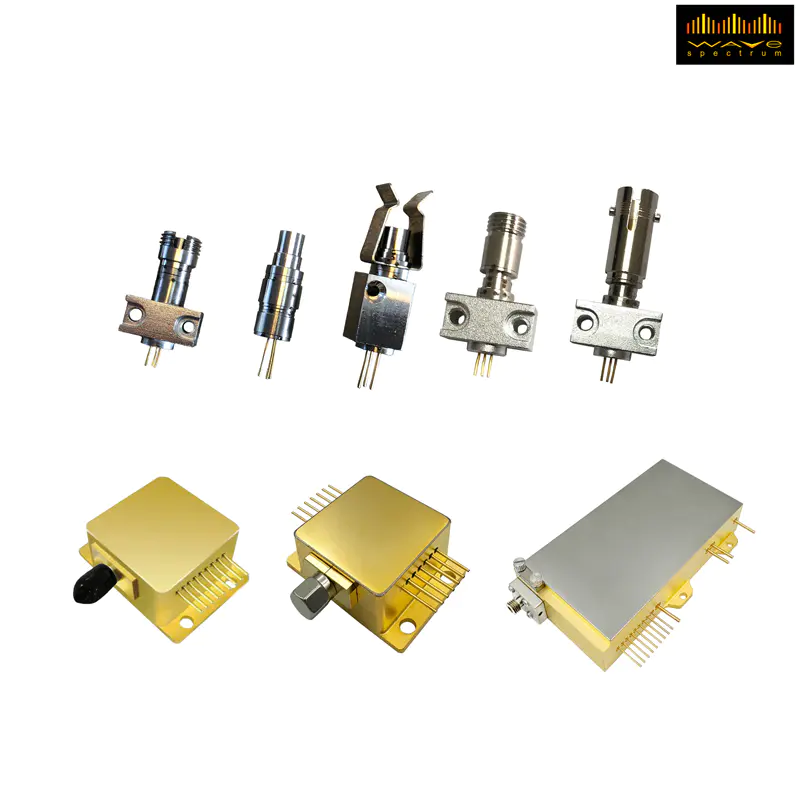
Core Physical Compatibility (The Connector Side)
From a mechanical standpoint, the Multi‑mode Fiber Detachable Laser Module uses industry‑standard interfaces—typically FC/APC, SC, or SMA‑905—that are physically identical to those found on single‑mode patch cords. This means you can plug them together without adapters or force. The detachable design of the module further simplifies swapping, as you can replace the output port or clean the ferrule easily. However, physical mating does not equal optical matching.
| Compatibility Aspect | Multi‑mode Module Side | Single‑mode Patch Cord Side | Verdict |
|---|---|---|---|
| Connector type (FC/SC/SMA) | Standard | Standard | ✅ Fully compatible |
| Ferrule core diameter | 50 µm or 62.5 µm | 9 µm | ⚠️ Mismatch |
| Numerical Aperture (NA) | 0.20 – 0.29 | ~0.14 | ⚠️ Mismatch |
| Insertion loss (typical) | < 0.5 dB (MM‑to‑MM) | 10 – 18 dB (MM‑to‑SM) | ❌ Unacceptable for most uses |
| Back reflection risk | Moderate | High (due to core mismatch) | ❌ Can damage the laser |
Why the Core Mismatch Matters
The laser diode inside a Multi‑mode Fiber Detachable Laser Module emits light into a wide core (50 or 62.5 µm) with a high numerical aperture. When you couple that into a single‑mode fiber with a 9‑µm core, over 85‑90% of the optical power is lost at the interface—either radiated into the cladding or reflected back toward the source. For low‑power alignment work (< 1 mW), this might still allow a faint signal to pass, but for any power‑sensitive application (e.g., spectroscopy, interferometry, or medical laser delivery), the loss is catastrophic.
More critically, the reflected light can destabilize the laser diode’s wavelength and produce etalon effects, causing measurement drift. Wavespectrum advises against this hybrid connection for any product requiring < 0.5 dB power stability.
When Could It Be Acceptable?
There are two niche scenarios where engineers deliberately use this mismatch:
-
Quick visual fault finding – using a visible red 635‑nm multi‑mode module to trace a single‑mode link, accepting high loss because only a red glow is needed.
-
Emergency backup – when no multi‑mode patch cord is available, and the system can tolerate a 15‑dB power hit for a short diagnostic test.
Outside these exceptions, Wavespectrum strongly recommends using dedicated multi‑mode patch cords (OM1, OM2, OM3, or OM4) with your detachable module.
FAQ – Multi‑mode Fiber Detachable Laser Module Common Questions
Q1: Can I permanently install a Multi‑mode Fiber Detachable Laser Module with a single‑mode patch cord in a production system?
A1: No. In production or permanent installations, the insertion loss (typically 10–18 dB) and back reflection (> 5%) will degrade system performance, shorten laser lifetime, and violate most industry specifications (e.g., Telcordia GR‑468). The Multi‑mode Fiber Detachable Laser Module is designed for multi‑mode fiber plants. If your system requires single‑mode delivery, you must choose a single‑mode laser module instead. Wavespectrum offers both variants with identical detachable form factors, so you can select the correct core size for your application without changing your mounting hardware.
Q2: Will using a single‑mode patch cord void the warranty of my Multi‑mode Fiber Detachable Laser Module?
A2: Yes, in most cases. Excessive back reflection from the core‑size mismatch can cause optical damage to the laser facet, especially for modules rated above 50 mW. At Wavespectrum, our warranty explicitly covers defects in materials and workmanship, but it does not cover damage from improper fiber mating. We always include a warning label on each Multi‑mode Fiber Detachable Laser Module stating “Use only with 50/125 or 62.5/125 fibers.” If you must test a single‑mode connection, we recommend inserting an isolator (≥ 40 dB isolation) between the module and the patch cord to protect the laser, but you will still lose most of your output power.
Q3: Is there any adapter or mode‑conditioning cable that can make a Multi‑mode Fiber Detachable Laser Module work efficiently with single‑mode patch cords?
A3: No passive adapter can solve the fundamental core‑area mismatch (50 µm² vs. 9 µm²). Mode‑conditioning cables exist for single‑mode transceivers over multi‑mode fiber (the reverse direction), but they do not work in reverse for a multi‑mode source into a single‑mode receiver. The only practical solution is to use a fiber‑pigtailed single‑mode laser or to place a spatial‑mode converter (e.g., a tapered fiber or lensed fiber) – but these are expensive, alignment‑sensitive, and not offered as detachable modules. For routine work, Wavespectrum recommends keeping dedicated multi‑mode patch cords (OM3 or OM4) in your toolkit and clearly labeling them to avoid cross‑connection.
Best Practice Summary Table
| Use Case | Recommended Fiber Type | Compatible with MM Detachable Module? |
|---|---|---|
| High‑power delivery (> 100 mW) | 62.5/125 µm (OM1) | ✅ Yes |
| Data communication (VCSEL) | 50/125 µm (OM3/OM4) | ✅ Yes |
| Spectroscopy / Sensing | 50/125 µm (low NA) | ✅ Yes (best) |
| Telecom / DWDM | SMF‑28 (9/125 µm) | ❌ No |
| Visual tracing (red laser) | Any (SM or MM) | ⚠️ Acceptable only for < 5 minutes |
Final Verdict
A Multi‑mode Fiber Detachable Laser Module is mechanically compatible with single‑mode patch cords, but optically incompatible for any serious application. The loss, back reflection, and stability penalties outweigh any temporary convenience. Always match your module’s core size and NA to the patch cord’s specifications. For guaranteed performance, Wavespectrum provides color‑coded connectors (blue for single‑mode, beige for multi‑mode) on all our detachable modules, making visual identification foolproof.
Need a tailored fiber‑mating solution for your laser system? Our engineering team at Wavespectrum specializes in custom detachable modules with built‑in mode scramblers, isolators, or hybrid output ports. Contact us today with your wavelength, power, and fiber type requirements – we will respond within 4 business hours with a detailed compatibility report and a free sample testing offer for qualified projects.