

How to Test and Validate the Performance of a High Frequency PCB
2025-12-10
Ensuring your High Frequency Board functions flawlessly is paramount to the success of any advanced RF or high-speed digital application. At HONTEC, we specialize in the manufacturing and rigorous validation of premium High Frequency PCBs, understanding that robust testing is not just a final step, but a core part of the design-for-manufacturability process. Proper testing guarantees signal integrity, minimizes loss, and ensures reliability in the field.
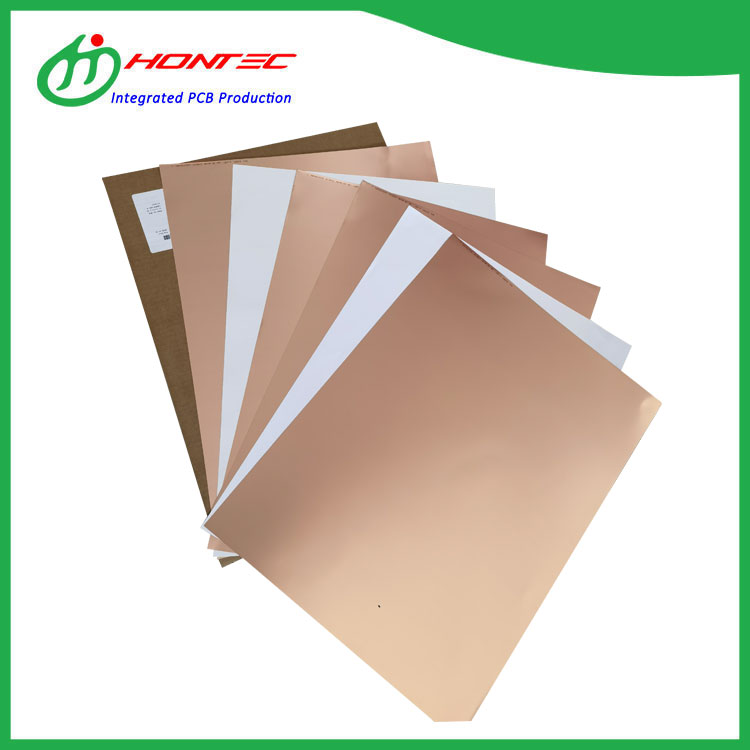
Validation of a High Frequency Board involves a multi-stage approach, targeting key electrical and physical parameters. Here is a systematic overview:
-
Pre-Test Inspection: Visual and automated optical inspection (AOI) to verify craftsmanship against HONTEC's stringent standards.
-
Electrical Testing: Continuity and isolation tests to ensure there are no shorts or opens.
-
Impedance Verification: Using a Time Domain Reflectometer (TDR) to confirm that controlled impedance traces meet the specified tolerance (typically ±10%).
-
Signal Integrity & S-parameter Analysis: Utilizing Vector Network Analyzers (VNA) to measure critical high-frequency performance metrics like insertion loss and return loss across the target frequency band.
-
Thermal & Environmental Stress Testing: Subjecting boards to thermal cycling and other stresses to validate long-term reliability.
Key Performance Parameters We Validate at HONTEC
Our testing protocol is designed to verify the following essential product parameters, which define the quality of our High Frequency PCBs:
| Parameter | Test Method | HONTEC Performance Standard |
|---|---|---|
| Dielectric Constant (Dk) | Clamped Stripline Test | Tight tolerance (±0.05) for predictable signal speed |
| Dissipation Factor (Df) | Resonant Cavity / VNA | Ultra-low loss (<0.002 at 10 GHz) materials |
| Impedance Control | Time Domain Reflectometry (TDR) | Controlled to within ±7% (standard), ±5% (advanced) |
| Insertion Loss | Vector Network Analyzer (VNA) | Minimized via optimal material selection and smooth plating |
| Thermal Reliability | Thermal Cycle Testing (-55°C to +125°C) | >500 cycles without failure |
High Frequency Board FAQ Common Questions
Q: Why is material choice so critical for a High Frequency PCB?
A: At high frequencies, signal loss and propagation speed are directly influenced by the substrate's dielectric constant (Dk) and dissipation factor (Df). HONTEC selects advanced materials like Rogers, Taconic, or Isola laminates with stable Dk and ultra-low Df to ensure consistent performance and minimal signal degradation.
Q: What is the most common cause of failure in High Frequency PCB testing?
A: Improper impedance control is a frequent issue. Deviations from the target impedance, caused by inconsistencies in trace geometry or material properties, lead to signal reflections and integrity problems. HONTEC's precision manufacturing and TDR validation are specifically designed to eliminate this risk.
Q: Can you test a High Frequency Board without specialized equipment?
A: No, effective validation requires specialized RF test equipment. Basic continuity testers cannot evaluate high-frequency performance. HONTEC utilizes state-of-the-art VNAs and TDRs in our dedicated labs to provide customers with accurate S-parameter data and impedance reports, proving the board performs as simulated.
Trusting your design to a manufacturer with a comprehensive validation philosophy is crucial. HONTEC doesn't just build High Frequency PCBs; we engineer and certify them for peak performance. Our detailed test reports provide you with the confidence that your board will perform reliably in its final application.
Contact us today with your project specifications. Let our engineering team demonstrate how HONTEC's expertise in High Frequency Board manufacturing and validation can de-risk your product development and ensure its success.