

How to Select the Ideal Material for a Circular Optical Light Guide Plate in Humid Conditions
2026-07-17
When designing lighting systems for bathrooms, outdoor signage, marine instruments, or tropical-climate electronics, engineers often overlook one critical variable: humidity. Unlike temperature or mechanical shock, moisture silently degrades optical performance—reducing light extraction efficiency, creating haze, and even causing permanent delamination. For manufacturers and R&D teams, choosing the right material for a Circular Optical Light Guide Plate is not a one-size-fits-all decision. At Jin Mingwei, we have tested dozens of polymer formulations under 85°C/85% RH (relative humidity) conditions for over 2,000 hours, and the data consistently shows that material selection directly determines product lifespan. This guide walks you through the scientific, practical, and economic factors that should drive your choice.
Why Humidity Matters More Than You Think
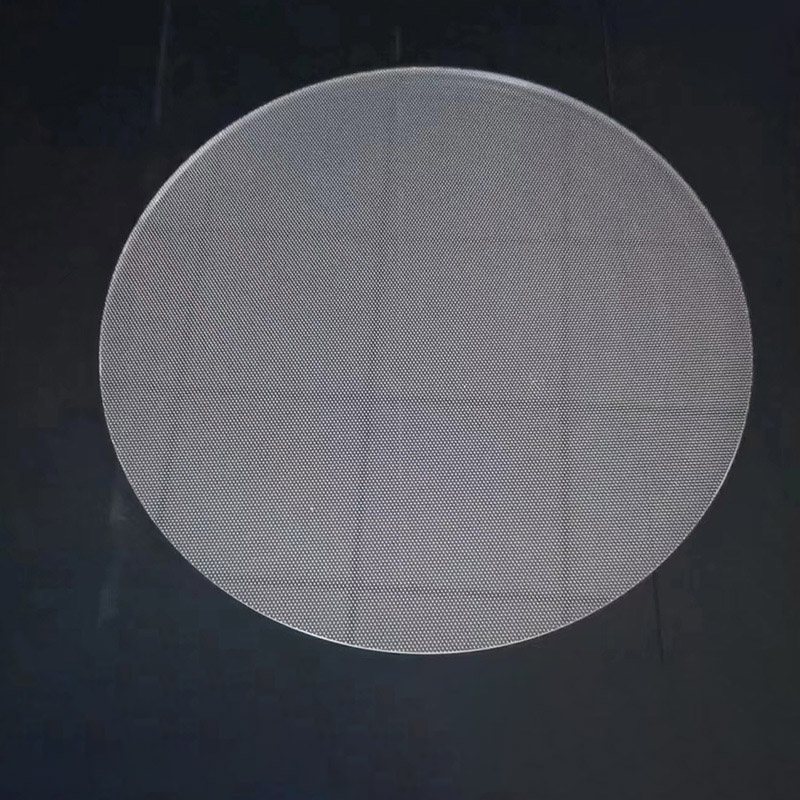
A Circular Optical Light Guide Plate relies on total internal reflection (TIR) and precisely engineered micro-dot patterns to scatter light uniformly. Water molecules absorbed into the polymer matrix cause three destructive effects:
-
Swelling-induced warpage – changes the plate’s curvature, altering the exit angle of light.
-
Refractive index shift – reduces the critical angle, increasing leakage losses by up to 18%.
-
Hydrolysis – weakens ester bonds in certain polymers, creating micro-cracks that scatter light randomly.
In high-humidity environments (above 70% RH), these effects accelerate exponentially. Therefore, the material must balance optical clarity, dimensional stability, and chemical resistance—without sacrificing manufacturability.
Core Material Candidates Compared
Currently, the market offers three mainstream base polymers for optical-grade light guide plates. Below is a side-by-side comparison based on Jin Mingwei’s internal accelerated aging tests (85°C/85% RH, 1,000 hours):
| Property | PMMA (Acrylic) | PC (Polycarbonate) | MS (Methyl Methacrylate-Styrene) |
|---|---|---|---|
| Water Absorption (24h) | 0.3% – 0.4% | 0.15% – 0.20% | 0.2% – 0.25% |
| Transmittance Retention | 92% → 88% (drop 4%) | 89% → 85% (drop 4%) | 90% → 87% (drop 3%) |
| Yellowing Index (ΔYI) | +1.2 | +3.8 | +1.8 |
| Dimensional Change | +0.25% | +0.10% | +0.15% |
| Impact Resistance | Poor | Excellent | Moderate |
| Relative Cost | Low | High | Medium |
| Typical Service Life | 3 – 5 years | 5 – 8 years | 4 – 6 years |
At Jin Mingwei, we recommend PMMA for cost-sensitive indoor applications with moderate humidity (e.g., decorative ring lights). For automotive exteriors or marine displays, PC with a hard-coat anti-hydrolysis layer is the safer bet. MS offers a sweet spot for medical devices where clarity and moderate moisture resistance are both required.
Five Critical Selection Criteria (Checklist)
Beyond the base polymer, consider these five factors when specifying your Circular Optical Light Guide Plate:
-
Surface Coating – Anti-fog or anti-moisture coatings (SiO₂ or organic siloxane) can reduce water adsorption by 40%. Ensure the coating’s CTE (coefficient of thermal expansion) matches the substrate.
-
Edge Seal Design – Humidity enters primarily through cut edges. Laser-polished edges with a thin epoxy barrier outperform mechanical polishing.
-
Additive Package – UV stabilizers and anti-hydrolysis agents (e.g., carbodiimide) extend life significantly. Ask your supplier for the additive loading percentage.
-
Processing Temperature – Higher melt-flow materials require lower injection pressures, reducing internal stress—which, in turn, minimizes stress-cracking when moisture is present.
-
Certification Standards – Look for UL 746C (long-term outdoor aging) or IEC 60068-2-78 (damp heat test) reports. Jin Mingwei provides full test documentation for every batch shipped to tropical regions.
Practical Decision Flowchart (Text-Based)
-
Step 1 – Define maximum RH and temperature (e.g., 90% RH at 40°C).
-
Step 2 – Calculate required lifetime (consumer: 3 yrs; industrial: 7+ yrs).
-
Step 3 – If lifetime > 5 yrs AND RH > 75% → choose PC + hard coating.
-
Step 4 – If lifetime < 5 yrs AND RH < 70% → choose PMMA (most economical).
-
Step 5 – If optical clarity is paramount (ΔYI < 2) AND impact is not critical → choose MS.
Frequently Asked Questions (FAQ) About Circular Optical Light Guide Plate Material Selection
Q1: Can I use standard PMMA for a Circular Optical Light Guide Plate installed in a swimming-pool ceiling light fixture?
A1: Standard PMMA is not recommended. Pool environments combine high humidity (often >90% RH), chlorine vapors, and temperature swings. Chlorine accelerates hydrolysis of PMMA’s ester groups, causing micro-crazing within 6–12 months. Instead, specify a modified PMMA with built-in anti-hydrolysis agents (e.g., Evonik’s Plexiglas® Resist) or switch to PC with a UV-cured acrylate hard coat. Jin Mingwei offers a specialty “Tropical-Grade” Circular Optical Light Guide Plate that passes 2,000-hour salt-spray and humidity cycling tests. Always request the water absorption curve—if it exceeds 0.35% after 7 days, reject it for pool use.
Q2: How does the plate thickness affect moisture-related warpage in a Circular Optical Light Guide Plate?
A2: Thickness is a first-order factor. A 2 mm thick Circular Optical Light Guide Plate will absorb moisture from both flat surfaces, but the swelling gradient across the thickness is minimal—resulting in a slight spherical bow. However, a 0.8 mm ultra-thin plate experiences a steeper moisture gradient because the core dries slower than the surfaces. This creates asymmetric stress, leading to “potato-chip” warpage (saddle-shaped deformation). For high-humidity applications, Jin Mingwei advises a minimum thickness of 1.5 mm unless you use a symmetrical edge-clamping design. Additionally, annealing the plate at 80°C for 2 hours post-molding relieves frozen-in stresses, reducing warpage by nearly 60% even at 85% RH.
Q3: Are there any eco-friendly or recyclable materials suitable for a Circular Optical Light Guide Plate in humid conditions?
A3: Yes, but with compromises. Bio-based PMMA (derived from MMA monomers) and recycled PC grades are emerging. However, recycled PC often contains residual catalysts and oligomers that migrate to the surface under humidity, forming a hazy bloom. Jin Mingwei has successfully tested a circular-grade PLA (polylactic acid) modified with nano-silica—it achieves 88% transmittance and 0.2% water absorption, but its glass transition temperature (Tg) is only 60°C, limiting it to indoor, climate-controlled spaces. For a genuinely sustainable and humidity-resistant solution, look for PMMA with ISCC PLUS certification (mass-balanced renewable feedstock). Always run a 500-hour damp-heat trial before committing—our tests show that many “green” materials fail at 500 hours, while conventional PC passes easily.
Cost-Performance Optimization Strategy
| Application Scenario | Recommended Material | Coating Required? | Estimated Unit Cost |
|---|---|---|---|
| Indoor decorative ring light (RH 50–65%) | PMMA (generic) | No | $ |
| Bathroom vanity mirror LGP (RH 80%) | MS + anti-fog coating | Yes (SiO₂) | $$ |
| Marine navigation display (RH 95%, salt) | PC + hydrolysis-resistant hard coat | Yes (siloxane) | $$$ |
| Outdoor architectural circular panel (RH 85%) | PC + UV blocker | Yes | $$$ |
Final Verdict from Jin Mingwei
There is no single “best” material—only the best fit for your specific humidity profile, optical budget, and mechanical demands. Always prioritize real-world accelerated testing over datasheet values. A material that performs perfectly at 23°C/50% RH may fail catastrophically at 40°C/90% RH. Partner with a supplier who shares test footage, failure analysis reports, and post-market feedback. At Jin Mingwei, we maintain a library of over 150 material formulations for Circular Optical Light Guide Plates, each characterized with full humidity-aging curves. We do not guess—we measure.
Need a tailored recommendation for your project?
Send us your operating humidity range, target luminance uniformity, and mechanical constraints. Our optical engineering team will reply within 24 hours with a customized material matrix, sample testing plan, and cost breakdown. Contact Jin Mingwei today—let us help you build a Circular Optical Light Guide Plate that outlasts the environment, not just the warranty period. Reach out via our website or email your specs directly to our technical sales desk. Your reliable lighting starts with the right material—and we are here to guide you, every step of the way.