

How to Select a DC Link Reactor for Variable Frequency Drives
2026-10-30
Choosing the right DC Link Reactor is one of the most consequential decisions in designing a reliable variable frequency drive (VFD) system. A properly sized DC Link Reactor smooths the DC bus current, suppresses harmonics, and protects the drive from transient events, while an undersized or mismatched unit can cause overheating, voltage ripple, and premature capacitor failure. At Dufew, we have supported drive manufacturers and system integrators across industrial applications, and the selection process below reflects the practical criteria our engineers apply every day.
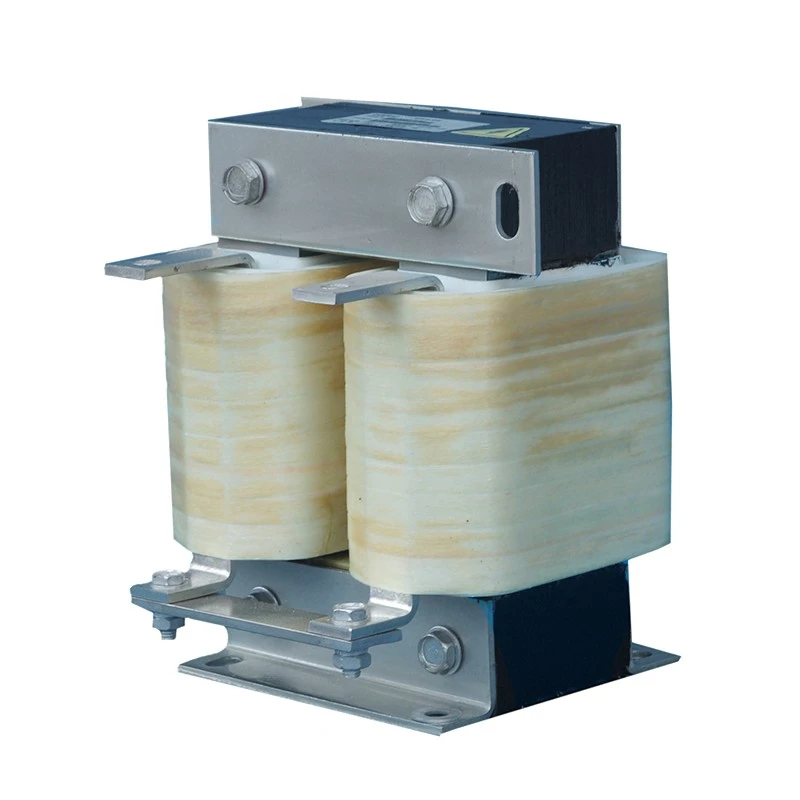
1. Start With the Drive's DC Bus Parameters
The DC Link Reactor must be matched to the actual DC bus voltage and current, not just the motor nameplate rating. Confirm the nominal DC bus voltage, the maximum continuous DC current, and the ripple current the drive will see under worst-case load conditions.
2. Determine the Required Inductance
Inductance is typically specified as a percentage of the drive's base impedance. A common design target is 2% to 5% inductance to limit DC bus ripple current and reduce harmonic distortion. Higher inductance improves smoothing but increases size, weight, and cost.
| Application Requirement | Typical Inductance Range | Selection Consideration |
|---|---|---|
| Standard pump and fan drives | 2%–3% | Cost-effective ripple reduction |
| High-dynamic servo and spindle drives | 3%–5% | Lower current ripple, faster control response |
| Multi-drive common DC bus systems | 3%–4% | Coordination with shared bus impedance |
| Harsh grid or weak supply | 4%–5% | Greater immunity to voltage sags |
3. Verify Current Ratings and Thermal Margin
The DC Link Reactor must carry the full DC current continuously, including overload conditions. Check the RMS current rating, the saturation current, and the temperature rise at the installed ambient. Dufew recommends specifying at least 20% thermal margin for drives that experience frequent overloads or high ambient temperatures.
4. Evaluate Core Material and Construction
-
Iron powder cores offer stable inductance under DC bias and are well suited to high-current VFD applications.
-
Laminated steel cores provide high inductance density but require careful design to avoid saturation.
-
Copper or aluminum windings affect losses and thermal performance; copper is preferred where efficiency matters.
-
Impregnation and encapsulation improve mechanical robustness and noise reduction in industrial environments.
5. Check Compliance, Mounting, and Integration
Confirm that the DC Link Reactor meets relevant standards such as UL, CE, and IEC requirements for the target market. Review mounting dimensions, terminal configuration, cooling clearance, and vibration resistance to ensure the unit integrates cleanly into the drive enclosure.
6. Validate With Real Operating Data
Simulation is useful, but final selection should be validated with ripple current measurements, temperature rise testing, and harmonic analysis under actual load profiles. This step confirms that the DC Link Reactor performs as intended across the full operating range.
Frequently Asked Questions
Q: What happens if the DC Link Reactor inductance is too low?
A: Insufficient inductance allows excessive ripple current to reach the DC bus capacitors, raising their temperature and shortening service life, while also increasing harmonic distortion on the supply side.
Q: Can a DC Link Reactor be used with any VFD topology?
A: It is most commonly applied in voltage-source drives with a diode rectifier front end; current-source drives and active front end designs require different magnetics and should be evaluated separately.
Q: How do I know whether I need a DC Link Reactor or an AC line reactor?
A: A DC Link Reactor sits on the DC bus and targets ripple current and DC bus stability, while an AC line reactor is placed on the input side to mitigate supply harmonics and transients; many drives benefit from both.
Selecting the right DC Link Reactor protects your drive investment and improves overall system efficiency. Contact us at Dufew today to discuss your VFD requirements and receive a tailored DC Link Reactor recommendation from our engineering team.