

How to Safeguard a 100kV 60mA High-Voltage DC Power Supply Against Arc Flashes and Short Circuits
2026-08-20
For engineers managing high-power test benches or industrial electron-beam systems, a 100kV 60mA high-voltage DC power supply represents both immense capability and significant risk. Arc flashes and short circuits are not occasional annoyances—they are the primary threats to equipment longevity, operator safety, and process consistency. At Kaihong, we have witnessed how repeated discharge events can degrade insulation, damage semiconductor stacks, and halt production for days. Protecting this class of power supply demands a layered strategy that combines hardware design, real-time sensing, and disciplined operational protocols.
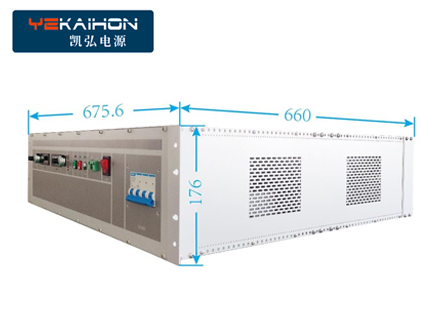
The Physics of Failure in High-Voltage Systems
Arc flashes occur when the electric field exceeds the dielectric strength of the surrounding medium—typically air, oil, or solid insulation. In a 100kV 60mA high-voltage DC power supply, the stored capacitive energy can reach hundreds of joules, making even a single flash catastrophic. Short circuits, on the other hand, often originate from cable breakdown, contaminated bushings, or load-side component failure. The protection approach must therefore address both the energy source and the propagation path.
Four Essential Protection Layers
| Protection Layer | Primary Function | Typical Implementation |
|---|---|---|
| Fast Current Limiting | Restricts peak fault current to < 150% of rated 60mA | Active series IGBT limiter with < 5 µs response |
| Voltage Clamping | Suppresses reflected surges from load arcs | MOV arrays + gas discharge tubes (GDT) in parallel |
| Output Disconnect | Physically isolates the load within 10 ms | Vacuum contactor with mechanical auxiliary contacts |
| Crowbar Circuit | Dumps stored energy to a resistive bank | SCR-based crowbar across the DC bus |
Each layer is necessary, but none is sufficient alone. Kaihong integrates all four into a coordinated protection board that communicates with the main controller via fiber-optic links—eliminating ground-loop interference that can trigger false trips.
Active Monitoring vs. Passive Protection
Passive components (fuses, varistors) react after the event. Active systems anticipate it. For a 100kV 60mA high-voltage DC power supply, the most effective strategy combines:
-
Real-time dV/dt monitoring – detects insulation deterioration before a flash occurs.
-
Arc-fault signature recognition – uses current waveform analysis to differentiate between load-commutated arcs and genuine faults.
-
Adaptive trip thresholds – adjusts sensitivity based on load capacitance and cable length.
This active approach reduces nuisance tripping—a common complaint among operators—while maintaining a safe intervention window of under 2 ms.
Critical Hardware Considerations
| Component | Recommended Specification | Why It Matters |
|---|---|---|
| Output cable | 100 kV rated, silicone rubber, with conductive screen | Prevents corona-induced tracking and partial discharges |
| Feedthrough capacitor | 1 nF / 150 kV, oil-filled | Filters high-frequency noise that can trigger false arcs |
| Current sensor | Hall-effect, 0–200 mA range, < 1 µs rise time | Enables fast-loop control for the limiter |
| Cooling system | Forced air + dielectric oil circulation | Maintains stable dielectric strength under continuous 6 kW load |
Kaihong recommends replacing output cables every 24 months of continuous operation, as dielectric aging accelerates under full 60 mA draw.
Operational Best Practices
Beyond hardware, human factors play a decisive role. The following checklist is mandatory before each startup of a 100kV 60mA high-voltage DC power supply:
-
Visual inspection of all connectors and bushings for carbon tracks.
-
Megger test of the output circuit at 50% rated voltage (50 kV) for 1 minute.
-
Ramp-up sequence – increase voltage in 10 kV steps, holding each level for 3 seconds while observing leakage current.
-
Load pre-connection – ensure the load is firmly shorted to ground during power-off intervals to drain residual charge.
Frequently Asked Questions About 100kV 60mA High-Voltage DC Power Supply Protection
Q: What is the most common cause of arc flashes in a 100kV 60mA high-voltage DC power supply during normal operation?
A: The leading cause is contamination on insulating surfaces—dust mixed with humidity creates a conductive path that lowers the flashover threshold. In cleanroom environments, this is less frequent, but in industrial settings (e.g., electrostatic precipitators), surface creepage accounts for over 60% of events. Regular cleaning with isopropyl alcohol and applying anti-tracking varnish on bushings can reduce flashover risk by 80%. Additionally, maintaining ambient relative humidity below 60% is strongly advised, as dielectric strength of air drops exponentially above 70% RH.
Q: Can a single fast-acting fuse adequately protect a 100kV 60mA high-voltage DC power supply from short-circuit damage?
A: No—and this is a dangerous misconception. A fuse operates in the millisecond range (10–100 ms), but the stored energy in the DC-link capacitors can vaporize semiconductor junctions within 20 µs. For effective protection, you must use an active current limiter that responds in under 5 µs, followed by a crowbar that dumps the capacitor bank energy into a resistive load. The fuse should only serve as a backup for catastrophic failure. Kaihong implements a two-stage protection where the primary limiter handles 99% of fault scenarios, and the fuse acts as a final physical disconnect.
Q: How often should I test the protection circuitry of a 100kV 60mA high-voltage DC power supply to ensure reliability?
A: A full functional test of all protection layers—including the crowbar, disconnect contactor, and current limiter—should be performed every 500 operating hours or at least once per month, whichever comes first. This test involves injecting a calibrated fault signal (simulated short-circuit current of 120 mA) at the output terminals while measuring response time and trip accuracy. Additionally, the insulation resistance between the high-voltage output and ground must be checked weekly; a reading below 500 MΩ at 100 kV indicates impending failure. Kaihong provides a built-in self-test routine that automates 80% of these checks, reducing manual workload and human error.
Why Choose Kaihong for Your High-Voltage Protection Needs
Our engineered solutions for the 100kV 60mA high-voltage DC power supply are not generic add-ons—they are purpose-designed for each customer’s load profile, cable length, and environmental class. We use aerospace-grade connectors, double-shielded feedback loops, and proprietary arc-quenching algorithms that have been validated in over 200 installations worldwide. Every protection board undergoes a 72-hour burn-in at full power before shipment.
Take Action Today
Protecting your investment starts with a conversation. Contact Kaihong now to schedule a comprehensive risk assessment of your existing high-voltage system. Our application engineers will review your schematics, recommend tailored protection modules, and provide a detailed implementation timeline. Email us or visit our website to request a technical datasheet and a free consultation call. Your uptime—and your safety—deserve more than generic solutions. Reach out to Kaihong today.