

How to Properly Maintain and Test Molded Case Circuit Breakers
2025-12-31
Ensuring the reliability and safety of your electrical distribution system hinges on the proper care of its critical components, with the Molded Case Circuit Breaker (MCCB) being paramount. A proactive maintenance schedule for these devices is not just a recommendation—it's a necessity for preventing unplanned downtime, protecting valuable assets, and safeguarding personnel. At SPX, we understand that a well-maintained MCCB is the cornerstone of operational continuity. This guide outlines essential steps for maintaining and testing your circuit breakers to ensure they perform when needed most.
A comprehensive maintenance program involves visual inspections, mechanical checks, and electrical testing. Always adhere to strict safety protocols, including de-energizing the breaker and following lockout/tagout (LOTO) procedures, before beginning any work.
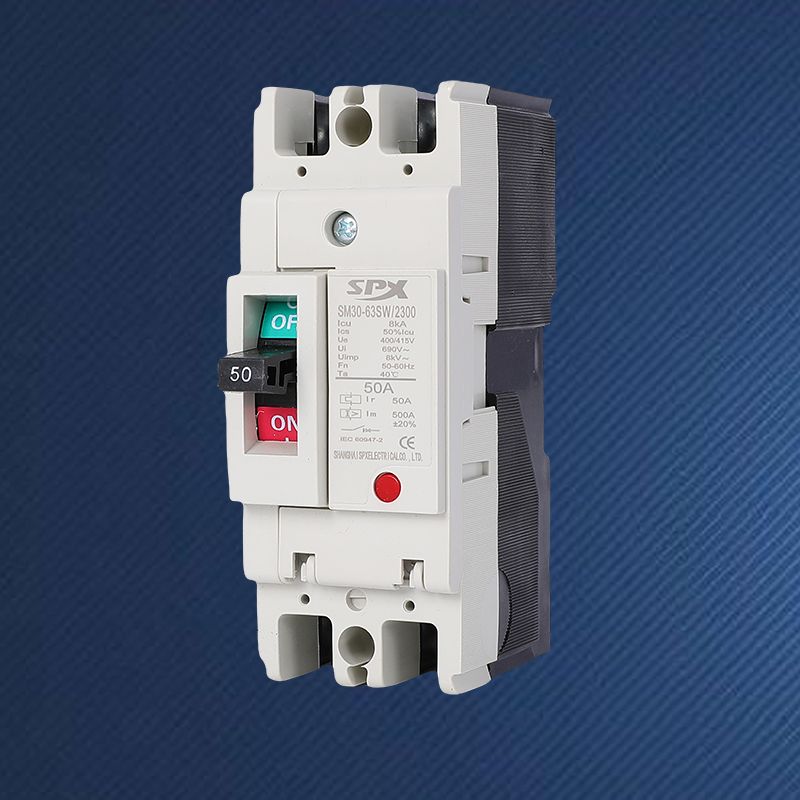
Key Maintenance & Testing Procedures
-
Visual & Mechanical Inspection:
-
Check for signs of overheating, corrosion, or physical damage on the Molded Case Circuit Breaker housing, terminals, and contacts.
-
Ensure the breaker enclosure is clean, dry, and free of dust or contaminants.
-
Manually operate the mechanism several times to verify smooth mechanical action.
-
Tighten power connections to the manufacturer's specified torque to prevent hot spots.
-
-
Insulation Resistance Test:
-
Using a megohmmeter, measure the insulation resistance between phases and from each phase to ground. This identifies deteriorating insulation before it leads to failure.
-
-
Contact Resistance Test:
-
Perform a micro-ohm or millivolt drop test to measure the resistance of the main contacts. High resistance indicates worn or pitted contacts, leading to excessive heat generation.
-
-
Primary Injection & Trip Test:
-
This is the most critical functional test. Using a test set, inject a simulated fault current directly through the breaker poles to verify its exact trip characteristics and timing against the manufacturer's curve (e.g., Long-Time, Short-Time, Instantaneous).
-
Recommended Maintenance Intervals
| Maintenance Activity | Frequency | Purpose |
|---|---|---|
| Visual Inspection | Quarterly / Bi-Annually | Identify obvious signs of wear, contamination, or loose connections. |
| Thermal Scan | Annually (under load) | Detect abnormal heating at terminations. |
| Insulation & Contact Resistance Test | Every 1-3 Years | Assess material degradation and current path integrity. |
| Full Primary Injection Test | Every 3-5 Years (or per NFPA 70B) | Validate the protective trip function and calibration. |
Molded Case Circuit Breakers FAQ
Q: How often should I exercise (turn on and off) a spare or infrequently used MCCB?
A: It is recommended to manually exercise the operating mechanism of a stationary Molded Case Circuit Breaker at least once per year. This action helps keep the mechanical linkages, pivots, and contacts free from oxidation buildup, ensures lubrication is spread, and verifies the mechanism doesn't seize, which could prevent operation during an emergency.
Q: Can I use a standard multimeter to test the trip functionality of an MCCB?
A: No, a standard multimeter cannot test the trip functionality. Verifying an Molded Case Circuit Breaker's protective response requires a primary injection test set. This specialized equipment generates the high currents necessary to simulate real overload and short-circuit conditions, allowing you to precisely measure the time it takes for the breaker to trip at various current levels, confirming it aligns with its time-current curve.
Q: What are the most common signs that an MCCB needs immediate replacement?
A: Immediate investigation and potential replacement are warranted if you observe: 1) Persistent tripping without an identifiable overload in the circuit; 2) Visible signs of arcing, melting, or severe discoloration on the case or terminals; 3) A burning smell emanating from the breaker; 4) Inability to reset the mechanism securely, or 5) Failed calibration during primary injection testing. Continuing to use a compromised breaker poses a significant fire and safety risk.
Proper maintenance extends the service life of your equipment and ensures your facility's safety. Don't leave the integrity of your electrical protection to chance. For expert guidance, certified testing services, or to inquire about the robust and reliable SPX series of Molded Case Circuit Breakers, contact us today. Our team of specialists is ready to help you design and implement a maintenance program that keeps your power system secure and efficient.