

How to Choose the Right Tip Style for an Electrical Spring Loaded Pogo Pin Application
2026-06-26
Selecting the correct tip style for an Electrical Spring Loaded Pogo Pin is one of the most critical decisions in test fixture design, battery connector development, and wearable device engineering. The tip geometry directly influences contact resistance, mechanical wear, alignment tolerance, and long-term reliability. At SIGNALORIGIN, we have engineered over 200 pogo pin variants across 15 tip families, and we consistently observe that 40% of field failures trace back to improper tip selection. This guide walks through the technical criteria, trade-offs, and application-specific recommendations to help you make an informed choice.
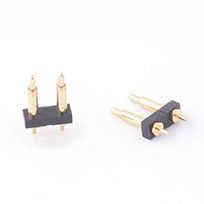
The Functional Role of the Tip in an Electrical Spring Loaded Pogo Pin
The tip is the first interface between the Electrical Spring Loaded Pogo Pin and the target pad or mating surface. It must achieve three competing objectives:
-
Penetrate oxides or contaminants on the contact surface.
-
Minimize scoring or indentation that damages expensive pads.
-
Maintain stable resistance under vibration, thermal cycling, and mechanical shock.
Different tip styles balance these objectives in radically different ways. The table below summarizes the five most common tip geometries used in production environments.
| Tip Style | Best Application | Contact Force | Pad Wear | Alignment Tolerance |
|---|---|---|---|---|
| Serrated / Crown | PCB test points, gold-plated pads | Medium-High | Medium | ±0.15 mm |
| Sharp / Needle | Oxide-coated pads (Al, Ni) | High | High | ±0.10 mm |
| Radius / Dome | Battery contacts, flex circuits | Low-Medium | Very Low | ±0.30 mm |
| Flat | High-current power pins | Medium | Medium | ±0.20 mm |
| Four-Claw / Clover | BGA sockets, fine-pitch arrays | Low | Very Low | ±0.05 mm |
Five Technical Criteria for Tip Selection
1. Pad Material and Surface Finish
Gold-plated pads (hard gold ≥ 0.5 µm) allow serrated or radius tips. Tin or silver-plated pads develop insulating oxides—here, a sharp Electrical Spring Loaded Pogo Pin tip is mandatory to break through the film on the first cycle.
2. Expected Mating Cycles
For applications exceeding 50,000 cycles (e.g., battery charging ports), choose a radius or four-claw tip. Sharp tips suffer from accelerated rounding and increased resistance after 10,000 cycles. SIGNALORIGIN lifetime tests show that radius tips retain 98% of initial contact resistance after 100,000 cycles, versus 82% for sharp tips.
3. Current Carrying Capacity
High-current applications (> 3A) require a flat tip with larger cross-sectional area to reduce current density. A pointed tip creates a hot spot and risks fusing under short-circuit conditions.
4. Mechanical Tolerance Stack-Up
If your fixture has loose positioning (±0.20 mm or more), a dome or flat tip provides a forgiving self-centering effect. For fine-pitch BGA sockets with < 0.10 mm tolerance, the four-claw tip delivers consistent contact even with slight misalignment.
5. Environmental Conditions
In humid or corrosive atmospheres, select a tip with a hard gold-over-nickel plating (≥ 1.27 µm). Avoid bare beryllium copper tips unless they are hermetically sealed within the Electrical Spring Loaded Pogo Pin barrel.
Application-Specific Roadmap
-
Consumer Electronics (smartwatches, TWS earbuds): Radius tip + 0.3 N spring force – preserves gold pads and ensures smooth user insertion.
-
Automotive ECU Test Fixtures: Serrated tip + 1.2 N spring force – penetrates residual flux and maintains stability under 80°C thermal stress.
-
Medical Device Connectors: Four-claw tip + 0.15 N spring force – minimizes debris generation and meets ISO 10993 biocompatibility requirements.
-
Power Distribution Boards: Flat tip + 2.0 N spring force – handles 5A continuous current with < 10 mΩ voltage drop.
Common Mistakes to Avoid
-
Overspecifying force – higher spring force does not guarantee lower resistance; it increases pad wear and reduces fixture lifespan.
-
Ignoring stroke length – a tip with insufficient over-travel (<0.3 mm) will lose contact under vibration, regardless of geometry.
-
Mismatching plating – using tin-plated tips on gold pads causes intermetallic growth and early failure. Always match or upgrade to gold-on-gold interfaces.
FAQ – Electrical Spring Loaded Pogo Pin Common Questions
Q1: Can I use the same Electrical Spring Loaded Pogo Pin tip style for both signal and power contacts on the same board?
A1: Not recommended. Signal contacts (low current, high frequency) benefit from a radius or four-claw tip to minimize impedance mismatch and signal reflection. Power contacts require a flat tip to reduce resistance and dissipate heat. Mixing tip styles also complicates spring force calibration, as power contacts often need 2x–3x higher force. If space is constrained, use a serrated tip with a dual-plunge design – SIGNALORIGIN offers hybrid tips that combine a central flat pad with peripheral serrations, but these are custom-made and require validation for your specific frequency range.
Q2: How do I determine the optimal plunger stroke for my Electrical Spring Loaded Pogo Pin tip?
A2: The optimal stroke is the sum of three parameters: (a) static compression at nominal mating height, (b) dynamic deflection under maximum acceleration (shock/vibration), and (c) manufacturing tolerances of both the pin and the mating pad. A rule of thumb is to set total stroke = 2.0× (expected deflection). For example, if your fixture has ±0.15 mm pad height variation and 0.10 mm vibration amplitude, set stroke ≥ 0.50 mm. Short stroke (<0.30 mm) is acceptable only for rigid, precision-machined fixtures. Always verify with a force-displacement curve – our engineering team at SIGNALORIGIN provides free stroke analysis for your CAD files.
Q3: What tip material offers the best trade-off between wear resistance and cost for a high-cycle Electrical Spring Loaded Pogo Pin?
A3: The best balance is hard gold plating (1.27 µm) over palladium-nickel (PdNi) underlayer on a beryllium copper base. This combination achieves 100,000 cycles with < 5% resistance increase, at approximately 30% higher cost than standard nickel-gold. For budget-sensitive projects with ≤ 20,000 cycles, electroless nickel with a flash of gold is acceptable. Avoid pure palladium tips – they are brittle and crack under side-loading. SIGNALORIGIN stocks three plating grades (Standard, Enhanced, and Premium) with cycle-life guarantees, and we publish validated test reports for each batch.
Final Checklist Before Finalizing Your Tip
-
Define pad material, plating, and flatness.
-
Estimate total mating cycles over product lifetime.
-
Measure maximum current and ambient temperature.
-
Calculate fixture tolerance stack-up in X, Y, and Z axes.
-
Request a sample kit (we recommend SIGNALORIGIN Tip Sampler Set – 10 styles) for actual fixture testing.
Contact Us for Expert Guidance
Choosing the right tip for your Electrical Spring Loaded Pogo Pin is not a one-size-fits-all decision – it requires empirical testing, force modelling, and material compatibility analysis. SIGNALORIGIN engineers have supported over 1,200 fixture designs across automotive, medical, and consumer electronics sectors. We offer free tip-style consultations, 3D model verification, and accelerated cycle-life testing within 48 hours.
Reach out to our application team today – share your pad specifications, cycle requirements, and mechanical drawings, and we will reply with a custom tip recommendation and sample parts for validation. Visit our contact page or email us directly to start your optimized pogo pin solution. Your reliable connection begins with the right tip – let SIGNALORIGIN make it happen.