

How to choose the right Siemens PLC for your industrial application?
2026-08-31
The Siemens PLC portfolio is vast—from the compact S7-1200 to the high performance S7-1500 and the distributed ET200 series. This breadth is an advantage, but it also makes selection a challenge. In our factory, we have helped hundreds of customers navigate this decision. The wrong choice leads to either overpaying for unused capacity or under spec'ing and facing performance bottlenecks. This guide presents a structured selection methodology based on real world application requirements.
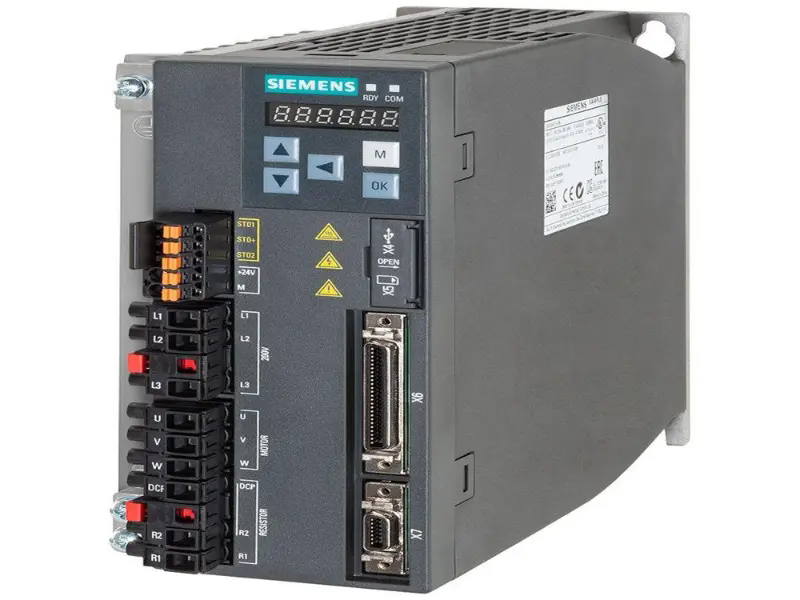
1. What Is the First Question You Should Ask Before Looking at Any Siemens PLC?
Before you compare any model specifications, ask yourself: what is the core function of this controller? The answer generally falls into one of three categories: standalone machine control, process automation with analog loops, or distributed I/O for a larger system. This initial classification immediately narrows your options. A simple packaging machine with 20 digital inputs and 10 digital outputs is a perfect candidate for the S7-1200. A water treatment plant with 30 analog sensors and PID loops should look at the S7-1500. A large conveyor system with remote stations is suited for the ET200 with a central S7-1500 CPU. At Yueyang Tongtu E-commerce Co., Ltd., we use a structured questionnaire to capture these requirements before any selection is made. The table below maps common application profiles to the recommended Siemens PLC family based on our field data.
| Application profile | Typical I/O count | Analog channels | Recommended Siemens PLC |
| Simple standalone machine (e.g., conveyor, packaging) | 20 – 40 DI, 10 – 20 DO | 0 – 2 | S7-1200 (CPU 1214 or 1215) |
| Complex machine with motion control (e.g., servo axes) | 40 – 80 DI, 20 – 40 DO | 4 – 8 | S7-1500 (CPU 1511 or 1513) |
| Process control with multiple PID loops (e.g., chemical batch) | 80 – 150 DI, 40 – 80 DO | 12 – 24 | S7-1500 (CPU 1516 or higher) |
| Distributed system with remote I/O (e.g., large assembly line) | 200+ DI, 100+ DO | 20+ | ET200SP + S7-1500 CPU |
| Safety critical application (e.g., press, robot cell) | Varies | Varies | F CPU variant (S7-1200F or S7-1500F) |
This initial mapping covers about 80 percent of applications. The remaining 20 percent require deeper analysis of communication needs, scan time requirements, and environmental conditions.
2. How Do You Assess the Communication Requirements for a Siemens PLC?
Modern industrial systems rarely operate in isolation. Your Siemens PLC must communicate with HMIs, drives, other PLCs, and possibly cloud systems. The communication interfaces available vary significantly across the portfolio. The S7-1200 has two PROFINET ports on the CPU, but it does not support the full range of communication protocols that the S7-1500 does. For example, if you need to act as a PROFIBUS master, you need an S7-1500 with a CM module. If you need OPC UA server functionality for IoT connectivity, the S7-1500 has native support, while the S7-1200 requires additional configuration. In our factory, we map the communication needs in three layers: field level (sensors/actuators), control level (HMIs/drives), and enterprise level (MES/ERP). The S7-1500 is the only platform that can handle all three layers natively. The S7-1200 is excellent for field and control levels but requires a gateway for enterprise connectivity. At Yueyang Tongtu E-commerce Co., Ltd., we maintain a communication requirement checklist that helps customers avoid unexpected integration costs.
3. What Performance Factors Actually Matter Beyond the Spec Sheet?
Three performance factors are often misunderstood: scan time, memory usage, and motion control capability. Scan time is the time it takes for the PLC to execute one cycle of the program. The S7-1200 has a typical scan time of 1 to 3 ms for a medium sized program. The S7-1500 can achieve sub 1 ms scan times due to its faster backplane. For applications with fast digital inputs (e.g., counting at 100 kHz), the S7-1200 is sufficient. For applications requiring coordinated motion control, the S7-1500's integrated motion control technology is superior. The memory hierarchy is also different. The S7-1200 has work memory of 100 KB to 200 KB, while the S7-1500 starts at 150 KB and goes up to 15 MB. A complex program with multiple function blocks, a large data block, and a visualization can quickly exceed the S7-1200's capacity. The table below shows typical application complexities and their memory requirements, based on our project records.
| Application complexity | Typical code size (KB) | Typical data block size (KB) | Minimum work memory needed | Recommended Siemens PLC |
| Simple logic with few alarms | 20 – 40 | 5 – 15 | 100 KB | S7-1200 CPU 1212 |
| Medium complexity with analog scaling | 50 – 80 | 20 – 40 | 200 KB | S7-1200 CPU 1215 |
| Complex with multiple function blocks and arrays | 100 – 200 | 50 – 150 | 500 KB | S7-1500 CPU 1513 |
| Advanced with motion and PID cascades | 200 – 400 | 150 – 400 | 1.5 MB | S7-1500 CPU 1516 |
| Large system with extensive data logging | 400+ | 500+ | 3 MB+ | S7-1500 CPU 1518 |
In our experience, customers who choose a PLC based solely on I/O count often find themselves adding expensive memory upgrades or replacing the CPU within a year. We recommend always taking the next step up in memory capacity if the application is expected to evolve.
4. How Do Environmental and Installation Factors Influence Your Siemens PLC Choice?
The operating environment has a significant impact on both reliability and cost. The S7-1200 and S7-1500 are rated for 0°C to 60°C ambient temperature for horizontal installation. However, the S7-1500 has a more robust thermal design and can operate with a higher density of modules. For ambient temperatures above 60°C, you need to consider the S7-1500 SIPLUS variants, which are rated up to 70°C. For applications with high vibration, such as those on mobile equipment or near presses, the S7-1500's mounting options are more secure. The S7-1200 has a clip on DIN rail design that is adequate for stationary applications but less reliable in high vibration environments. Power supply requirements also differ. The S7-1200 is typically powered by a 24 V DC supply rated at 1.5 A per CPU. The S7-1500 may require up to 4 A for larger configurations. Our factory provides a checklist for these environmental factors, because we have seen installations where the PLC failed within six months due to overheating or vibration. Yueyang Tongtu E-commerce Co., Ltd. offers a range of Siemens PLC variants, including SIPLUS extreme condition models, to address these challenges.
Frequently Asked Questions About Siemens PLC Selection
Final Summary
Selecting the right Siemens PLC requires a systematic approach that starts with application classification and moves through I/O count, communication needs, performance, and environmental conditions. Each decision point narrows the options until you have a clear recommendation. The cost of a wrong selection is not just the hardware swap—it is the engineering rework and production downtime. Our team has guided hundreds of engineers through this process. Yueyang Tongtu E-commerce Co., Ltd. provides expert advice and genuine Siemens PLC hardware with full technical support.