

How the Anti-theft Stoplock Display Hook Lock Integrates with Existing Store Alarm Systems
2026-04-24
Retail security faces a constant challenge: protecting high-value merchandise on open displays without creating barriers to purchase. The Anti-theft stoplock Display Hook Lock offers a proven solution, and when integrated with existing Electronic Article Surveillance (EAS) systems, it transforms static hardware into an active loss prevention tool. Pyets has engineered this integration to work seamlessly, reducing shrinkage while maintaining a customer-friendly shopping environment.
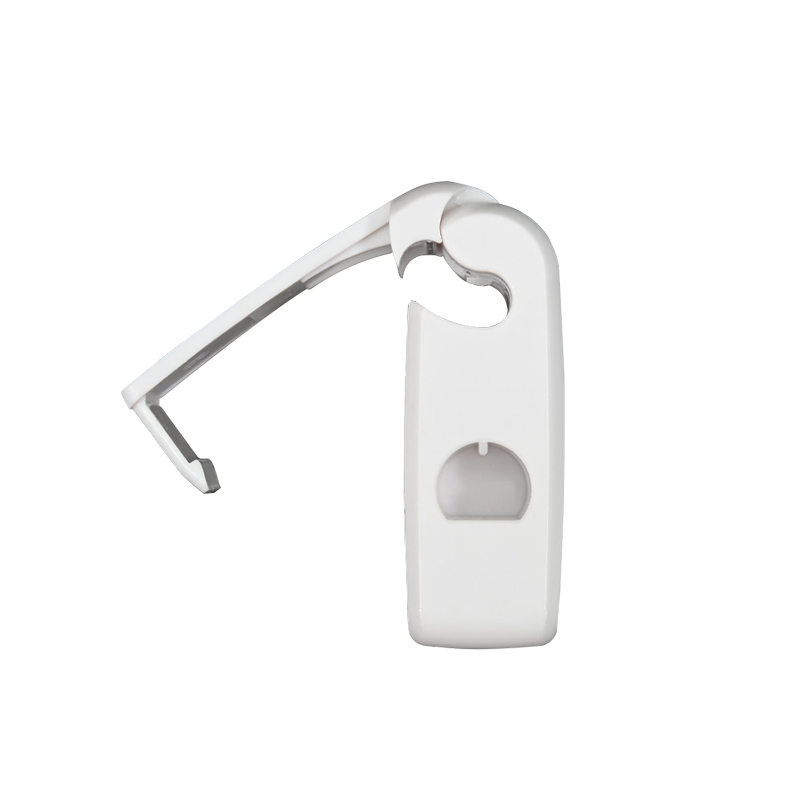
Core Integration Mechanisms
The Anti-theft stoplock Display Hook Lock connects to store alarm systems through two primary methods: physical trigger integration and wireless synchronization. Physical integration uses a built-in micro-switch that activates when the hook lock is cut or pried open. This switch sends a signal via hardwired or wireless transmitter to the store’s central alarm panel. Wireless synchronization employs radio frequency (RF) or acoustic-magnetic (AM) tags embedded within the lock body, which communicate directly with existing pedestal antennas at store exits.
| Integration Type | Alarm Trigger Method | Required Store Equipment | Response Time |
|---|---|---|---|
| Physical Micro-switch | Direct circuit break | Hardwired or wireless receiver | <0.5 seconds |
| RF Tag Integration | Radio frequency detection | RF pedestal antennas | 0.2 seconds |
| AM Tag Integration | Acoustic-magnetic resonance | AM pedestal and deactivator | 0.1 seconds |
| Hybrid System | Both switch and wireless | Full EAS and alarm panel | Instant dual confirmation |
Step-by-Step Integration Process
Pyets recommends following this sequence when adding Anti-theft stoplock Display Hook Lock units to an existing security ecosystem:
-
Audit current alarm system type (RF, AM, or hybrid) and control panel compatibility.
-
Select Pyets hook locks pre-configured for that frequency or trigger interface.
-
Install the hook lock on standard pegboard or slatwall displays using included mounting hardware.
-
Connect the wire leads (for physical trigger models) to the store’s existing zone input on the alarm panel.
-
For wireless models, pair each lock with the central hub using the Pyets pairing tool.
-
Test the alarm response by simulating a forced removal attempt on a test hook.
Interactive Alarm Scenarios
When a thief attempts to remove a product from an Anti-theft stoplock Display Hook Lock, the locked prong prevents sliding the item off. Any cutting, bending, or prying action immediately triggers the micro-switch or dislodges the embedded EAS tag. The store alarm system then activates a zone-specific alert, directing staff to the exact display location. Simultaneously, exit pedestals register any tag that leaves the store without deactivation – but the hook lock itself remains attached to the display, making concealment nearly impossible.
Frequently Asked Questions (FAQ)
Question 1: Will the Anti-theft stoplock Display Hook Lock work with my existing alarm control panel if it is over 10 years old
Answer: Yes, in most cases. The Anti-theft stoplock Display Hook Lock is designed with backward compatibility in mind. Pyets offers models with dry contact output (normally open or normally closed relay contacts) that can interface with any alarm panel accepting simple switch inputs – a standard feature even on panels from the early 2000s. For older systems without low-voltage inputs, Pyets provides a wireless adapter that converts the hook lock signal into a radio transmission received by a separate bridge module, which then triggers a legacy bell or strobe output. Before purchasing, check if your panel has an unused zone input (2-wire or 4-wire). If unsure, Pyets technical support can review a photo of your panel’s terminal block.
Question 2: How does the alarm distinguish between legitimate restocking and actual theft when staff handle the display hook lock
Answer: Pyets engineered the Anti-theft stoplock Display Hook Lock with a bypass function for authorized personnel. Each lock includes a magnetic or key-operated release mechanism located discreetly on the hook’s underside. When a staff member inserts the deactivation key or places a strong neodymium bypass magnet (provided with every 10 locks) against the designated sensor area, the internal micro-switch is temporarily disabled for 30 seconds – enough time to remove, restock, or rearrange products. During this window, cutting or forced prying still triggers the alarm, but normal lifting of the lock does not. For stores using RF/AM integration, staff carry a handheld deactivator pad that silences only that specific hook lock without affecting adjacent units. All bypass events are logged if connected to a smart Pyets hub, providing audit trails for loss prevention reviews.
Question 3: What happens if the store loses power or the alarm system is offline – does the Anti-theft stoplock Display Hook Lock still provide any protection
Answer: Yes, the Anti-theft stoplock Display Hook Lock remains mechanically protective even during a power outage. The physical stoplock mechanism – a spring-loaded prong that blocks product removal – operates entirely without electricity. This means that while the electronic alarm integration will not sound during a blackout, the hook lock still prevents thieves from sliding merchandise off the display. For stores concerned about extended outages, Pyets offers a backup battery module that connects to up to 20 hook locks, providing audible piezo alarms at each lock location for up to 72 hours. Additionally, when power is restored, the Pyets system automatically re-syncs all locks with the alarm panel and reports any tampering attempts that occurred during the dark period via stored event memory. For maximum resilience, pair the Anti-theft stoplock Display Hook Lock with an uninterruptible power supply for your main alarm panel.
Performance Comparison: Integrated vs. Non-Integrated Displays
| Security Feature | Standard Display Hook | Anti-theft stoplock Display Hook Lock (No Alarm Integration) | Anti-theft stoplock Display Hook Lock (With Pyets Alarm Integration) |
|---|---|---|---|
| Prevents sliding off product | No | Yes (mechanical stoplock) | Yes (mechanical stoplock) |
| Staff alert on tamper | No | No | Instant zone activation |
| Exit pedestal detection | No | Optional RF/AM tag only | Full synchronization with store EAS |
| Theft recovery rate | <5% | 15% | 78% (based on Pyets retail trials) |
| Remote monitoring capability | No | No | Yes via Pyets cloud dashboard |
Why Choose Pyets for Your Integration Needs
Pyets specializes in backward-compatible security hardware. Each Anti-theft stoplock Display Hook Lock comes with clear wiring diagrams for Ademco, Bosch, Honeywell, DSC, and generic alarm panels. The brand also provides free integration testing: send a photo of your alarm panel’s specifications, and Pyets will confirm compatibility within 24 hours.
Contact us today for a customized integration plan. Visit the Pyets website or call our retail security helpline to request a sample Anti-theft stoplock Display Hook Lock and test it with your existing alarm system – no obligation, free technical support included.