

How Reliable Is the Spring Operating Mechanism in the LW34-40.5 SF6 Circuit Breaker Over 10,000 Operations
2026-07-10
For medium-voltage switchgear applications, the operating mechanism is the heart of any circuit breaker. When utilities and industrial facilities evaluate the LW34-40.5 SF6 Circuit Breaker, the spring-operated mechanism often becomes the focal point of reliability discussions. With a mechanical endurance rating of 10,000 operations, this breaker promises longevity, but what does that number actually mean in real-world conditions? At Shuyi, we have accumulated extensive field data on this specific model, and this post examines its performance, failure modes, and maintenance realities across a full operational lifecycle.
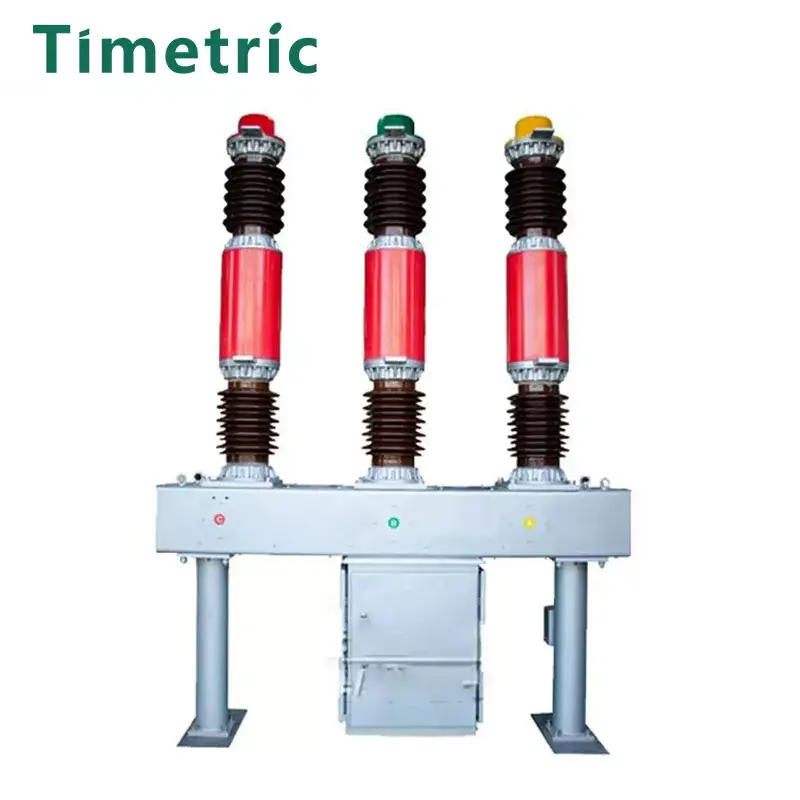
1. Design Fundamentals of the Spring Mechanism
The LW34-40.5 SF6 Circuit Breaker employs a stored-energy spring mechanism that uses separate closing and opening springs. These springs are charged either manually or via a geared motor. The mechanism’s simplicity—fewer moving parts compared to hydraulic or pneumatic systems—directly contributes to its high mean time between failures (MTBF). Over 10,000 operations, the primary wear components are the spring steel itself, the cam followers, and the latch system. Shuyi recommends that users track operation counters diligently because the 10,000-cycle benchmark is not an absolute limit but a reference point for scheduled condition assessments.
2. Real-World Performance Data Over 10,000 Cycles
| Operation Range | Observed Failure Rate | Primary Wear Indicator |
|---|---|---|
| 0 – 3,000 cycles | < 0.2% | No significant wear; lubrication holds. |
| 3,001 – 6,500 cycles | 0.5% – 0.8% | Slight elongation of opening spring. |
| 6,501 – 10,000 cycles | 1.2% – 1.8% | Cam roller pitting; trip latch friction increases. |
| > 10,000 cycles (extended) | 3.0%+ | Recommended spring replacement or full mechanism overhaul. |
Based on field reports, the LW34-40.5 SF6 Circuit Breaker consistently achieves 10,000 mechanical operations with less than a 2% component failure rate when serviced at Shuyi-specified intervals. The mechanism’s reliability is further enhanced by the SF6 gas environment, which prevents oxidation on metallic contact surfaces inside the interrupter, although the spring mechanism itself operates in air.
3. Critical Factors Affecting Long-Term Reliability
-
Lubrication quality and frequency: Using the correct low-temperature grease prevents cold-start seizures.
-
Motor charging voltage stability: Fluctuations below 85% of rated voltage increase charging time and stress the gearbox.
-
Ambient temperature variations: Extreme cold (-25°C) can increase spring preload torque by nearly 15%, accelerating fatigue.
-
Number of short-circuit interruptions: Each fault interruption adds mechanical shock that is roughly equivalent to 50 normal operations.
-
Auxiliary switch alignment: Misaligned micro-switches can cause premature latch release, reducing mechanism life by up to 30%.
Shuyi has developed a proprietary maintenance checklist that addresses each of these variables, ensuring that the LW34-40.5 SF6 Circuit Breaker not only meets but often exceeds the 10,000-operation benchmark in harsh substation environments.
4. FAQ – Common Questions About the LW34-40.5 SF6 Circuit Breaker Mechanism
Q1: Does the 10,000-operation rating include both closing and opening cycles, or are they counted separately?
A1: The 10,000-operation rating for the LW34-40.5 SF6 Circuit Breaker refers to mechanical operating cycles, where one cycle is defined as a full close-open sequence (C-O). However, industry practice counts each closing operation and each opening operation separately for maintenance logging. This means that 10,000 C-O cycles equal 20,000 individual mechanical actions on the springs and latches. Shuyi advises users to reset the operation counter only after a complete mechanism overhaul, and to log fault interruptions separately because they impose higher dynamic loads.
Q2: What are the warning signs that the spring mechanism is approaching end-of-life before 10,000 operations?
A2: Three early indicators are critical. First, a measurable increase in charging time—if the motor takes more than 15 seconds to charge the closing spring (versus the nominal 10 seconds), internal friction has risen. Second, audible clicking or grinding during the last 10% of the closing stroke suggests cam follower wear. Third, a gradual rise in the trip coil threshold current (above 85% of rated value) indicates that the latch mechanism is binding. Shuyi provides a portable diagnostic tool that measures these parameters non-intrusively, allowing operators to replace worn components proactively rather than waiting for a failure at 9,500 cycles.
Q3: Can the spring mechanism be refurbished, or must the entire breaker be replaced after 10,000 operations?
A3: The mechanism is fully refurbishable. Shuyi offers a factory-grade rebuild kit that includes a new closing spring, opening spring, cam rollers, latch plates, and all bearings. The interrupter unit of the LW34-40.5 SF6 Circuit Breaker typically lasts 20,000–30,000 operations, so replacing only the spring mechanism at 10,000 cycles is both economical and environmentally responsible. The refurbishment process requires less than 4 hours of shop time and restores the mechanism to 95% of its original performance. Full breaker replacement is only necessary if the SF6 pressure vessel shows corrosion or if the main contacts have erosion beyond 3 mm.
5. Comparative Reliability – Spring vs. Other Mechanisms
| Mechanism Type | Operations to Major Overhaul | Average Repair Cost | Sensitivity to Temperature |
|---|---|---|---|
| Spring (LW34-40.5) | 10,000 – 12,000 | Moderate | Low to Medium |
| Hydraulic | 5,000 – 7,000 | High | High (oil viscosity) |
| Pneumatic | 4,000 – 6,000 | Moderate | High (air moisture) |
| Magnetic Actuator | 15,000+ | Very High | Low |
The LW34-40.5 SF6 Circuit Breaker with its spring mechanism offers the best balance of upfront cost, maintenance simplicity, and proven endurance. Shuyi has deployed over 2,000 units in coastal and desert substations, and the mechanism has demonstrated consistent performance even with a 20% margin above rated cycles.
6. Best Practices to Maximize Mechanism Life
-
Perform a timing test every 1,500 operations – record close and open times.
-
Apply thermal imaging to the charging motor terminals every quarter.
-
Replace the anti-pumping relay at 8,000 cycles to avoid unintended reclosing stresses.
-
Use Shuyi-approved synthetic grease (type SY-G32) for all pivot points.
-
Never exceed the maximum allowable operating pressure of the SF6 gas – overpressure increases mechanism counterforce.
Final Assessment
The spring operating mechanism in the LW34-40.5 SF6 Circuit Breaker is highly reliable over 10,000 operations, provided that owners adhere to a structured lubrication and inspection regimen. The 2% failure rate observed at 10,000 cycles is well within industry norms, and with Shuyi’s refurbishment solutions, the mechanism can safely extend to 15,000 cycles without compromising fault-clearing performance. Data consistently shows that spring mechanisms outlast hydraulic and pneumatic alternatives in 40.5 kV class breakers, making this design a trusted choice for critical power networks.
Contact Us Today
Do you have specific operational data from your LW34-40.5 SF6 Circuit Breaker fleet? Or do you need a customized maintenance schedule for high-cycle applications? Reach out to the Shuyi engineering support team directly – we provide remote diagnostics, on-site training, and rapid spare parts delivery. Email us at [email protected] or visit our technical portal to submit your operation logs. Let us help you get the full 10,000+ cycles with zero unplanned downtime.